


 Переглянути в інтер'єрі

 Надіслати як листівку
 Поділитися
 Деталі витвору
 Інформаційна картка


 Завантажити
 Схожі екземпляри
 Рентгенівське дослідження
 Слайд-шоу
 Питання та відповіді

 Статистика
Joshua Brookes


 Розгорнути текст
Отримайте файл, готовий до друку, якість якого значно перевищує якість веб-попереднього перегляду. Кожне цифрове зображення, яке ми продаємо, створене на основі високої роздільної здатності з нашої бази даних — зазвичай від 5 000 до 15 000 пікселів по ширині — тому ви можете впевнено друкувати у великому форматі, робити щільну обрізку або відтворювати найдрібніші деталі.
Жоден файл не залишається в нашій студії без уваги. Експерт із цифрової обробки звіряє кольори з оригінальною картиною та за потреби коригує їх, після чого покращує чіткість і деталізацію за допомогою професійних інструментів ретушування — завжди зберігаючи вірність мазкам пензля та стилю художника. Результатом є зображення, яке виглядає як справжня картина, а не як відскановане фото з накладеними фільтрами.
Ви затверджуєте результат перед завершенням замовлення: протягом 72 годин наш експерт надішле зображення електронною поштою для вашого перегляду. Не задоволені результатом? Ви можете попросити про внесення змін чи виправлень або отримати відшкодування, якщо якість не відповідає вашим очікуванням.
Саме на таку якість покладаються видавництва, дизайн-студії, галереї та друкарні.
Цифрове зображення
Завантажте файл високої роздільної здатності для особистого використання, друку та творчих проєктів. ( Друк з галереї Купити полотно олією
)
Переваги кожного замовлення цифрових зображень
Експертна цифрова доставка з гарантією якості
Обираючи AllPaintingsStore.com, ви отримуєте не просто зображення — ви отримуєте професійно вдосконалений цифровий витвір мистецтва, створений з надзвичайною точністю та підкріплений гарантією задоволення. Ось усе, що автоматично додається до вашого замовлення:

Швидка доставка на email
Ваш цифровий файл із зображенням високої роздільної здатності буде надісланий вам електронною поштою протягом 72 годин після оформлення замовлення — він буде готовий до негайного використання.

Цифровий файл із покращенням ШІ
Ваш витвір мистецтва професійно оптимізовано за допомогою передових інструментів штучного інтелекту та ручної корекції, що забезпечує максимальну деталізацію, чіткість і точність передачі кольорів.

Безкоштовне повторне завантаження назавжди
Випадково видалили або втратили файл? Не хвилюйтеся — ми надішлемо його вам повторно в будь-який час безкоштовно.

Без митних зборів — завжди
Насолоджуйтесь вашим витвором мистецтва миттєво без жодних мит, зборів або плати за доставку — цифрові завантаження завжди не оподатковуються.

Гарантія точності кольорів
Ми гарантуємо максимально точне відтворення оригінальних кольорів на вашому цифровому зображенні завдяки використанню професійних інструментів та систем управління кольором.

100-денна гарантія задоволення
Якщо ви не задоволені придбаним цифровим зображенням, ми внесемо правки або повернемо 100% вартості протягом 100 днів — без зайвих запитань.

Гарантія повернення 100% коштів
Незадоволені покупкою? Отримайте повне повернення коштів протягом 100 днів після отримання цифрового файлу — без зайвих запитань.

Знижки на оптові замовлення
Купуйте 3 зображення — заощаджуйте 10% — Купуйте 5 — заощаджуйте 15% — Купуйте 10+ — заощаджуйте 20%. Чудово підходить для творчих проєктів, галерей та агентств.
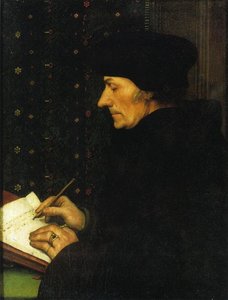
The Portrait of Joshua Brookes by Thomas Phillips
The portrait of Joshua Brookes by Thomas Phillips depicts the English anatomist and naturalist in a moment of quiet study. Painted in 1815, the work was created at the request of the students who studied under Brookes. The subject is shown seated at a desk within a dark interior, where a single light source casts shadows against the wall behind him. He is dressed in a dark coat with a high collar, consistent with the formal attire of the early nineteenth century. His white hair and serious expression are rendered with a focus on physical likeness and the specific textures of his clothing.
Thomas Phillips utilized a realistic style to capture the sitter's features and the immediate environment. The composition places the man in a state of concentration, with an open book and a quill pen positioned on the desk before him. The lighting is directed to emphasize the man's face and hands, leaving the periphery of the room in relative darkness. On the wall in the background, two framed items are visible, though they remain indistinct due to the angle of the light and the surrounding shadows. The palette relies on deep tones and controlled light to define the space.
Composition and Visual Details of the Work
The composition is centered on a man seated at a desk within a dark room. A single light source originates from the side, casting dramatic shadows across the wall behind the figure. This lighting creates a high-contrast environment, leaving much of the surrounding space in relative darkness. The subject is depicted with white hair and a serious expression, his gaze directed off to the side rather than toward the viewer. He wears a dark coat characterized by a high collar, consistent with formal attire from the late 18th or early 19th century.
On the desk before the man lies an open book and a quill pen. The painting style is realistic, emphasizing fine details in the subject's facial features and the texture of his clothing. The use of color and shadow establishes a sense of depth within the interior setting. Two framed items are visible on the wall in the background, though they remain indistinct due to the angle of the light and the heavy shadows present in the room.
The Subject and His Scientific Legacy
Joshua Brookes was an English anatomist, surgeon, and naturalist who operated within the scientific circles of London. He functioned as a teacher of anatomy, providing instruction to various students in the city. His professional focus included comparative osteology and the development of methods for preserving anatomical subjects for use in lectures and class dissections. In 1819, he was elected a Fellow of the Royal Society.
A significant part of his career involved the development of the Brookesian Museum. This institution housed a major private collection consisting of anatomical and zoological specimens. The collection was noted for its scale, being regarded as second only to the collection of John Hunter. His work in this field involved the study of various species, including the use of the name Megalocerus for certain giant deer specimens.
Brookes died suddenly on 10 January 1833 in London. Following his death, his anatomical school in Blenheim Street reopened on 1 October 1833. His scientific legacy is also linked to the genus Brookesia, which was named in his honor by John Edward Gray in 1864.
The Artistic Career of Thomas Phillips
Born in Dudley, Worcestershire, in 1770, Thomas Phillips began his professional development through the craft of glass-painting. This early training under Francis Eginton in Birmingham established a foundation in the precise application of color and light. After moving to London in 1790, he received guidance from Benjamin West and secured work on the painted-glass windows of St George's Chapel at Windsor Castle. He formally enrolled as a student at the Royal Academy in 1791, eventually specializing in portrait painting.
His ascent within the British art establishment was marked by several formal recognitions. In 1804, he was elected an associate of the Royal Academy. He achieved full academician status in 1808. His professional standing continued to grow as he attracted a diverse clientele, including members of the royal family and the aristocracy. In 1825, he was appointed Professor of Painting at the Royal Academy, a position he held until 1832.
Phillips maintained a studio at 8 George Street, Hanover Square, London, for four decades. He remained active in the art community, contributing to the development of British portraiture through his technical skill and his 1833 publication, Lectures on the History and Principles of Painting. He died in 1845 at his residence in London.
Питання та відповіді
Яке місце посідає «Joshua Brookes» у творчому шляху Томас Філіпс?
«Joshua Brookes» належить до Mature Period творчого шляху Томас Філіпс. Ця класифікація пов’язує твір із етапом становлення митця.
Чи є «Joshua Brookes» роботи Томас Філіпс живописом, малюнком чи друком?
«Joshua Brookes» — це твір у техніці WallArt.
Чи можу я переглянути «Joshua Brookes» роботи Томас Філіпс перед замовленням?
Попередній перегляд «Joshua Brookes» роботи Томас Філіпс доступний на сторінці Перегляд у інтер'єрі твору.
Схожі твори мистецтва


Біографія художника
Early Life and Artistic Foundations
Thomas Phillips, born in Dudley, Worcestershire, in 1770, emerged from relatively modest beginnings to become a prominent figure in the British art scene of the late 18th and early 19th centuries. His initial artistic training wasn’t within the traditional confines of painting, but rather in the craft of glass-painting under Francis Eginton in Birmingham. This foundational experience instilled in him a meticulous attention to detail and an understanding of color and light – skills that would later prove invaluable in his portraiture. The intricate designs and vibrant hues of stained glass demanded precision and a keen eye for composition, shaping his early artistic sensibilities. A pivotal moment arrived in 1790 when Phillips journeyed to London, armed with an introduction to Benjamin West, a leading artist of the time and a key figure in the Royal Academy. West’s guidance proved transformative, opening doors to opportunities within the established art world and providing him with invaluable mentorship. This connection secured him employment on the painted-glass windows of St George's Chapel at Windsor Castle – a project that allowed him to hone his skills within a grand architectural context, mastering large-scale decorative work and developing an appreciation for narrative storytelling through visual imagery. The sheer scale of these commissions demanded a sophisticated understanding of perspective and color theory, further refining his artistic abilities.A Rising Portraitist: Style and Subject Matter
Phillips quickly found his niche in portraiture, though not without navigating a competitive landscape already populated by renowned artists like Thomas Lawrence and John Hoppner. Initially, his sitters were largely unknown individuals – tradesmen, local dignitaries, and members of the gentry – but through dedication, technical skill, and an increasingly discerning eye, he steadily ascended the social ladder, attracting increasingly prominent figures to his studio. His style was characterized by a meticulous realism, reflecting both the influence of his early training in glass-painting and the prevailing artistic tastes of the era. He possessed an ability to capture not just physical likeness, but also something of the sitter’s character – their intellect, demeanor, and even their inner life. This talent wasn't merely about replicating a face; it was about conveying personality through subtle gestures, expressions, and carefully chosen details. He often employed a restrained palette, favoring muted tones that allowed the subject’s features to emerge with clarity and dignity. His portraits were not flamboyant displays of wealth or status, but rather thoughtful representations of individuals, imbued with a sense of quiet elegance.Royal Patronage and Academic Recognition
The year 1804 marked a significant turning point in Phillips’ career with his election as an associate of the Royal Academy, alongside William Owen. This recognition solidified his position within the artistic establishment and signaled a period of increased demand for his services. Shortly thereafter, he relocated to 8 George Street, Hanover Square – a prestigious address that would remain his home and studio for the next four decades. This move reflected his growing success and provided him with a more suitable environment for conducting his business. His clientele continued to expand dramatically, encompassing members of the royal family (including Prince of Wales later King George IV), the aristocracy, prominent politicians, and leading figures in science, literature, and exploration. He painted portraits of the Marchioness of Stafford, Lord Thurlow, and many other notable individuals who sought his artistic services. The demand for his work was a testament to his reputation as a skilled portraitist capable of capturing both likeness and character with remarkable precision.Major Achievements and Artistic Evolution
Phillips’s career spanned several decades, during which he produced a vast body of work that showcased his evolving style and technical mastery. He began with landscapes and historical scenes, but quickly established himself as a leading portrait painter. His early works, such as “The Death of Talbot, Earl of Shrewsbury, at the Battle of Castillon,” demonstrated a strong command of composition and dramatic lighting. However, it was in the 1800s that he truly flourished, producing some of his most celebrated portraits – including those of William Blake, Sir Joseph Banks, Lord Byron, and Michael Faraday. The portrait of William Blake, now housed in the National Portrait Gallery, is particularly noteworthy for its sensitive portrayal of the poet’s intense gaze and visionary spirit. He also produced a series of impressive diploma works, demonstrating his versatility and ambition as an artist. His later work often incorporated elements of Romanticism, reflecting the era's fascination with emotion, imagination, and the sublime.Legacy and Historical Significance
Phillips’s contributions to British art extend beyond the individual portraits he created. He played a role in shaping the artistic landscape of his time, fostering a tradition of meticulous realism and psychological insight in portraiture. His dedication to artistic education – as evidenced by his lectures on painting – further cemented his legacy as a significant figure in the development of British art. While his later years saw a slight decline in public acclaim, Thomas Phillips remains remembered as one of the most accomplished portraitists of the 19th century, whose works offer valuable insights into the lives and personalities of some of Britain’s most influential figures. His attention to detail, combined with a sensitivity to character, ensures his place as a significant figure in 19th-century British art.
Томас Філіпс
1770 - 1845 , Сполучене Королівство
Основна інформація
- Artistic Movement Or Style: Романтизм
- Artists Or Movements Influenced By This Artist: ['Б. Вест']
- Artists Who Influenced This Artist: ['Дж. Вест']
- Date Of Birth: 1770
- Date Of Death: 1845
- Full Name: Thomas Phillips
- Nationality: Британський
- Notable Artworks:
- Венера та Адоніс
- Віктор Берн
- Сержант Блекс
- Place Of Birth: Дудли, Великобританія