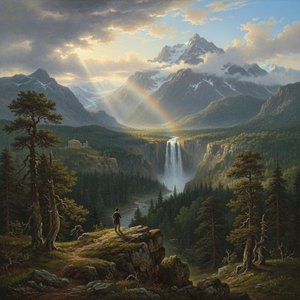
1852. Lithograph, 52.0 x 69.0 cm. Музей Метрополітен.

§ 1Catalogue data
 Lithograph
- WallArt
- Barbizon School
 1852
1852 52.0 x 69.0 cm
 Музей Метрополітен
§ 2Abstract
Опис експоната
Explore William Morris Hunt’s ‘Landscape’ (1852) – a serene black & white lithograph capturing rural beauty. Barbizon style, tranquil mood, & evocative of 19th-century America.
 Розгорнути текст
Біографія митця
Вільям Морріс Гант (1824-1879): американський живописець школи Барбізон, відомий світлими пейзажами та портретами. Натхненний Мілле, він сформував мистецтво Бостона XIX століття та популяризував європейські стилі.
§ 3Commentary
Landscape by William Morris Hunt
William Morris Hunt’s “Landscape,” completed around 1852-53, stands as a cornerstone of American Barbizon painting—a movement that championed the direct observation of nature and imbued landscapes with profound emotional resonance. More than just a depiction of scenery, it embodies the spirit of its time, reflecting the burgeoning interest in Romantic idealism and the influence of European masters like Jean-François Millet.
- Subject Matter: The painting captures a tranquil rural vista featuring a solitary figure traversing a wooded path alongside a dog. This simple composition—a man and his companion amidst trees—serves as a conduit for contemplation on the relationship between humanity and the natural world.
- Style & Technique: Hunt’s approach aligns closely with the Barbizon School's ethos, prioritizing tonal gradation and atmospheric perspective over meticulous detail. The loose brushstrokes convey a sense of immediacy and spontaneity, mirroring the Impressionists’ desire to capture fleeting moments of light and color. Lithography—a printing process known for its grainy texture—was employed, lending an understated materiality to the artwork.
- Historical Context: Painted during the mid-1850s, “Landscape” emerged from a period marked by significant artistic experimentation in America. Artists like Hunt were actively rejecting academic conventions and embracing plein air painting—working outdoors directly before their subjects—a revolutionary concept for the era.
The scene’s symbolism extends beyond its visual representation. The solitary figure symbolizes introspection and a yearning for connection with something larger than oneself, while the dog embodies loyalty and companionship – themes prevalent in Romantic art of the period. Hunt skillfully utilizes light and shadow to create depth and mood, fostering an atmosphere of serenity and quiet contemplation.
Further research into William Morris Hunt reveals his dedication to artistic education and his role as a champion for European styles on American soil. His influence can be seen in subsequent generations of landscape painters who sought to emulate the Barbizon’s expressive power. As showcased at The Metropolitan Museum of Art, “Landscape” continues to inspire admiration for its masterful execution and enduring beauty.
- Notable Resources:
- The Metropolitan Museum of Art
- Richard Morris Hunt
Питання та відповіді
Яка насиченість кольорів у творі «Landscape» роботи Вільям Морріс Гант?
Насиченість кольорів у творі «Landscape» — Monochromatic. Насиченість описує, наскільки яскравими та виразними є кольори.
Яка сприймається яскравість твору «Landscape» роботи Вільям Морріс Гант?
Відчутна яскравість твору «Landscape» роботи Вільям Морріс Гант становить brilliant. Її можна підібрати відповідно до освітлення в запланованому інтер'єрі.
Яке місце посідає «Landscape» у творчому шляху Вільям Морріс Гант?
У межах творчого шляху Вільям Морріс Гант твір "Landscape" належить до періоду Mature Period. Ця фаза дозволяє порівняти його з іншими роботами митця.


 Перейти до друку


 Для творів мистецтва або репродукцій, розмір яких перевищує 105 см (приблизно 41 дюйм) з будь-якого боку, рама доставляється у вигляді розібраного комплекту. Такий метод гарантує безпечну доставку та запобігає пошкодженням під час транспортування.