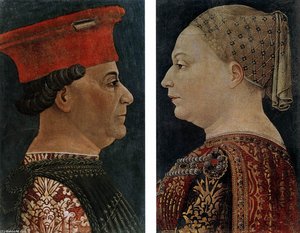
The Brief, Luminous Life of Bonifazio Bembo
In the grand tapestry of the Italian Renaissance, some threads shine with a brilliance so intense that they leave an indelible mark, even if they are tragically short. Bonifazio Bembo (1447–1477) was such a thread. Born in the artistic cradle of Brescia, Lombardy, Bembo’s life was a fleeting meteor across the cultural sky of Milanese Italy. Though he passed away at the tender age of thirty, his presence remains etched into the very walls of history through works that capture the transition from medieval tradition to the burgeoning humanism of the late fifteenth century. His career, though concentrated in a mere few decades, serves as a vital window into the aesthetic soul of the Sforza era.
The foundations of Bembo’s mastery were laid in his early apprenticeship under Giovanni Battista Ticcioli. This formative period was crucial, as it immersed him in the demanding world of fresco painting and decorative sculpture. From Ticcioli, Bembo inherited a profound command over large-scale compositions and the technical rigors required to marry pigment with damp plaster. However, his vision was far from provincial. As his talent matured, he began to weave together disparate stylistic currents, creating a unique visual language that bridged the gap between Northern European realism and the burgeoning elegance of the Italian peninsula.
A Synthesis of North and South
What distinguishes Bembo’s oeuvre is the sophisticated dialogue he maintained between different artistic traditions. He was deeply moved by the Flemish Primitives, particularly the meticulous naturalism of masters like Jan van Eyck and Rogier van der Weyden. This influence is evident in his devotion to minute detail and his ability to use light to create a sense of luminous depth, making textures appear almost tactile to the viewer. Yet, simultaneously, Bembo was absorbing the stylistic shifts of Early Florentine Mannerism. He embraced the grace of elongated figures and the rhythmic, stylized drapery that would later define the works of Botticelli and Da Vinci, lending his portraits and frescoes a sense of poetic movement.
This duality allowed him to create works that were both grounded in physical reality and elevated by spiritual symbolism. In his celebrated Vaulting Decoration within the Castello Sforzesco in Milan, one can witness this breathtaking synthesis. The fresco is a celestial dance of angelic figures and vibrant pigments, where the heavy weight of Renaissance architecture meets the ethereal lightness of divine presence. It is here that Bembo’s ability to transform stone and plaster into a window to the heavens truly shines.
Legacy Amidst the Sforza Splendor
The zenith of Bembo’s career was inextricably linked to the patronage of Ludovico Sforza, the Duke of Milan. Under the protection of one of Italy's most ambitious cultural architects, Bembo found the resources to execute works of immense scale and prestige. His involvement in the creation of the Bembo Tarot Cards and his various portraits of the Sforza family solidified his status as a premier court artist. These works were not merely decorations; they were instruments of political and social prestige, designed to project the power, intellect, and refined taste of the Milanese court.
Though his life ended prematurely, leaving many projects unfinished and much of his biography lost to time, the historical significance of Bonifazio Bembo cannot be overstated. He stands as a crucial link in the evolution of Renaissance art, representing a moment when the meticulous observation of the North met the idealized grace of the South. To study Bembo is to encounter a master who, in a short lifetime, captured the very essence of an era defined by discovery, beauty, and the eternal pursuit of perfection.
Питання та відповіді
Чи можу я відвідати віртуальний музей творів Bonifazio Bembo?
3D-музей Bonifazio Bembo — це сторінка, на якій роботи митця представлені у віртуальній тривимірній галереї.
Чи можу я переглянути роботи Bonifazio Bembo за художніми напрямами?
Мистецькі напрями, у яких працював(ла) Bonifazio Bembo, можна переглянути на сторінці Усі художні напрями, де твори згруповані за напрямами.
Чи є загальний огляд усіх сюжетів, які малював Bonifazio Bembo?
Роботи Bonifazio Bembo можна переглянути за тематикою на сторінці Атлас тематик митця.