


 效果预览
效果预览
 分享
分享 分享
分享
 详情
详情 指南
指南

 下载
下载
 相似作品
相似作品 X射线
X射线 幻灯片播放
幻灯片播放 统计数据
统计数据Minerva Crowns the Maid of Leiden
 Oil
Oil- WallArt
- Baroque
 1650
1650- Early Modern
 176.0 x 221.0 cm
 Stedelijk Museum De Lakenhal
 展开详情
展开详情
手工油画复制品
由我们的艺术家按需定制,为您提供您所选尺寸及画框的布面手工油画。 ( 切换至版画销售渠道 切换至数字图像销售渠道)




P118B $10

P118H $10

P118W $10

P438Z $10

P508JH $12

P508YH $12

P805H $10

P805Z $10

P919BZ $10

P919G $10

P919XJ $10

P959ZH $10

P968JZ $12

W106C $8

W218G $10

W218JH $8

W218Y $10

W307PJ $10

W316G $10

W316PJ $8

W316Y $10

W398PJ $8

W4111J $10

W500HY $15

W500JH $15

W692G $12

W849H $8

W940BG $15

W953PJ $8




从与原作比例一致的预设尺寸中进行选择。

您可以输入自定义尺寸,以适配特定的画框或空间。如果所选尺寸与原图比例不符,我们将通过裁剪作品或添加手绘元素来扩展画面。数字样稿将在制作开始前发送给您确认。
请注意,屏幕预览无法准确反映实际的裁剪或扩展效果,只有样稿才能真实呈现最终的构图。
虽然我们提供定制尺寸服务,但为了保留原作比例,建议您从预设列表中选择尺寸。
下单后,AllPaintingsStore.com 团队将通过电子邮件联系客户获取具体要求,并提供效果预览图。


 玻璃选项仅适用于110厘米以下的尺寸。

Minerva Crowns the Maid of Leiden
复制材质
复制品尺寸
-


最终总价
$ 258
A Divine Coronation: The Allegory of Leiden
In the grand tapestry of the Dutch Golden Age, few works capture the intersection of civic pride and mythological grandeur as poignantly as Abraham Lambertsz. van den Tempel’s masterpiece, Minerva Crowns the Maid of Leiden. Painted around 1650, this monumental canvas serves as more than a mere historical record; it is a breathtaking theatrical performance frozen in oil. At its heart, the composition centers on a profound moment of divine intervention, where Minerva, the Roman goddess of wisdom, descends to bestow a crown upon the personification of Leiden. The scene is thick with tension and drama, as the subject appears caught in a state of emotional vulnerability, her distress contrasting sharply with the celestial authority of the goddess. This interplay between the mortal and the divine creates an immediate, visceral connection for any viewer, drawing them into a world where history and myth are inextricably entwined.
The technical mastery displayed in this work is nothing short of extraordinary, making it a quintessential choice for collectors who value the intricate realism of the 17th century. Van den Tempel employs a sophisticated use of light and shadow to sculpt the figures within the frame, lending them a three-dimensional presence that commands the room. The composition is masterfully balanced; while the central coronation provides the emotional anchor, the surrounding figures—including those bearing flags and observers on the periphery—add layers of narrative depth and movement. Every detail, from the delicate texture of the fabrics to the subtle glint of light on a distant vase or the scholarly weight of a book tucked into the corner, has been rendered with a precision that speaks to the artist's devotion to the Dutch tradition of meticulous observation.
Symbolism and the Spirit of an Era
Beyond its visual splendor, the painting is a rich lexicon of symbolism designed to resonate with the intellectual climate of the Netherlands. The presence of Minerva is not merely decorative; she represents the triumph of intellect, strategy, and justice over chaos. By crowning the Maid of Leiden, Van den Tempel celebrates the city's resilience and its identity as a bastion of wisdom and culture. The inclusion of secondary elements—a bowl at the base, a book suggesting erudition, and the symbolic flag—serves to ground this mythological event in the civic reality of the time. For an interior designer, these layers of meaning offer a profound way to introduce "storytelling" into a space, allowing a high-quality reproduction to act as a conversation piece that reflects themes of wisdom, heritage, and triumph.
For those seeking to adorn a curated collection or a sophisticated living space, this artwork offers an unparalleled emotional impact. It possesses the rare ability to evoke both the solemnity of historical importance and the awe of classical beauty. Whether placed in a grand library, a formal dining hall, or a contemporary gallery setting, Minerva Crowns the Maid of Leiden brings with it an aura of timeless prestige. Owning a reproduction of such a significant work allows one to inhabit the splendor of the Dutch Golden Age, surrounding oneself with the light, the drama, and the enduring legacy of Van den Tempel’s visionary artistry.
相似艺术品


艺术家简介
Early Life and Influences (1887-1905)
- Born Sybren van Haersma Buma on January 13, 1887, in Leeuwarden, Netherlands.
- Came from a noble Frisian family with historical ties to the region's governance and land ownership.
- Early exposure to Frisian culture, language, and history significantly shaped his worldview and artistic interests. Frisian identity became central to his work.
- Initially showed an aptitude for law but ultimately pursued a career in politics and public service.
- Influenced by the rise of Dutch nationalism and the growing desire for greater autonomy within the Kingdom of Netherlands.
Political Career and Public Service (1905-1940)
- Began his political career as a member of the conservative Protestant Union party in Leeuwarden's city council.
- Rapidly ascended through the ranks, gaining recognition for his strong leadership skills and commitment to traditional values.
- Served as a member of the Frisian States (provincial parliament) from 1918 onwards, representing the Protestant Union.
- Became known for advocating for policies that supported agriculture, small businesses, and rural communities. Rural interests were paramount.
- Held various positions within the provincial government, including serving as a deputy governor (vice-governor) from 1933 to 1940.
Role During World War II and Occupation (1940-1945)
- During the German occupation of the Netherlands (1940-1945), Buma faced a difficult situation as a public official.
- Attempted to navigate the complex political landscape while resisting collaboration with the occupying forces. Resistance was subtle but present.
- Played a role in supporting Frisian cultural institutions and organizations that were threatened by German censorship and suppression.
- Reportedly helped individuals who were persecuted for their religious beliefs or political affiliations.
- His actions during the occupation remain subject to historical debate, with some scholars arguing that he could have done more to actively oppose the Germans.
Post-War Career and Legacy (1945-1978)
- After the liberation of the Netherlands in 1945, Buma resumed his political career.
- Served as a member of the Dutch House of Representatives (national parliament) from 1946 to 1962, representing the Protestant Union.
- Became a prominent voice for conservative and Christian-democratic values in Dutch politics.
- Advocated for policies that supported family values, religious freedom, and economic stability.
- Retired from active political life in 1962 but remained involved in various civic organizations.
- Died on December 28, 1978, in Leeuwarden, leaving behind a legacy as a respected politician and public servant who dedicated his life to serving the people of Friesland and the Netherlands. Frisian service defined his career.
Historical Significance
- Represented a generation of conservative politicians who sought to preserve traditional values in a rapidly changing world.
- Played a role in shaping Dutch politics during a period of significant social and economic transformation.
- His actions during World War II remain subject to historical debate, but he is generally regarded as having resisted collaboration with the occupying forces.
- Remembered for his commitment to serving the people of Friesland and the Netherlands, and for his dedication to upholding Christian-democratic values. Christian values were central.

abraham lambertsz. van den tempel
1622 - 1672 , Netherlands
艺术家简介
- Artistic Movement Or Style: Governing coalition
- Full Name: Sybrand van Haersma Buma
- Nationality: Dutch
相关文章

Charles Leickert: Capturing the Dutch Golden Age Light – A Comprehensive Study of Technique, Context, and Legacy
Explore the captivating winter landscapes of Charles Leickert, a master of Dutch Golden Age light & atmosphere. Discover his techniques, symbolism, and lasting legacy – a comprehensive study for art enthusiasts and collectors.
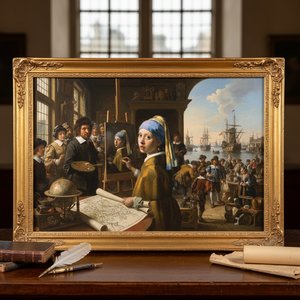
荷兰黄金时代绘画:文化创新中的现实主义反思
深入探索荷兰黄金时代绘画的文化创新与现实主义反思。本文解读伦勃朗、维米尔等大师的作品,并结合玛莉特·韦斯特曼的图像学研究,揭示艺术史背后的社会语境与现代性意识觉醒。

Mastering Light & Shadow: A Journey Through the Dutch Golden Age's Luminous Legacy
Embark on a cultural journey through the Dutch Golden Age. Explore the masterful interplay of light and shadow in 17th-century masterpieces, from Rembrandt to Vermeer, and discover how this era of profound realism continues to inspire fine art collectors today.
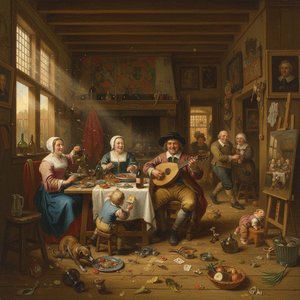
Jan Steen: A Master of Dutch Genre Painting & the Golden Age
Explore the life & art of Jan Steen, a leading Dutch Golden Age painter renowned for his humorous genre scenes & insightful social commentary. Discover his techniques, legacy, and collecting tips.

Golden Light & Dutch Skies: The Timeless Magic of Dutch Golden Age Landscapes
Discover the breathtaking beauty of Dutch Golden Age landscapes. Explore the mastery of light, chiaroscuro, and 17th-century realism through an expert art history lens, celebrating the enduring legacy of the Dutch Masters for discerning collectors and art lovers.

