


 效果预览
效果预览
 分享
分享 分享
分享
 详情
详情 指南
指南

 下载
下载
 相似作品
相似作品 X射线
X射线 幻灯片播放
幻灯片播放 统计数据
统计数据The Raising of Lazarus, Aertgen Claesz van Leyden (attributed to), c. 1530 - c. 1535
 Early Netherlandish
 1535
1535 76.0 x 79.0 cm
 展开详情
展开详情
手工油画复制品
由我们的艺术家按需定制,为您提供您所选尺寸及画框的布面手工油画。 ( 切换至版画销售渠道 切换至数字图像销售渠道)




































从与原作比例一致的预设尺寸中进行选择。

您可以输入自定义尺寸,以适配特定的画框或空间。如果所选尺寸与原图比例不符,我们将通过裁剪作品或添加手绘元素来扩展画面。数字样稿将在制作开始前发送给您确认。
请注意,屏幕预览无法准确反映实际的裁剪或扩展效果,只有样稿才能真实呈现最终的构图。
虽然我们提供定制尺寸服务,但为了保留原作比例,建议您从预设列表中选择尺寸。
下单后,AllPaintingsStore.com 团队将通过电子邮件联系客户获取具体要求,并提供效果预览图。


 玻璃选项仅适用于110厘米以下的尺寸。

The Raising of Lazarus, Aertgen Claesz van Leyden (attributed to), c. 1530 - c. 1535
复制材质
复制品尺寸
-


最终总价
$ 583
相似艺术品

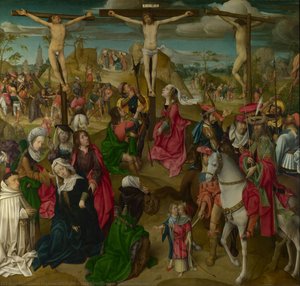


艺术家简介
Aertgen Claesz van Leyden: A Master of Subtle Detail in the Dutch Renaissance
Aertgen Claesz van Leyden (c. 1498 – c. 1564), a name perhaps less familiar than those of his contemporaries, stands as a quietly significant figure within the rich tapestry of early Netherlandish painting. Born and primarily active in Leiden, Netherlands, he carved out a distinctive artistic identity characterized by an exquisite attention to detail, a profound understanding of religious iconography, and a masterful command of oil paint—qualities that secured him a place among the esteemed Leiden Masters.
Van Leyden’s early life remains somewhat shrouded in mystery. Records suggest he was the son of a Leiden fuller, a profession indicating a family rooted in textile production. This humble background contrasts sharply with the refined artistry he would later develop. His formal artistic training began under the tutelage of Cornelis Engebrechtsz., a prominent Leiden painter known for his meticulous realism and detailed depictions of religious scenes. Engebrechtsz.’s influence is readily apparent in Aertgen’s initial works, characterized by a similar emphasis on precise rendering and a restrained palette. However, it was not merely imitation; Van Leyden quickly developed his own unique style, subtly diverging from his mentor's approach.
The Development of a Distinctive Style
Van Leyden’s artistic journey reveals a fascinating evolution, influenced by a diverse range of masters and contemporary trends. Early works demonstrate a clear debt to Engebrechtsz., particularly in the meticulous rendering of drapery and the careful observation of natural forms. Yet, as he matured, Van Leyden absorbed elements from Jan van Scorel, renowned for his luminous colors and atmospheric effects, and even the more dramatic style of Maarten van Heemskerck, a master of narrative painting. This eclectic blend resulted in a highly individualistic approach—one that is both technically accomplished and emotionally resonant.
Crucially, Van Leyden’s style wasn't simply a synthesis of influences; he possessed a remarkable ability to distill these elements into a cohesive and deeply personal vision. His paintings are distinguished by their subtle gradations of tone, their delicate modeling, and their almost photographic realism—a hallmark of the Leiden school. He frequently employed a limited palette, favoring muted earth tones and rich jewel colors, creating a sense of quiet solemnity and spiritual depth.
Religious Themes and Iconographic Significance
Van Leyden’s oeuvre is overwhelmingly devoted to religious subjects, reflecting the prevailing artistic climate of the 16th century. He produced numerous altarpieces, panel paintings, and devotional images—each imbued with profound symbolic meaning. His depictions of biblical scenes, such as *The Raising of Lazarus* (attributed to him), are not merely illustrations but carefully constructed narratives designed to convey theological truths. The artist’s meticulous attention to detail extends beyond mere representation; he meticulously incorporates symbolism into every element of the composition—from the gestures and expressions of the figures to the arrangement of objects within the scene.
Notable works include *St. Jerome in his Study*, a poignant portrayal of the hermit contemplating scripture, and depictions of *The Last Judgment*. His *Calling of St. Anthony* is particularly noteworthy for its intimate portrayal of the saint’s conversion—a moment of profound spiritual awakening rendered with remarkable sensitivity.
Legacy and Historical Context
Despite his considerable talent and prolific output, Van Leyden's name has often been overshadowed by that of his more famous brother, Lucas van Leyden. This is partly due to the challenges inherent in attributing paintings to individual artists within the Leiden school—a group characterized by a high degree of stylistic similarity. However, recent scholarship has increasingly recognized Aertgen’s unique contribution to Netherlandish art.
Van Leyden's work reflects the broader cultural and artistic currents of the 16th century—the rise of humanism, the rediscovery of classical antiquity, and the burgeoning interest in religious imagery. His paintings offer a valuable window into the spiritual and intellectual life of Renaissance Europe, demonstrating the power of art to both illuminate and inspire.
His legacy endures through his meticulously crafted works, which continue to be admired for their technical brilliance, emotional depth, and profound symbolic significance. Aertgen Claesz van Leyden remains a testament to the quiet artistry and enduring influence of a master painter who deserves greater recognition within the history of art.

aertgen claesz van leyden
1498 - 1564 , Netherlands
艺术家简介
- Artistic Movement Or Style: Early Netherlandish
- Artists Or Movements Influenced By This Artist:
- Jan van Scorel
- Maarten van Heemskerck
- Artists Who Influenced This Artist: ['Cornelis Engebrechtsz']
- Date Of Birth: c. 1498
- Date Of Death: c. 1564
- Full Name: Aertgen Claesz van Leyden
- Nationality: Dutch
- Notable Artworks:
- The Raising of Lazarus
- St Jerome
- Place Of Birth: Leiden, Netherlands
相关文章

Early Netherlandish Masters: 10 Paintings That Revolutionized Art & Decor
Journey into the Early Netherlandish Renaissance! Explore 10 iconic paintings by Jan van Eyck, Rogier van der Weyden & more. Discover stunning detail, symbolism, and oil painting techniques. Find museum-quality art reproductions for your home at AllPaintingsStore.com.

Early Netherlandish Masters: 10 Paintings That Revolutionized Art & Decor
Journey into the world of Early Netherlandish painting! Explore 10 masterpieces by Jan van Eyck, Rogier van der Weyden & more. Discover stunning detail, symbolism & Renaissance art for your home decor. Find museum-quality reproductions on AllPaintingsStore.com
Hugo van der Goes: Devotion, Innovation & the Psychological Depth of Early Netherlandish Painting
Explore the revolutionary art of Hugo van der Goes – a master of Early Netherlandish painting renowned for his dramatic realism, psychological depth & profound influence on Renaissance artists. Discover his iconic works and lasting legacy.
伦勃朗25幅杰作:光影大师的艺术传奇与家居臻选
探索伦勃朗25幅杰作,领略荷兰黄金时代光影大师的艺术传奇!从《夜巡》到自画像,深入了解巴洛克艺术、历史绘画与人物肖像背后的故事。AllPaintingsStore.com提供高清艺术复制品及家居装饰灵感。立即探索完整系列!
Jan van Eyck: Innovation, Symbolism & the Dawn of Early Netherlandish Painting
Explore the revolutionary art of Jan van Eyck! Discover his groundbreaking oil painting techniques, hidden symbolism, and lasting impact on the Early Netherlandish Renaissance. A deep dive for art enthusiasts.

