


 实景预览
实景预览
 发送
发送 分享
分享
 详情
详情 指南
指南

 下载图片
下载图片
 相似作品
相似作品 X射线
X射线 幻灯片播放
幻灯片播放 统计数据
统计数据The Forge\n\nReference Image


 阅读全文
阅读全文
艺术微喷/版画
博物馆级艺术微喷或帆布版画,制作高效,并提供多种饰面选择。 ( 订购此收藏品的纯手工复刻画作 切换至数字图像销售渠道)




































您可以从与原作比例一致的预设尺寸中进行选择。

请输入您所需的宽度和高度,以适配您的画框或墙面。由于印刷品只能进行裁剪,无法超出原图尺寸,因此若比例不一致,画面的一部分将会被裁切。在正式印刷之前,我们会为您发送一份数字效果图供您确认。本页面显示的图片并非最终裁剪后的效果——只有效果图才能展示真实的裁剪情况。


 玻璃选项仅适用于110厘米以下的尺寸。

The Forge\n\nReference Image
艺术微喷/版画
复刻品尺寸说明
-


总计金额
¥ 431
问答详情
Andrzej Różycki 的《The Forge\n\nReference Image》展现了怎样的色彩和谐感?
Andrzej Różycki 的《The Forge\n\nReference Image》 的色彩呈现出一种 Strong Color Unity 的和谐感。这种和谐感描述了色彩之间的相互关系。
哪家博物馆收藏了《The Forge\n\nReference Image》的原作?
Andrzej Różycki 的《The Forge\n\nReference Image》 目前正在 Centre of Contemporary Art Znaki Czasu, Torun, Poland 展出。博物馆列表所指为原作,而非复制品。
我该如何获取Andrzej Różycki 的《The Forge\n\nReference Image》的数字文件?
若想获取 Andrzej Różycki 的《The Forge\n\nReference Image》 的数字版文件,请前往其 数字图像 页面进行 高分辨率数字图像下载。
相关艺术品


![Urban Light [in Situ] — Christopher Lee Burden, Contemporary Art](/media/artworks/images-thumb/bb/41/bb41e0e98ca1ce05061042408c88a300.jpg)


艺术家简介
A Visionary of Folklore and Film: The Life and Art of Andrzej Różycki
Andrzej Różycki, a Polish artist who passed away in 2021, was far more than simply a photographer or filmmaker. He was a polymath—a thinker, theorist, multimedia artist whose work delved into the very essence of image-making and its relationship to culture, ritual, and memory. Born in Baranowicze, Poland, in 1942, his early life was marked by displacement following World War II, an experience that would profoundly shape his artistic sensibility. This sense of loss and a fascination with fragmented histories became recurring themes throughout his prolific career. He received his formal training at the Faculty of Fine Arts at Nicolaus Copernicus University in Toruń, laying the groundwork for a practice that seamlessly blended academic rigor with experimental approaches.From Zero-61 to the Film Form Workshop: Early Artistic Development
Różycki’s artistic journey truly began to take form in Łódź, where he settled in 1969 and became deeply involved in the city's vibrant avant-garde scene. He was a key member of the Zero-61 group, an influential collective dedicated to exploring new forms of photographic expression. This period saw him move away from traditional documentary styles toward more conceptual approaches, seeking “positive values” within the medium itself—a search for meaning beyond mere representation. His involvement with the Film Form Workshop at the Polish National Film, Television and Theater School further broadened his horizons, leading to the creation of around sixty films that spanned ethnology, art history, and folk traditions. These weren’t conventional documentaries; they were often poetic explorations, imbued with a philosophical depth that questioned the nature of reality itself.Ethnological Films & The Power of Ritual
Różycki's most significant contribution lies in his unique ethnological films. He didn’t approach folklore as a static relic of the past but as a living, breathing force—a complex system of beliefs and practices that continued to resonate within contemporary Polish society. His work meticulously documented folk rituals, not simply recording them but attempting to understand their underlying symbolism and social function. He collaborated extensively with the Educational Film Studio in Łódź during the 1970s and 80s, producing films that were both artistically innovative and academically insightful. These works often explored the tension between tradition and modernity, highlighting the ways in which ancient customs adapted to changing times. He wasn’t merely an observer; he was a participant, deeply engaged with the communities he filmed, seeking to capture the *spirit* of these traditions rather than simply their outward forms.Fotozofia & The Legacy of Discarded Images
In later years, Różycki’s work took an increasingly introspective turn, focusing on his personal collections of forgotten or obsolete objects and images. This practice, which he termed “Fotozofia” (Photosophy), was a fascinating blend of hoarding, archaeology, and philosophical inquiry. He saw beauty in the discarded—in the remnants of everyday life that others had deemed worthless. These collected fragments became the raw material for his art, prompting reflections on memory, loss, and the ephemeral nature of existence. His 2021 retrospective exhibition, *Import(ance)s. Between Hoarding and Photosophy*, at Fotofestiwal in Łódź, offered a comprehensive overview of this unique artistic trajectory, showcasing five decades of work that challenged conventional notions of art and value. His influence extends beyond the realm of visual arts, impacting fields such as anthropology and cultural studies. Różycki’s legacy is one of relentless curiosity, intellectual rigor, and a profound respect for the power of images to shape our understanding of the world.Historical Significance & Enduring Impact
Andrzej Różycki stands as a pivotal figure in Polish postwar avant-garde art. His work challenged the boundaries between disciplines—photography, film, ethnography, philosophy—creating a truly interdisciplinary practice that continues to inspire artists and scholars today. He was not simply documenting reality; he was actively constructing it, questioning its very foundations. His films offer invaluable insights into Polish folklore and social commentary, while his Fotozofia provides a unique perspective on the relationship between memory, materiality, and identity.- A member of Zero-61 group.
- Co-founder of the Łódź Film Form Workshop.
- Created around sixty films related to ethnology, art, and folk rituals.

Andrzej Różycki
1942 - 2021 , Poland
快速概览
- Full Name: Andrzej Różycki
- Nationality: Polish
- Date Of Birth: 1942
- Date Of Death: 2021
- Place Of Birth: Baranowicze, Poland
- Notable Artworks: ['The Forge']
- Artistic Movement Or Style: Ethnological films & art
相关文章

White on Canvas: 10 Masterpieces & Timeless Elegance for Your Home Decor
Explore 10 iconic white paintings by Monet, Whistler & Rothko! Discover the stories behind these serene masterpieces and their impact on art history. Find museum-quality reproductions for your home decor at .

Shadow & Soul: Why Black & White Photography Remains the Ultimate Power Move in Modern Art
Discover why black & white photography remains a powerful force in contemporary art. Explore the impact of light, shadow, and texture through a visual journey of monochrome mastery and learn how to elevate your space with timeless grayscale aesthetics.

Monochrome Edge: The Ultimate Design Flex—Level Up Your Space with Bold Black & White Art
Master the monochrome aesthetic with high-impact Black & White art from AllPaintingsStore.com. From custom hand-painted oils to iconic pop culture remixes, discover the ultimate design flex for your urban space. Elevate your decor with bold, premium, and timeless monochrome masterpieces.
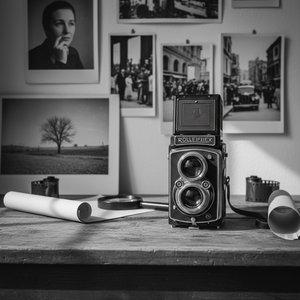
Monochrome Visions: Exploring the Aesthetic & Historical Significance of Black & White Photography
Explore the rich history & artistic power of black and white photography. From early techniques to iconic masters like Ansel Adams, discover why monochrome continues to captivate art lovers today. Expert insights for collectors.

Dark Masterpieces: 10 Iconic Paintings Dominated by Black Tones |
Explore 10 iconic paintings dominated by black tones, from Rembrandt’s chiaroscuro to Goya's dark expressions. Discover the stories behind these masterpieces & find museum-quality art reproductions for your home at .

