


 效果预览
效果预览
 购买手绘画作
 分享
分享 分享
分享
 详情
详情

 下载
下载
 相似作品
相似作品 X射线
X射线 幻灯片播放
幻灯片播放Two Figures

 展开详情
展开详情




P118B $10

P118H $10

P118W $10

P438Z $10

P508JH $12

P508YH $12

P805H $10

P805Z $10

P919BZ $10

P919G $10

P919XJ $10

P959ZH $10

P968JZ $12

W106C $8

W218G $10

W218JH $8

W218Y $10

W307PJ $10

W316G $10

W316PJ $8

W316Y $10

W398PJ $8

W4111J $10

W500HY $15

W500JH $15

W692G $12

W849H $8

W940BG $15

W953PJ $8




从与原作比例一致的预设尺寸中进行选择。

您可以输入自定义尺寸,以适配特定的画框或空间。如果您选择的尺寸与原图比例不符,我们将对作品进行裁剪,或通过镜像填充/纯色填充边缘的方式来扩展图像。在开始制作之前,我们会向您发送一份数字效果图供您确认。
请注意,屏幕上的预览并不能反映实际的裁剪或扩展效果。只有效果图才能准确展示最终的构图。
虽然我们提供定制尺寸,但为了保持原图比例,我们建议您从预设列表中选择尺寸。


 玻璃选项仅适用于110厘米以下的尺寸。

Two Figures
艺术微喷/版画
复制品尺寸
-


最终总价
$ 64


艺术家简介
A Life Painted in Bold Strokes: The Story of Carl Newman
Carl Newman (1858-1932) remains a compelling, if often overlooked, figure in the landscape of late 19th and early 20th century American art. Born in Germany – though details surrounding his earliest life are somewhat elusive – Newman’s artistic journey took root in Philadelphia, where he became a student at the prestigious Pennsylvania Academy of the Fine Arts in both 1876 and 1879. This foundational training would prove crucial, shaping his approach to figurative work that would later spark both admiration and controversy. He married Helene Zaun of Philadelphia in 1883, becoming a naturalized U.S. citizen shortly thereafter, solidifying his commitment to the American art scene. Newman wasn’t merely a painter; he was an educator, holding a teaching position at the Academy from 1892 to 1895, influencing a generation of artists with his distinctive style and perspective.The Figurative World and Controversial Themes
Newman's oeuvre is characterized by its focus on the human form, encompassing nudes, portraits, and landscapes. However, it was his treatment of these subjects – particularly his bold depictions of nude figures – that set him apart and often drew criticism. In an era marked by Victorian sensibilities, Newman’s work possessed a frankness and sensuality that challenged prevailing norms. He didn't shy away from portraying the body with a directness rarely seen at the time, leading to debates about propriety and artistic license. Beyond nudes, his portraits reveal a keen understanding of human psychology, capturing not just likeness but also an inner life within his subjects. His landscapes, while less frequently discussed, demonstrate a similar commitment to realism and emotional depth, often serving as backdrops for his figurative compositions.Influences and Artistic Development
Pinpointing specific artistic influences on Newman is complex, yet the echoes of European academic painting are clearly discernible in his early work. The emphasis on anatomical accuracy and classical composition points to a strong grounding in traditional techniques. However, Newman wasn’t simply a mimic; he gradually developed a style that incorporated elements of realism with a growing interest in abstraction. This can be seen in pieces like “Abstract Flowers in Left,” where geometric forms and muted tones suggest a move away from purely representational art. While not fully embracing Cubism or other avant-garde movements, Newman’s experimentation demonstrates an openness to new ideas and a desire to push the boundaries of his own artistic expression. His work also shares affinities with artists exploring similar themes of modernity and psychological realism, though he maintained a distinctly individual voice.Exhibitions and Legacy
Throughout his career, Carl Newman actively exhibited his work at the Pennsylvania Academy of Fine Arts from 1887 to 1921, consistently showcasing his evolving style and subject matter. These exhibitions provided a platform for both recognition and scrutiny, solidifying his presence within the Philadelphia art community. While he may not have achieved widespread fame during his lifetime, Newman’s work has experienced renewed interest in recent years. His paintings are now held in prestigious collections, including the Smithsonian American Art Museum, ensuring that his contributions to American art are preserved for future generations. The rediscovery of his artwork offers a valuable insight into the artistic debates and social tensions of the late 19th and early 20th centuries.A Lasting Impression
Carl Newman’s significance lies not only in his technical skill but also in his willingness to challenge conventions. He was an artist who dared to portray the human form with honesty and sensuality, even when it meant facing criticism and controversy. His work serves as a reminder that art is often at its most powerful when it provokes thought and challenges established norms. Newman’s legacy extends beyond his paintings; he represents a spirit of artistic independence and a commitment to exploring the complexities of the human experience. His bold style continues to resonate with contemporary audiences, offering a glimpse into a pivotal moment in American art history and inspiring artists to push the boundaries of their own creative expression.
carl newman
1858 - 1932
艺术家简介
- Artistic Movement Or Style: Figurative art, Cubism
- Date Of Birth: 1858
- Date Of Death: 1932
- Full Name: Carl Newman
- Nationality: American
- Notable Artworks:
- Two Figures
- Abstract Flowers in Left
- City Scene Abstract
- Place Of Birth: Germany
相关文章

White on Canvas: 10 Masterpieces & Timeless Elegance for Your Home Decor
Explore 10 iconic white paintings by Monet, Whistler & Rothko! Discover the stories behind these serene masterpieces and their impact on art history. Find museum-quality reproductions for your home decor at .

Dark Masterpieces: 10 Iconic Paintings Dominated by Black Tones |
Explore 10 iconic paintings dominated by black tones, from Rembrandt’s chiaroscuro to Goya's dark expressions. Discover the stories behind these masterpieces & find museum-quality art reproductions for your home at .

Shadow & Soul: Why Black & White Photography Remains the Ultimate Power Move in Modern Art
Discover why black & white photography remains a powerful force in contemporary art. Explore the impact of light, shadow, and texture through a visual journey of monochrome mastery and learn how to elevate your space with timeless grayscale aesthetics.
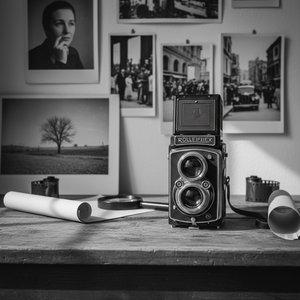
Monochrome Visions: Exploring the Aesthetic & Historical Significance of Black & White Photography
Explore the rich history & artistic power of black and white photography. From early techniques to iconic masters like Ansel Adams, discover why monochrome continues to captivate art lovers today. Expert insights for collectors.

Mastering the Line: A Comprehensive Expert Guide to Technical Precision and Expressive Depth in Drawing
Elevate your artistic practice with this expert guide to mastering the line. Discover advanced techniques in graphite, charcoal, and contour drawing designed for art students seeking technical precision and expressive depth in their fine art studies.



