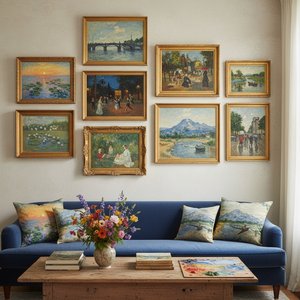
1872. Oil.

§ 1目录数据


§ 2摘要
藏品详情
Experience Claude Monet's 'Argenteuil,' capturing the vibrant waterfront scene of 1872. A quintessential Impressionist painting showcasing light, color, and Parisian charm.
 展开全文
展开全文
§ 3赏析
The Seine’s Embrace: Claude Monet's *Argenteuil*
Claude Monet’s *Argenteuil*, painted in 1872, isn’t merely a depiction of a riverside scene; it’s a shimmering distillation of light and atmosphere, a pivotal moment in the birth of Impressionism. More than just a landscape, it's an evocation of a specific time and place – Argenteuil, a charming town on the outskirts of Paris, where Monet found himself immersed in a vibrant artistic community and experimenting with radical new approaches to painting. The canvas captures a fleeting instant, a summer’s day by the Seine, imbued with a sense of joyful leisure and the subtle poetry of nature. The scene unfolds before us: a small boat glides across the water, reflecting the azure sky and the verdant hues of the surrounding trees. Scattered figures – likely friends and family – are enjoying the afternoon, their presence adding a touch of humanity to this otherwise serene vista. It’s a painting that invites the viewer to step into the scene, to feel the warmth of the sun and hear the gentle lapping of the water.
Composition and Technique: A Dance of Light
Monet's genius lies in his ability to capture not just what he *saw*, but how he *felt* about what he saw. *Argenteuil* exemplifies this perfectly, utilizing a technique that would become synonymous with Impressionism. Short, broken brushstrokes of pure color are layered upon one another, creating an effect of shimmering light and movement. Notice the way the blues and greens of the water seem to vibrate, reflecting the sky above. The trees in the background aren’t rendered with sharp detail; instead, they're suggested through a hazy wash of color, contributing to the overall sense of atmospheric depth. He deliberately avoided outlining forms, opting for an approach that prioritized capturing the *impression* of light and color rather than precise representation. This technique was revolutionary at the time, challenging the established academic tradition of detailed realism.
Historical Context: A Studio by the Seine
*Argenteuil* was painted during a crucial period in Monet’s artistic development. He had recently moved to Argenteuil, seeking inspiration and a respite from the bustle of Paris. This location proved invaluable, providing him with endless opportunities to study the changing effects of light on the Seine River. The painting reflects this environment – it's not just a picturesque scene; it’s a testament to Monet’s dedication to *plein air* painting—working directly from nature. The town itself was undergoing rapid change during this period, becoming increasingly popular with artists and intellectuals drawn by its proximity to Paris and its relaxed atmosphere. It’s fascinating to consider that Monet was not only capturing the beauty of Argenteuil but also documenting a pivotal moment in the town's own transformation.
Symbolism and Emotional Resonance
Beyond its technical brilliance, *Argenteuil* resonates with a profound sense of tranquility and joy. The leisurely activity depicted – the boat on the water, the figures enjoying themselves – speaks to a celebration of life and the pleasures of nature. The painting’s hazy atmosphere evokes a feeling of warmth and contentment, inviting the viewer to share in this idyllic scene. Some art historians have interpreted the painting as a reflection of Monet's own personal happiness during this period, a time when he was finding his artistic voice and establishing himself as a leading figure in the Impressionist movement. The subtle details – the reflections on the water, the dappled sunlight filtering through the trees – all contribute to an overall sense of harmony and beauty. It’s a painting that reminds us of the simple joys of life and the transformative power of art.
AllPaintingsStore offers exquisite hand-painted reproductions of *Argenteuil*, meticulously crafted by our talented artists using archival quality materials. Each reproduction captures the essence of Monet's original masterpiece, allowing you to bring this iconic work into your home or office with confidence. Explore our range of sizes and framing options to find the perfect addition to your collection.
常见问题与解答
克劳德·莫奈 的《Argenteuil》 建议用于何种场景?
克劳德·莫奈 的《Argenteuil》 的复制品非常适合用于 Statement。这一建议源于作品的主题、意境与色彩。
在哪里可以找到关于“Argenteuil”的指南?
针对 克劳德·莫奈 的《Argenteuil》,我们提供了一个 指南 页面:这是一份可打印的艺术品资料页,专为学生及课堂教学使用而设计。
建议将 克劳德·莫奈 的《Argenteuil》 悬挂在哪个空间?
克劳德·莫奈 的《Argenteuil》 推荐陈列于 Living Room。此建议是基于作品的主题、色彩与意境而定。


 切换至版画销售渠道


 对于任何边长超过 105 厘米(约 41 英寸)的艺术品或复制品,画框将以拆解后的组件形式发货。此方法可确保安全送达并防止运输过程中的损坏。