Oil On Canvas.

§ 1目录数据


§ 2摘要
藏品详情
 展开全文
展开全文
§ 3赏析
Poplars on the Epte: A Symphony of Light and Impression
Claude Monet’s “Poplars on the Epte,” painted in 1891, transcends mere landscape depiction; it embodies the very essence of Impressionism—a radical departure from academic conventions that sought to capture not just what was seen but how it *felt*. Situated along the tranquil Epte River near Giverny, France, this canvas presents a deceptively simple scene: slender poplar trees silhouetted against the muted hues of twilight.
Composition and Style Monet’s genius lies in his masterful manipulation of light. Unlike traditional artists who meticulously rendered details with precise shading, Monet employed loose brushstrokes—a hallmark of Impressionism—to convey the fleeting atmospheric conditions. The artist prioritized capturing the ephemeral quality of sunlight filtering through the foliage, resulting in a textured surface that vibrates with color and movement. Observe how Monet skillfully blends shades of yellow, orange, and green to depict the autumnal brilliance of the poplar leaves.
Historical Context “Poplars on the Epte” emerged during a pivotal moment in Monet’s artistic evolution. He was actively refining his Impressionist style, rejecting the rigid rules imposed by the Salon Académique—the official art exhibition of Paris—and embracing plein air painting as his primary method. This bold decision challenged established artistic dogma and cemented Monet's position as a pioneer of modern art.
Symbolism and Emotional Impact Beyond its aesthetic beauty, “Poplars on the Epte” carries subtle symbolic resonance. Poplar trees were frequently depicted by Monet in Giverny’s gardens, representing resilience and adaptability—qualities that mirrored his own unwavering dedication to artistic experimentation. The painting evokes a profound sense of serenity and contemplation, inviting viewers to immerse themselves in the beauty of nature and appreciate the transformative power of light.
Technique Monet achieved this ethereal effect through layering thin glazes of oil paint—a technique perfected by Impressionists—allowing colors to blend seamlessly on the canvas. The resulting luminosity is remarkable, capturing the subtle nuances of color that would have been lost in more conventional painting styles. This meticulous attention to detail underscores Monet’s commitment to conveying not just visual information but also emotional experience.
- Provenance: Musée Marmottan Monet
- Medium: Oil on Canvas
- Dimensions: Unknown
If you aspire to own a stunning reproduction of “Poplars on the Epte,” AllPaintingsStore.com offers exceptional quality prints crafted by classically trained artists, ensuring that you experience Monet’s legacy in its purest form.
常见问题与解答
建议将 克劳德·莫奈 的《Poplars on the Epte》 悬挂在哪个空间?
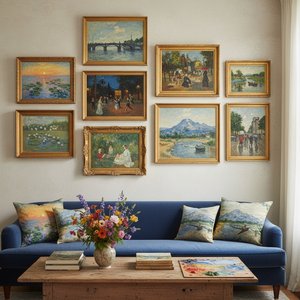
"Poplars on the Epte" 的复制品非常适合陈设于 Living Room 中。
"Poplars on the Epte" 的整体色调有多明亮?
克劳德·莫奈 的《Poplars on the Epte》 的视觉亮度为 brilliant,能够与目标空间的灯光完美融合。
"Poplars on the Epte" 的版画推荐用于何处?
克劳德·莫奈 的《Poplars on the Epte》 的复制品非常适合用于 Accent。这一建议源于作品的主题、意境与色彩。


 切换至版画销售渠道


 对于任何边长超过 105 厘米(约 41 英寸)的艺术品或复制品,画框将以拆解后的组件形式发货。此方法可确保安全送达并防止运输过程中的损坏。