

Acrylic On Canvas.

§ 1目录数据

§ 2摘要
藏品详情
Admire Claude Monet's 'untitled (1199)', capturing serene beauty with vibrant hues of red flowers and lush greenery – an iconic Impressionist masterpiece from Musée Marmottan Monet.
 展开全文
展开全文
§ 3赏析
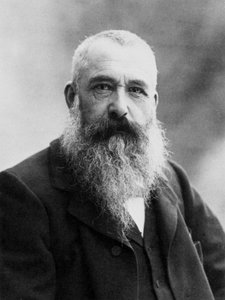
A Life Immersed in Light: The World of Claude Monet
Claude Monet, a name synonymous with Impressionism, wasn’t merely a painter of landscapes; he was a chronicler of fleeting moments, a poet of light and color. Born in Paris on November 14, 1840, his early life took an unexpected turn when his family relocated to Le Havre, Normandy, at the age of five. While initially destined for a commercial career by his father, young Claude’s innate artistic talent quickly surfaced, manifesting first in charcoal caricatures sold locally – a testament to both his skill and entrepreneurial spirit.
- Early Influences: Boudin and Impressionism's Genesis
- Formal Training & Artistic Development
- The Giverny Years: A Dedicated Pursuit of Light
- Monet’s Legacy: Shaping Modern Art
Early Influences: Boudin and Impressionism's Genesis
His encounter with Eugène Boudin proved pivotal. Boudin didn't just teach Monet *how* to paint; he instilled within him the revolutionary idea of painting en plein air—directly from nature—a practice that would define his entire artistic journey. Boudin championed this method, arguing passionately for capturing the immediacy of visual experience before it vanished. Monet embraced Boudin’s teachings wholeheartedly, recognizing them as foundational to his distinctive style.
Monet's initial works reflected a fascination with observation and experimentation. He diligently studied the effects of light on surfaces—particularly water—capturing the subtle shifts in hue and tone that characterize dawn, dusk, and midday. This dedication to capturing transient beauty would become a hallmark of Impressionism.
Formal Training & Artistic Development
Monet’s formal training began in Paris, briefly at the Académie Suisse and later under Charles Gleyre. It was here he forged lasting friendships with fellow artists like Auguste Renoir and Frédéric Bazille—artists who would become integral to the burgeoning Impressionist movement. Despite initial skepticism from his father regarding artistic pursuits, Monet persevered, honing his skills and refining his technique.
Gleyre’s instruction emphasized classical composition and academic color theory – a deliberate contrast to Boudin's advocacy for plein air painting. However, Monet skillfully blended these influences with his own intuitive understanding of light and color, establishing the groundwork for his groundbreaking artistic vision.
The Giverny Years: A Dedicated Pursuit of Light
From 1883, Monet relocated to Giverny, France—a move that would profoundly shape his artistic output. He purchased a sprawling estate and embarked on an ambitious landscaping project centered around a lily pond, meticulously recreating the Japanese garden he had admired during his travels.
This deliberate creation of an idealized natural environment served as constant inspiration for Monet’s paintings. He returned to Giverny repeatedly over several decades, documenting the changing seasons and capturing the ethereal beauty of the lily pads and surrounding foliage. The resulting series of canvases—particularly those depicting the water lilies—are considered among the most iconic examples of Impressionist art.
Monet’s Legacy: Shaping Modern Art
Monet's unwavering commitment to portraying light and color as perceived by the eye solidified his position as a pioneer of modern art. He challenged conventional artistic conventions, prioritizing subjective experience over objective representation—a revolutionary stance that paved the way for subsequent movements like Post-Impressionism and Fauvism.
His influence extends far beyond painting; Monet’s approach to artistic practice continues to inspire artists today who strive to capture the essence of visual perception. The enduring beauty and emotional resonance of his works attest to his genius as a translator of light, color, and atmosphere—a legacy that secures his place among the greatest painters in history.
常见问题与解答
克劳德·莫奈 的《untitled (1199)》 的色彩是鲜艳夺目还是柔和低调?
克劳德·莫奈 的《untitled (1199)》 的色彩饱和度为 Balanced Soft。
克劳德·莫奈 的《untitled (1199)》 描绘了怎样的场景,又传达了怎样的意境?
"untitled (1199)" 描绘了 garden landscape, woman walking, flowers red, impressionism, sunlight, tranquility, normandy,并传达出 Serene 的意境。
建议将 克劳德·莫奈 的《untitled (1199)》 悬挂在哪个空间?
克劳德·莫奈 的《untitled (1199)》 的推荐陈列空间为 Living Room。当然,该建议也可根据您的室内装饰进行灵活调整。


 切换至版画销售渠道


 对于任何边长超过 105 厘米(约 41 英寸)的艺术品或复制品,画框将以拆解后的组件形式发货。此方法可确保安全送达并防止运输过程中的损坏。


