


 效果预览
效果预览
 购买手绘画作
 分享
分享 分享
分享
 详情
详情

 下载
下载
 相似作品
相似作品 X射线
X射线 幻灯片播放
幻灯片播放Self-portrait


 展开详情
展开详情




































从与原作比例一致的预设尺寸中进行选择。

您可以输入自定义尺寸,以适配特定的画框或空间。如果您选择的尺寸与原图比例不符,我们将对作品进行裁剪,或通过镜像填充/纯色填充边缘的方式来扩展图像。在开始制作之前,我们会向您发送一份数字效果图供您确认。
请注意,屏幕上的预览并不能反映实际的裁剪或扩展效果。只有效果图才能准确展示最终的构图。
虽然我们提供定制尺寸,但为了保持原图比例,我们建议您从预设列表中选择尺寸。


 玻璃选项仅适用于110厘米以下的尺寸。

Self-portrait
艺术微喷/版画
复制品尺寸
-


最终总价
$ 64
藏品详情
相似艺术品


艺术家简介
The Crucible of Memory and Loss
Born amidst the lush landscapes of Sochi in 1927, Dmitry Zhilinsky’s early life was a tapestry woven with both profound cultural richness and devastating personal tragedy. The son of a family deeply embedded in the Russian intelligentsia, his world was shaped by the intellectual rigor of educators and the heavy shadow of Stalinist repression. In 1937, the arrest and execution of his father left an indelible scar upon his psyche, creating a melancholic resonance that would later infuse his canvases with a haunting, soulful depth. Growing up in an environment where art, literature, and science were inextricably intertwined, Zhilinsky inherited a legacy of excellence, being the grandson of Nadezhda Nemchinova, the sister of the legendary painter Valentin Serov. This lineage provided not just a connection to greatness, but a profound responsibility to the continuity of Russian artistic tradition.A Synthesis of Sacred and Secular Traditions
Zhilinsky’s artistic evolution was marked by an extraordinary ability to bridge disparate eras, creating a visual language that felt simultaneously ancient and modern. His training at the prestigious Moscow State Art Institute under masters such as Pavel Korin and Semyon Chuikov allowed him to master the technical precision of Soviet Realism while seeking something much more transcendent. He became a master alchemist, blending the austere, spiritual gravity of traditional Russian icon painting with the fluid, humanistic dynamism of the Renaissance. His work often featured:- The structural elegance and anatomical grace of Renaissance composition.
- The symbolic depth and expressive, flattened planes characteristic of Orthodox iconography.
- A meticulous observation of light and form that grounded his more abstract tendencies.
This unique stylistic synthesis allowed him to navigate the complexities of the Soviet era, finding a way to innovate without severing ties to the venerable past. His brushwork captured the tension between the tangible world and the spiritual realm, making his narratives feel both historically grounded and eternally relevant.
The Portraitist’s Vision and Lasting Legacy
While his repertoire spanned landscapes and still lifes, Zhilinsky achieved international renown through his masterful portraiture. He possessed a rare ability to capture the psychological essence of his subjects, ranging from fellow artists like Vladimir Favorsky to members of the Danish Royal Family, including Queen Margrethe II. These portraits, characterized by their formal dignity and subtle emotional complexity, are celebrated for their ability to transcend mere likeness. His work has found permanent homes in prestigious institutions, most notably the Tretyakov Gallery, ensuring that his contribution to the evolution of 20th-century art remains a vital part of the Russian canon. Through his life and work, Dmitry Zhilinsky remains a monumental figure who successfully navigated the turbulent currents of history to preserve and reimagine the sacred flame of artistic tradition.
dmitry d. zhilinsky
1927 - 2015 , Russia
艺术家简介
- Artistic Movement Or Style: Social realist; Icon painting & Renaissance
- Artists Or Movements Influenced By This Artist: ['Renaissance Painting']
- Artists Who Influenced This Artist:
- Valentin Serov
- Alexander Ivanov
- Date Of Birth: 1927
- Date Of Death: 2015
- Full Name: Dmitry D. Zhilinsky
- Nationality: Russian
- Notable Artworks:
- Self-Portrait
- Family at the Seaside
- Place Of Birth: Sochi, Russia
相关文章

The Enduring Legacy of Oil on Canvas: Technique, History & Aesthetic Impact
Explore the rich history & techniques of oil painting – from Renaissance masters to Impressionism. Discover pigments, layering methods, and why this timeless medium endures. Expert insights for artists & art enthusiasts.
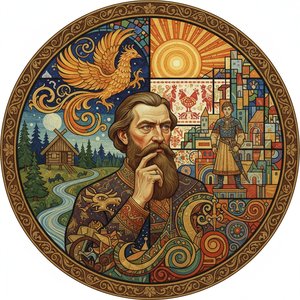
Ivan Bilibin: A Synthesis of Folklore, Modernism & National Identity in Russian Illustration
Explore the enchanting world of Ivan Bilibin, a master Russian illustrator who synthesized folklore, Art Nouveau & national identity. Discover his iconic fairy tale illustrations and legacy with AllPaintingsStore.

Oil on Canvas: A Historical & Technical Exploration of a Timeless Artistic Medium
Explore the rich history & enduring techniques of oil painting on canvas. Discover the science behind its longevity, conservation practices, and contemporary relevance. Expert insights for art enthusiasts.

Reflecting the Self: A History of Portraiture & Psychological Insight
Explore the fascinating history of self-portraiture from Renaissance masters like Dürer & Rembrandt to modern interpretations. Discover the psychological insights and artistic techniques behind these iconic works. Expert analysis for art enthusiasts.

The Enduring Power of Painting: A Historical & Contemporary Exploration of Form and Emotion
Explore the rich history & enduring techniques of oil painting with AllPaintingsStore. Discover masterpieces, learn about art collecting, and find authentic handmade reproductions crafted by skilled artists.



