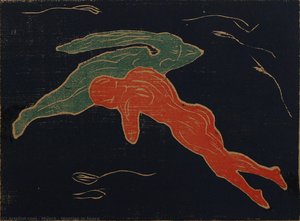
Acrylic On Canvas.

§ 1Catalogue data

§ 2Abstract
藏品详情
 展开全文
展开全文
§ 3Commentary
A Window into Melancholy: Examining Edvard Munch’s ‘Portrait of Dr. Daniel Jacobson’
Edvard Munch's 'Portrait of Dr. Daniel Jacobson,' a deceptively serene depiction amidst the turbulent currents of Expressionism, transcends mere likeness to offer a profound meditation on human connection and vulnerability. Painted in 1895 during Munch’s formative years as an artist—a period marked by intense personal struggles and burgeoning artistic experimentation—the canvas embodies the core tenets of his distinctive style: raw emotion rendered with meticulous detail against a backdrop of muted color palettes. This artwork isn't simply a portrait; it’s a snapshot of a moment, imbued with layers of psychological significance that continue to resonate with viewers today.- Subject Matter & Composition: The painting portrays Dr. Daniel Jacobson, a physician and close friend of Munch himself. Positioned centrally within the frame, Jacobson gazes directly at the viewer—a gaze laden with quiet contemplation and perhaps even apprehension—creating an immediate sense of intimacy. Munch skillfully employs triangular composition, anchoring Jacobson’s figure against a subtly textured yellow background that serves as both visual warmth and symbolic representation of inner stability.
- Style & Technique: Munch's masterful technique exemplifies Expressionism, prioritizing emotional intensity over realistic representation. He utilizes oil paints with impasto—thickly applied brushstrokes—to capture the contours of Jacobson’s face and clothing, conveying a palpable sense of physicality alongside psychological depth. The muted yellow hue contrasts sharply with darker shades used in the shadows, amplifying the dramatic effect and highlighting Munch's preoccupation with capturing fleeting expressions of emotion.
Historical Context: Expressionism and the Anxiety of Modernity
‘Portrait of Dr. Daniel Jacobson’ emerged during a pivotal moment in European art history—the rise of Expressionism. Born from disillusionment with Impressionistic ideals, Expressionist artists sought to depict subjective experience rather than objective observation, channeling inner turmoil into visual form. Munch's work reflects the broader anxieties of the era: concerns about illness, mortality, and the psychological impact of urbanization on the human spirit. The painting speaks directly to the pervasive sense of unease that characterized late 19th-century society—a feeling mirrored in Munch’s own life experiences.- Symbolism: Beyond its formal elements, ‘Portrait of Dr. Daniel Jacobson’ is rich in symbolic resonance. The yellow background can be interpreted as representing hope and resilience amidst despair – a subtle counterpoint to the melancholic mood conveyed by Jacobson's gaze. Furthermore, Munch’s meticulous rendering of Jacobson’s facial features—particularly his eyes—suggests an attempt to capture not just physical appearance but also inner thoughts and feelings.
Emotional Impact & Legacy
Ultimately, ‘Portrait of Dr. Daniel Jacobson’ succeeds in conveying a profound emotional impact. It invites viewers to contemplate the complexities of friendship, empathy, and the human condition—themes that remain powerfully relevant today. Munch's ability to distill intense emotion into a deceptively simple composition solidified his reputation as one of the most influential artists of the 20th century, establishing him as a pioneer of Expressionism and securing his place in art history’s canon. Its enduring appeal lies in its capacity to provoke introspection and illuminate the universal experience of confronting vulnerability and seeking solace in human connection.常见问题与解答
"Daniel Jacobson" 是如何平衡明暗对比的?
爱德华·蒙克 的《Daniel Jacobson》 的亮度记录为 bright,亮度值为 Gentle Luminance。
爱德华·蒙克 还有哪些别名?
关于《Daniel Jacobson》的创作者 爱德华·蒙克,其记录在案的其他名称包括 艾德華·蒙克, 埃德瓦尔·蒙克, 爱德华·克里斯蒂安·蒙克。
在“Daniel Jacobson”中,对比与和谐是如何交织融合的?
爱德华·蒙克 的《Daniel Jacobson》 的色彩分析呈现出一种 Bold 的对比与 Unified Palette 的和谐。



 切换至版画销售渠道


 对于任何边长超过 105 厘米(约 41 英寸)的艺术品或复制品,画框将以拆解后的组件形式发货。此方法可确保安全送达并防止运输过程中的损坏。