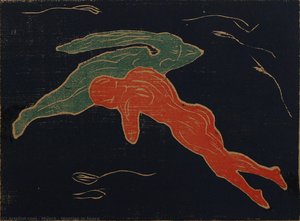
1895. Acrylic, 67.0 x 100.0 cm.

§ 1目录数据

- 67.0 x 100.0 cm


§ 2摘要
藏品详情
Edvard Munch’s haunting ‘Jealousy,’ painted in 1895, captures profound emotional turmoil with its expressive brushstrokes and symbolic depiction of longing—a masterpiece from the Symbolist movement inviting you to explore its evocative beauty.
 展开全文
展开全文
§ 3赏析
A Portrait Steeped in Unease: Exploring Edvard Munch’s ‘Jealousy’
- Subject Matter: Edvard Munch's “Jealousy,” painted in 1895, presents a psychologically charged portrait depicting a man and woman within an intimate domestic setting. The composition focuses intently on the male figure’s gaze—directed outwards, away from the viewer—suggesting preoccupation with something unseen yet powerfully felt.
- Style: Munch's style aligns firmly with Expressionism, prioritizing emotional intensity over realistic representation. He abandons conventional perspective and employs distorted forms to convey inner turmoil and psychological distress. The painting eschews polished surfaces for a deliberately rough texture, mirroring the turbulent emotions depicted.
Technique: Color and Texture as Vehicles of Emotion
- Color Palette: Munch utilizes a muted color palette dominated by earthy tones—browns, ochres, and reds—creating an atmosphere of subdued melancholy. However, splashes of crimson appear prominently on the woman’s dress and vase, injecting bursts of passionate energy into the scene. These contrasting hues amplify the underlying tension and underscore the emotional core of the artwork.
- Brushwork: Munch employs loose, agitated brushstrokes that contribute significantly to the painting's expressive quality. Thick impasto—heavy application of paint—creates a palpable textural surface, emphasizing the artist’s desire to capture not just what he sees but how he feels. The visible brushstrokes convey movement and instability, mirroring the psychological state of the depicted individuals.


 切换至版画销售渠道


 对于任何边长超过 105 厘米(约 41 英寸)的艺术品或复制品,画框将以拆解后的组件形式发货。此方法可确保安全送达并防止运输过程中的损坏。