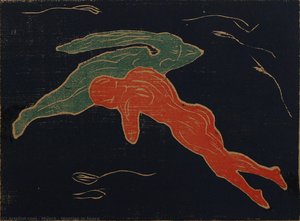
1895. Acrylic On Canvas.

§ 1Catalogue data


§ 2Abstract
藏品详情
 展开全文
展开全文
§ 3Commentary
Madonna (Munch) – A Symphony of Anxiety and Divine Grace
Edvard Munch’s “Madonna” isn't merely a depiction of the Virgin Mary; it’s a profound meditation on femininity, mortality, and the unsettling beauty found within existential dread. Created in 1895 during Munch’s formative years as an Expressionist artist—a movement characterized by prioritizing subjective emotion over objective representation—the painting embodies the core tenets of this artistic philosophy. It stands apart from traditional religious iconography, rejecting idealized serenity for a visceral portrayal of vulnerability and psychological turmoil.- Style: Munch’s Madonna exemplifies Expressionism's distinctive aesthetic. Bold colors clash jarringly – crimson dominates against muted blues and yellows—creating an atmosphere of tension and unease. Distortion is paramount; figures are rendered with elongated limbs and flattened planes, mirroring the artist’s internal struggles.
- Technique: Munch employed tempera on canvas, a medium known for its luminosity and permanence. However, he applied it in a manner that prioritized textural richness and expressive brushstrokes. Thick impasto—heavy layering of paint—emphasizes the physicality of the image and contributes to its unsettling quality.
- Historical Context: Munch’s artistic output coincided with a period of intense intellectual ferment in Europe. Nietzsche's proclamation of “God is dead” challenged established moral frameworks, fueling anxieties about meaninglessness and fragmentation. Munch wrestled with personal demons—including unresolved trauma from his childhood—and channeled these experiences into his art.



 切换至版画销售渠道


 对于任何边长超过 105 厘米(约 41 英寸)的艺术品或复制品,画框将以拆解后的组件形式发货。此方法可确保安全送达并防止运输过程中的损坏。