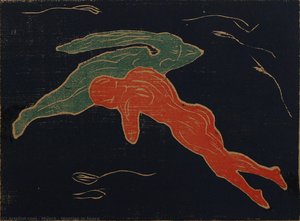
Acrylic On Canvas.

§ 1目录数据

§ 2摘要
藏品详情
 展开全文
展开全文
§ 3赏析
A Portrait of Unease: Decoding Edvard Munch’s “Untitled (1532)”
Edvard Munch's "Untitled (1532)" isn’t merely a painting; it’s a visceral distillation of existential dread, rendered with the unsettling brilliance characteristic of Expressionism. Captured sometime around 1908, this piece exemplifies Munch’s relentless pursuit to translate inner turmoil onto canvas—a quest born from deeply personal experiences and fueled by an unwavering fascination with psychological landscapes. The image depicts a woman standing before a window, her posture conveying both contemplation and palpable vulnerability. Her hands rest upon the windowsill, suggesting a yearning for connection or perhaps simply seeking solace against the encroaching darkness of the scene.- Subject Matter: The central figure embodies solitude and introspection, framed by the symbolic presence of a window—a recurring motif in Munch’s oeuvre representing portals to both external reality and internal consciousness.
- Style & Technique: Munch's masterful use of expressive brushstrokes dominates the composition, creating a textured surface that vibrates with emotion. Bold swathes of color – predominantly reds and yellows – clash dramatically against muted blues and greens, mirroring the turbulent psychological state depicted. The artist’s technique prioritizes conveying feeling over precise representation, prioritizing emotional impact above visual accuracy.
Historical Context: Embracing Anxiety in Fin-de-Siècle Norway
“Untitled (1532)” emerged during a period of profound societal upheaval—the Fin-de-Siècle era in Norway—marked by anxieties surrounding industrialization, urbanization, and the decline of traditional values. Munch himself wrestled with personal demons – including familial illness and psychological instability – mirroring the broader cultural preoccupation with mortality and mental anguish prevalent at the time. This artwork stands as a testament to Expressionism’s core mission: to confront uncomfortable truths about human experience and capture the raw essence of emotion.- Symbolism: The window itself symbolizes both confinement and aspiration, hinting at the woman's desire for escape from an oppressive environment while simultaneously acknowledging her inescapable connection to it.
- Color Palette: Munch’s deliberate use of color—particularly fiery reds—evokes feelings of passion, danger, and impending doom, amplifying the painting’s emotional intensity.
Emotional Resonance: A Window into the Soul
More than just a visual depiction, “Untitled (1532)” operates on an emotional level, inviting viewers to confront their own anxieties about existence. The woman's gaze—directed outwards yet seemingly lost—captures the universal experience of confronting uncertainty and grappling with profound questions about life’s meaning. Munch’s ability to translate psychological complexity into visual form solidified his place as one of the most influential artists of the 20th century, inspiring generations of creatives to explore the depths of human emotion. The painting's enduring power lies in its unflinching portrayal of vulnerability and its poignant reminder that beauty can coexist with sorrow—a duality perfectly encapsulated within Munch’s unforgettable masterpiece. Explore this evocative artwork at AllPaintingsStore.com for high-quality reproductions.常见问题与解答
"untitled (1532)" 的主题与 爱德华·蒙克 常有的创作主题有何关联?
爱德华·蒙克 的创作主题常涉及 symbolic expressionism, psychological angst, mortality fears, norwegian landscape, munch legacy;而《untitled (1532)》则聚焦于 woman, window, interior, spoon, darkness, emotion, fear, landscape。
爱德华·蒙克 的《untitled (1532)》 的亮度是多少?
"untitled (1532)" 的色彩呈现出 Dark 的亮度。
爱德华·蒙克 的《untitled (1532)》 是油画、素描还是版画?
“untitled (1532)”是一件WallArt作品。


 切换至版画销售渠道


 对于任何边长超过 105 厘米(约 41 英寸)的艺术品或复制品,画框将以拆解后的组件形式发货。此方法可确保安全送达并防止运输过程中的损坏。