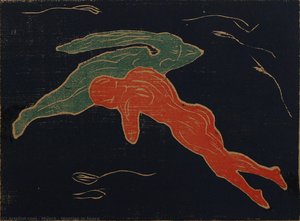
Oil On Canvas.

§ 1目录数据


§ 2摘要
藏品详情
Explore Edvard Munch’s "untitled (4770)", a haunting Expressionist oil painting of isolation & emotion. Discover its dramatic colors, loose brushwork & symbolic depth.
 展开全文
展开全文
§ 3赏析
A Descent into Melancholy: Unpacking Edvard Munch’s “Untitled (4770)”
Edvard Munch's "Untitled (4770)," painted in 1893, isn’t merely a depiction of a seated man; it’s a visceral plunge into the heart of human anxiety and isolation. This oil on canvas work, now residing within the Munch Museum’s collection in Oslo, stands as a cornerstone of Expressionism, embodying the movement's core tenets – not through objective representation, but through the raw conveyance of inner turmoil. The painting immediately arrests the viewer with its unsettling palette: predominantly blues and yellows clash dramatically, creating an atmosphere thick with unease and impending doom. These aren’t the comforting hues of a serene landscape; they are the colors of fever dreams and suppressed emotions.The Figure and Its Setting – A Study in Claustrophobia
The central figure, rendered in broad, almost brutal strokes, is seated at a table within what appears to be a dimly lit café or restaurant. However, this setting isn’t inviting; it feels oppressive, claustrophobic even. The space is deliberately shallow, the perspective skewed and distorted – a technique Munch frequently employed to heighten the sense of unease. Notice how the figures in the background are rendered as dark, indistinct masses, almost swallowed by shadow. They represent an unseen audience, perhaps judgmental or simply indifferent to the man’s plight. His posture—slumped, head bowed—suggests profound introspection and a deep-seated loneliness. The table itself, laden with a wine bottle and glass, feels like a fragile barrier against the encroaching darkness, offering little solace.Brushstrokes as Emotion – A Technique of Raw Feeling
Munch’s technique is deliberately loose and gestural, prioritizing emotional impact over meticulous detail. The brushwork is visible, almost frantic in places, mirroring the agitated state of mind he sought to capture. Thick impasto builds up on the canvas, creating a palpable texture that invites the viewer to feel the weight of the scene. Observe how the colors bleed into one another, blurring the lines between form and feeling. This isn’t about recreating reality; it's about translating an internal experience onto the surface of the painting. The use of color is particularly significant – the blues evoke sadness and despair, while the yellows suggest a flickering hope desperately struggling against encroaching darkness.Symbolism and the Echoes of Munch’s Life
“Untitled (4770)” resonates deeply with Munch's personal history and artistic preoccupations. Born into a family marked by illness and loss – his mother succumbed to tuberculosis when he was five, and his sister Sophie died from the same disease at fifteen – Munch grappled throughout his life with themes of mortality, grief, and psychological distress. The painting can be interpreted as an embodiment of this inner landscape, reflecting the pervasive sense of anxiety that haunted him. The solitary figure represents a universal experience of isolation and vulnerability, while the shadowy figures in the background symbolize the judgmental gaze of society or perhaps the inescapable weight of one’s own demons. It's often linked to his "Frieze of Life" series, exploring fundamental human emotions.A Timeless Portrait of Human Anguish
“Untitled (4770)” transcends its historical context and continues to resonate powerfully with contemporary viewers. It’s a stark reminder of the fragility of the human psyche and the enduring struggle against loneliness, despair, and existential dread. More than just a painting, it's an invitation to confront our own inner anxieties and to acknowledge the shared experience of vulnerability that connects us all. Its raw emotional honesty and masterful execution solidify its place as one of Munch’s most compelling and enduring works – a haunting testament to the power of art to capture the darkest corners of the human heart.常见问题与解答
爱德华·蒙克 的《untitled (4770)》 属于哪种艺术流派,又处于哪个时代?
爱德华·蒙克 的《untitled (4770)》 属于 Expressionism 流派,创作于其作者的 19世纪 时期。
如何预览爱德华·蒙克 的《untitled (4770)》的复制品?
通过“untitled (4770)”的效果预览页面,您可以在下单前预览艺术品。
Expressionism 流派的作品 "untitled (4770)" 源自哪个国家?
这件Expressionism风格的作品《untitled (4770)》出自一位出生于瑞典的艺术家之手。


 切换至版画销售渠道


 对于任何边长超过 105 厘米(约 41 英寸)的艺术品或复制品,画框将以拆解后的组件形式发货。此方法可确保安全送达并防止运输过程中的损坏。