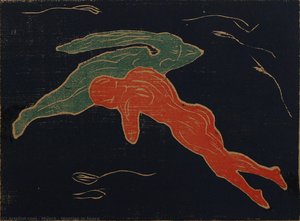
Acrylic On Canvas.

§ 1目录数据

§ 2摘要
藏品详情
 展开全文
展开全文
§ 3赏析
A Portrait of Unease: Decoding Munch’s “Untitled (6157)”
Edvard Munch's "Untitled (6157)" stands as a cornerstone of Expressionism, capturing not merely an image but a visceral experience of psychological distress. Painted circa 1908, this portrait transcends mere representation; it delves into the depths of human emotion—fear, anxiety, and vulnerability—themes that resonate powerfully even today. The artwork depicts a man seated in a chair, his hands clasped together in a gesture of contemplation or perhaps apprehension. He wears a suit and tie, suggesting a formal setting yet conveying an aura of inner turmoil. Munch’s masterful use of color – predominantly muted reds and yellows – amplifies the painting's unsettling atmosphere. These hues aren’t merely decorative; they symbolize passion, danger, and impending doom, mirroring the psychological state of the subject.- Style: Expressionism – Munch’s approach prioritizes conveying emotion over objective realism.
- Technique: Oil on canvas – Munch employed a thick impasto technique, layering paint onto the surface to create textural depth and heighten visual impact. This deliberate roughness contributes to the painting's sense of immediacy and unease.
- Historical Context: Created during a period marked by significant social upheaval and intellectual ferment—the dawn of the 20th century—"Untitled (6157)" reflects anxieties surrounding modernity, illness, and mortality prevalent in European society at the time. Munch himself wrestled with personal demons, including mental instability, which undoubtedly informed his artistic vision.
Symbolism Within Silence: The Vase and Its Significance
The inclusion of a vase within the composition is laden with symbolic meaning. Traditionally associated with beauty and tranquility, the vase serves as a jarring contrast to the man’s palpable distress. This juxtaposition underscores Munch's preoccupation with duality—the tension between outward appearances and inner realities—a central concept in Expressionist art. The vase isn’t merely an ornamental element; it represents a fragile equilibrium threatened by overwhelming emotion. Its placement on the right side of the canvas subtly directs the viewer’s gaze away from the man’s face, emphasizing his isolation and vulnerability. Considerations for Interior Design:Munch’s Legacy: An Artist Haunted by Emotion
Edvard Munch (1863-1944), a Norwegian painter whose life was profoundly shaped by loss and mental illness, remains one of the most influential artists of the modern era. His exploration of human psychology—particularly fear and anxiety—established him as a pioneer of Expressionism, influencing generations of subsequent artists. “Untitled (6157)” exemplifies Munch’s unwavering commitment to portraying inner experience with uncompromising honesty. It's a testament to his ability to transform personal trauma into universal symbols of human suffering, cementing his place in art history as an artist who dared to confront the darkest recesses of the human psyche. The painting continues to captivate audiences worldwide, prompting reflection on our own vulnerabilities and anxieties—a timeless reminder of Munch’s enduring artistic legacy. Explore More:常见问题与解答
爱德华·蒙克 的《untitled (6157)》 的色彩构图是如何构建的?
爱德华·蒙克 的《untitled (6157)》 的色彩构成将 Statement 的对比与 Strong Color Unity 的和谐融为一体。
"untitled (6157)" 是否属于公有领域作品?
爱德华·蒙克 的《untitled (6157)》 属于 属于公有领域 —— 其版权已过期。此版权状态决定了该作品图像的复制方式。
爱德华·蒙克 的《untitled (6157)》 建议用于何种场景?
爱德华·蒙克 的《untitled (6157)》 的复制品非常适合用于 Accent。这一建议源于作品的主题、意境与色彩。


 切换至版画销售渠道


 对于任何边长超过 105 厘米(约 41 英寸)的艺术品或复制品,画框将以拆解后的组件形式发货。此方法可确保安全送达并防止运输过程中的损坏。