


 效果预览
效果预览
 分享
分享 分享
分享
 详情
详情 指南
指南

 下载
下载
 相似作品
相似作品 X射线
X射线 幻灯片播放
幻灯片播放 统计数据
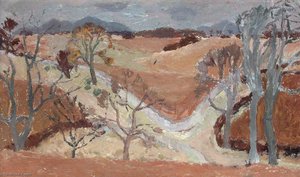
统计数据View of a Meadow with Trees in Blossom
 Acrylic On Canvas
- WallArt
 51.0 x 66.0 cm
 County Hall
 展开详情
展开详情
手工油画复制品
由我们的艺术家按需定制,为您提供您所选尺寸及画框的布面手工油画。 ( 切换至版画销售渠道 切换至数字图像销售渠道)




P118B $10

P118H $10

P118W $10

P438Z $10

P508JH $12

P508YH $12

P805H $10

P805Z $10

P919BZ $10

P919G $10

P919XJ $10

P959ZH $10

P968JZ $12

W106C $8

W218G $10

W218JH $8

W218Y $10

W307PJ $10

W316G $10

W316PJ $8

W316Y $10

W398PJ $8

W4111J $10

W500HY $15

W500JH $15

W692G $12

W849H $8

W940BG $15

W953PJ $8




从与原作比例一致的预设尺寸中进行选择。

您可以输入自定义尺寸,以适配特定的画框或空间。如果所选尺寸与原图比例不符,我们将通过裁剪作品或添加手绘元素来扩展画面。数字样稿将在制作开始前发送给您确认。
请注意,屏幕预览无法准确反映实际的裁剪或扩展效果,只有样稿才能真实呈现最终的构图。
虽然我们提供定制尺寸服务,但为了保留原作比例,建议您从预设列表中选择尺寸。
下单后,AllPaintingsStore.com 团队将通过电子邮件联系客户获取具体要求,并提供效果预览图。


 玻璃选项仅适用于110厘米以下的尺寸。

View of a Meadow with Trees in Blossom
复制材质
复制品尺寸
-


最终总价
$ 258
A Symphony of Springtime: Edward Archibald Brown’s Meadow Landscape
Edward Archibald Brown's "Meadow Landscape," painted sometime before 1935, stands as a testament to the enduring fascination with capturing the beauty and tranquility of the English countryside. More than just a depiction of flora and fauna, it embodies a profound understanding of light and color—principles honed through an early apprenticeship under Francis Hadow, whose photographic explorations instilled in Brown a meticulous attention to detail and atmospheric nuance.The Photographer's Influence: Mastering Light and Texture
Brown’s formative years were profoundly impacted by his collaboration with photographer Francis Hadow. Recognizing the transformative power of photographic techniques—particularly the careful layering of tones and textures—he adopted a method that prioritized capturing fleeting moments of visual sensation. This approach extended beyond mere representation; it demanded an artist's ability to distill complex atmospheric conditions into manageable color palettes, mirroring Hadow’s own dedication to precision and observation. The resulting paintings possess a remarkable luminosity, achieved through painstaking blending and glazing techniques—a deliberate departure from the more conventional brushstrokes favored by many of his contemporaries.A Pre-Raphaelite Vision: Symbolism Rooted in Medieval Tradition
Brown's artistic sensibilities aligned closely with the Pre-Raphaelite movement, inheriting its reverence for medieval art and literature and its commitment to idealized beauty. Unlike the Romantic painters who sought dramatic grandeur, Brown focused on conveying a sense of serene contemplation—a deliberate counterpoint to the turbulent upheavals of his era. The meadow itself serves as a powerful symbol—representing fertility, renewal, and the cyclical rhythms of nature. Scattered amongst the blossoms are ancient oaks, representing strength, endurance, and connection to the past. These elements intertwine seamlessly, creating an image that transcends mere visual pleasure; it invites viewers to contemplate themes of spirituality and timelessness.Historical Context: England Under Edward VII
Painted during the reign of Edward VII (1901-1910), Brown’s landscape reflects the optimism and confidence characteristic of Britain's Belle Époque—a period marked by industrial progress, imperial expansion, and a burgeoning cultural elite. The painting captures the spirit of this era—one eager to celebrate beauty and harmony amidst the complexities of modern life. Furthermore, it aligns with broader trends in British art at the time—namely, a renewed interest in landscape painting as a means of expressing moral and spiritual values.Emotional Resonance: Capturing the Essence of Tranquility
Ultimately, “Meadow Landscape” succeeds in conveying an unparalleled sense of tranquility—a feeling that lingers long after viewing the artwork. The soft hues of pink and lavender dominate the palette, creating an ethereal glow that envelops the scene. Brown’s masterful brushwork captures the subtle movements of air and light—transforming a simple meadow into a realm of profound beauty and contemplation. It's a painting designed not merely to please the eye but to nourish the soul—a timeless reminder of the restorative power of nature and the enduring allure of Pre-Raphaelite artistic vision.相似艺术品



艺术家简介
Edward Archibald Brown: Weaver of Light and Shadow
Edward Archibald Brown, a name perhaps less instantly recognizable than some of his Pre-Raphaelite contemporaries, nevertheless possessed a singular vision – one deeply rooted in the evocative landscapes of England and imbued with a profound understanding of light and color. Born in 1866 in London, Brown’s artistic journey was shaped by a meticulous apprenticeship under the renowned photographer Francis Hadow, an experience that fundamentally altered his approach to seeing and representing the world. This early exposure to photographic techniques – particularly the careful manipulation of tones and textures – instilled in him a remarkable sensitivity to detail and a desire to capture fleeting moments of atmospheric effect.
Brown’s artistic development unfolded gradually, initially exploring watercolor landscapes before gravitating towards oil painting. His formative years were spent absorbing the influence of the Pre-Raphaelite Brotherhood, though he never fully embraced their overtly romantic or mythological themes. Instead, he found his strength in depicting the quiet beauty of the English countryside – the rolling hills of Cornwall, the misty moors of Yorkshire, and the serene shores of Dorset. He was particularly drawn to scenes of rural life, capturing the rhythms of daily existence with a remarkable degree of realism and emotional resonance.
The Language of Light
What distinguishes Brown’s work is his masterful manipulation of light. He wasn't simply aiming for accurate representation; he sought to convey the *feeling* of light – its warmth, its coolness, its ability to transform a scene with subtle shifts in hue and tone. This is most evident in paintings like “Stormy Evening” (1903) and “Lock Keeper Cottage” (1907), both iconic works that exemplify his unique style. He employed a broken color technique, layering thin washes of paint to build up complex gradations of light and shadow. His brushstrokes were often loose and expressive, creating a sense of movement and atmosphere. He studied the effects of weather with an almost scientific precision, meticulously observing how sunlight filtered through clouds or reflected off water surfaces.
Brown’s technical skill was further enhanced by his understanding of color theory. He wasn't afraid to use unexpected combinations – vibrant blues against muted greens, fiery oranges against somber browns – to create a sense of visual drama and emotional intensity. His palette was often restrained, favoring subtle harmonies rather than bold contrasts, yet within this restraint lay a remarkable power to evoke mood and atmosphere.
Influences and Artistic Connections
While Brown’s work is firmly rooted in the Pre-Raphaelite tradition, he also drew inspiration from other sources. The landscapes of J.M.W. Turner, with their atmospheric effects and emphasis on light, were undoubtedly a significant influence. He was also fascinated by the works of Constable, particularly his depictions of rural England. Furthermore, Brown’s time spent working as a photographer informed his approach to painting, encouraging him to see the world in terms of shapes, tones, and textures.
He maintained close friendships with several prominent artists of his era, including William Denselow and Frank Bramley. These artistic connections provided opportunities for mutual inspiration and critique, contributing to the vibrant cultural landscape of late Victorian England. His work was exhibited regularly at the Royal Academy and other prestigious galleries, gaining him a modest but loyal following.
Major Achievements and Legacy
Brown’s most celebrated works include “Stormy Evening,” “Lock Keeper Cottage,” and his series of paintings depicting the Cornish coast. These landscapes are characterized by their atmospheric depth, their subtle color harmonies, and their evocative portrayal of rural life. While he never achieved widespread fame during his lifetime, Brown's work is now recognized as a significant contribution to British landscape painting. His meticulous observation, his masterful manipulation of light, and his quiet sensitivity have secured him a place among the most accomplished artists of the Pre-Raphaelite era.
His legacy lies not in grand pronouncements or revolutionary innovations, but rather in the enduring beauty and emotional resonance of his paintings – works that invite viewers to pause, reflect, and connect with the quiet wonders of the English countryside. Edward Archibald Brown’s art is a testament to the power of observation, the importance of light, and the timeless appeal of simple beauty.

edward archibald brown
1866 - 1935
艺术家简介
- Artistic Movement Or Style: Pre-Raphaelite
- Artists Or Movements Influenced By This Artist: ['Pre-Raphaelites']
- Artists Who Influenced This Artist: ['Burne-Jones']
- Date Of Birth: 1866
- Date Of Death: 1935
- Full Name: Edward Archibald Brown
- Nationality: British
- Notable Artworks:
- Stormy Evening
- Lock Keeper Cottage
- Place Of Birth: London, England
相关文章

Pre-Raphaelite Romanticism: A Guide to Vivid Detail and Medieval Beauty in Victorian Art
Explore the vivid detail and medieval beauty of Pre-Raphaelite Romanticism. Discover the history of masters like Rossetti and Millais through our expert guide to Victorian art, perfect for collectors and professionals seeking authentic, museum-quality reproductions.

