

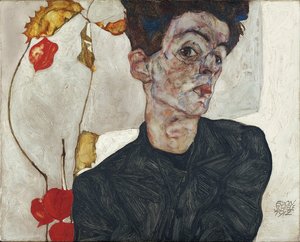
1913. Acrylic On Canvas, 89.0 x 90.0 cm.

§ 1Catalogue data

- 89.0 x 90.0 cm


§ 2Abstract
藏品详情
Experience the raw emotion of Egon Schiele’s ‘The Bridge,’ a pivotal Expressionist masterpiece exploring themes of transition and introspection. Explore stunning reproductions at WikiArt.
 展开全文
展开全文
艺术家简介
探索奥地利表现主义画家埃贡·席勒 (1890-1918) 的充满情感的艺术:大胆肖像、心理主题和独特的线条。现在就发现他的杰作!席勒以其对死亡、性与孤立的深刻描绘而闻名,作品如《自画像(带石刁柏)》等,是20世纪早期艺术的重要代表。
§ 3Commentary
A Window Into Expressionism: Examining Egon Schiele’s “The Bridge”
Egon Schiele’s “The Bridge,” painted in 1913, stands as a cornerstone of early 20th-century Expressionist art—a movement that sought to convey raw emotion and psychological intensity rather than merely depicting the external world. More than just a landscape scene, it's a profound meditation on human experience, rendered with Schiele’s distinctive blend of bold lines and unsettling realism.
- Historical Context: The painting emerged during a period of seismic change in European art history. Artists like Schiele were reacting against the academic conventions of their time, rejecting idealized representations for unflinching portrayals of human vulnerability and anxiety. The influence of Cubism is palpable in the geometric structuring of the bridge itself, demonstrating Schiele’s willingness to experiment with innovative artistic approaches.
- Composition & Symbolism: Schiele meticulously crafted a scene dominated by two figures—one standing rigidly, one seated passively—positioned beneath a starkly rendered bridge. The bridge serves as a powerful symbol of transition and connection, representing the precarious balance between stability and upheaval. Its angular lines emphasize this duality, mirroring the internal struggles reflected in the postures of the subjects.
- Technique: Executed in oil on canvas, “The Bridge” showcases Schiele’s masterful control over texture and color. Thick impasto brushstrokes contribute to a palpable sense of physicality, conveying both vulnerability and resilience. The muted palette—primarily browns and reds—intensifies the emotional impact of the artwork, creating an atmosphere of quiet contemplation punctuated by moments of unsettling tension.
- The Figure’s Significance: Notably, the seated figure is often interpreted as Schiele's self-portrait, embodying introspection and confronting mortality. The posture conveys a sense of stillness amidst inner turmoil—a characteristic motif in Schiele’s oeuvre that speaks to his preoccupation with existential themes.
- Legacy & Influence: “The Bridge” cemented Schiele’s reputation as one of the most important artists of his generation and profoundly impacted subsequent artistic movements, including Surrealism and Absurdism. Its uncompromising honesty and psychological depth continue to resonate with viewers today, reminding us of art's capacity to explore the darkest recesses of human consciousness.
A reproduction of “The Bridge” offers an exceptional opportunity to bring Schiele’s visionary aesthetic into your home or workspace—capturing not only its striking visual qualities but also the enduring emotional power that defines this iconic masterpiece.
常见问题与解答
《The Bridge》的创作者 埃贡·席勒 是否还有其他艺名?
关于《The Bridge》的创作者 埃贡·席勒,其记录在案的其他名称包括 埃贡·莱奥·阿道夫·路德维希·席勒。
如何描述 埃贡·席勒 的《The Bridge》 的意境?
“The Bridge”营造出一种Dramatic的氛围。
"The Bridge" 的色彩饱和度如何?
埃贡·席勒 的《The Bridge》 的色彩饱和度为 Balanced Soft。


 切换至版画销售渠道


 对于任何边长超过 105 厘米(约 41 英寸)的艺术品或复制品,画框将以拆解后的组件形式发货。此方法可确保安全送达并防止运输过程中的损坏。


