

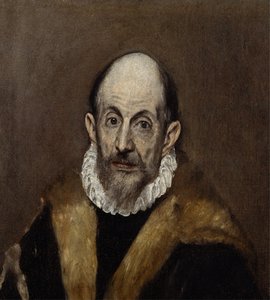
1610. Acrylic On Canvas, 70.0 x 62.0 cm. 普拉多博物馆.

§ 1目录数据

- 70.0 x 62.0 cm


§ 2摘要
藏品详情
 展开全文
展开全文
艺术家简介
埃尔·格列柯(El Greco),西班牙文艺复兴时期杰出画家,以其独特的曼陀罗风格和对宗教题材的深刻诠释闻名。他的作品如《奥尔加兹伯爵葬礼》等,融合了拜占庭传统、威尼斯色彩与罗马风格,预示着未来表现主义和立体主义的到来。
§ 3赏析
El Greco: A Master of Dramatic Expression
Doménikos Theotokópoulos, universally known as El Greco (meaning “the Greek”), stands as one of the most singular figures in the history of Western art. His dramatic and intensely emotional works bridged the gap between the Renaissance and the Baroque periods, while simultaneously forging a distinctly personal style—a style that continues to captivate audiences centuries later. This remarkable artist’s oeuvre defies easy categorization, blending Byzantine traditions with innovations drawn from Venetian Mannerism and Florentine Renaissance influences, resulting in an unparalleled visual language.The Painting: Jerónimo de Cevallos
“Jerónimo de Cevallos” by El Greco is a captivating portrait executed in 1613 during his final years in Toledo, Spain. Measuring 70 x 62 cm and housed at the Museo del Prado, this oil on canvas piece exemplifies El Greco’s signature technique—tortuously elongated figures rendered with vibrant pigmentation that borders on hallucinatory intensity. The artist skillfully employs chiaroscuro, creating a dramatic contrast between light and dark to sculpt the subject's form and imbue it with palpable emotion.
The Artist: El Greco (Doménikos Theotokopoulos)
Born in Crete around 1541, Doménikos Theotokópoulos embarked on a transformative artistic journey that began within the confines of Byzantine iconography. Trained rigorously in Constantinople’s monasteries, he mastered the conventions of Byzantine art—precise detail, symbolic color palettes rooted in theological significance, and an unwavering devotion to portraying spiritual ideals. However, El Greco's restless spirit propelled him eastward to Venice and Rome, where he absorbed the dynamism of Mannerism and the opulent splendor of the Venetian Renaissance.
Symbolic Significance & Artistic Context
El Greco’s stylistic choices were initially met with bewilderment by his contemporaries. Yet, his work resonated deeply with artists of subsequent generations—particularly those influenced by Romanticism—who recognized in it a profound expression of inner turmoil and spiritual yearning. The elongated figures, often depicted in poses that defy anatomical realism, serve as conduits for conveying psychological states—fear, sorrow, ecstasy—rather than merely representing physical likenesses. Furthermore, the dark background amplifies the luminosity of the subject’s flesh tones, creating an illusionistic depth that enhances the painting's dramatic impact.
Relevance and Legacy
The Museo del Prado, established in Madrid during the reign of Philip II, stands as one of Europe’s premier art museums—a repository of masterpieces spanning from the Gothic to the Romantic eras. El Greco’s “Jerónimo de Cevallos” occupies a prominent position within its collection, alongside other seminal works by Titian, Rubens and Velázquez. Its enduring appeal testifies to El Greco's genius as an artist who transcended stylistic boundaries and achieved a level of expressive power unmatched by his peers—a legacy that continues to inspire admiration and scholarly debate.
常见问题与解答
埃尔·格列柯 的《Jerónimo de Cevallos》 的整体基调是什么?
“Jerónimo de Cevallos”营造出一种Dramatic的氛围。
考虑到其色彩搭配,建议将 埃尔·格列柯 的《Jerónimo de Cevallos》 悬挂在哪个房间?
考虑到其Earthy的色调,建议将“Jerónimo de Cevallos”布置于Living Room中。
埃尔·格列柯 的《Jerónimo de Cevallos》传达了怎样的情感?
“Jerónimo de Cevallos” 传达出一种 Mysterious 的情感。这种情感基调描述了作品给人的印象。


 切换至版画销售渠道


 对于任何边长超过 105 厘米(约 41 英寸)的艺术品或复制品,画框将以拆解后的组件形式发货。此方法可确保安全送达并防止运输过程中的损坏。


