- 首页

- 油画复制品
- 欧几何亨利·保罗·古尔涅
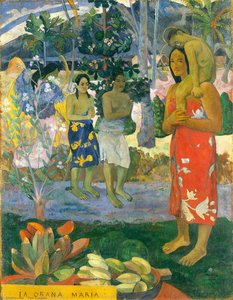
- Ia Orana Maria(也称为“圣母颂”)
 购买版画
购买版画 分享
分享 分享
分享
 详情
详情

 下载
下载
 相似作品
相似作品 X射线
X射线 幻灯片播放
幻灯片播放Ia Orana Maria(也称为“圣母颂”)


 展开详情
展开详情




P118B $10

P118H $10

P118W $10

P438Z $10

P508JH $12

P508YH $12

P805H $10

P805Z $10

P919BZ $10

P919G $10

P919XJ $10

P959ZH $10

P968JZ $12

W106C $8

W218G $10

W218JH $8

W218Y $10

W307PJ $10

W316G $10

W316PJ $8

W316Y $10

W398PJ $8

W4111J $10

W500HY $15

W500JH $15

W692G $12

W849H $8

W940BG $15

W953PJ $8




从与原作比例一致的预设尺寸中进行选择。

您可以输入自定义尺寸,以适配特定的画框或空间。如果所选尺寸与原图比例不符,我们将通过裁剪作品或添加手绘元素来扩展画面。数字样稿将在制作开始前发送给您确认。
请注意,屏幕预览无法准确反映实际的裁剪或扩展效果,只有样稿才能真实呈现最终的构图。
虽然我们提供定制尺寸服务,但为了保留原作比例,建议您从预设列表中选择尺寸。
下单后,AllPaintingsStore.com 团队将通过电子邮件联系客户获取具体要求,并提供效果预览图。


 玻璃选项仅适用于110厘米以下的尺寸。

Ia Orana Maria(也称为“圣母颂”)
复制材质
复制品尺寸
-


最终总价
-
作品详情
塔希提的幻梦:解读高更的《圣母颂》
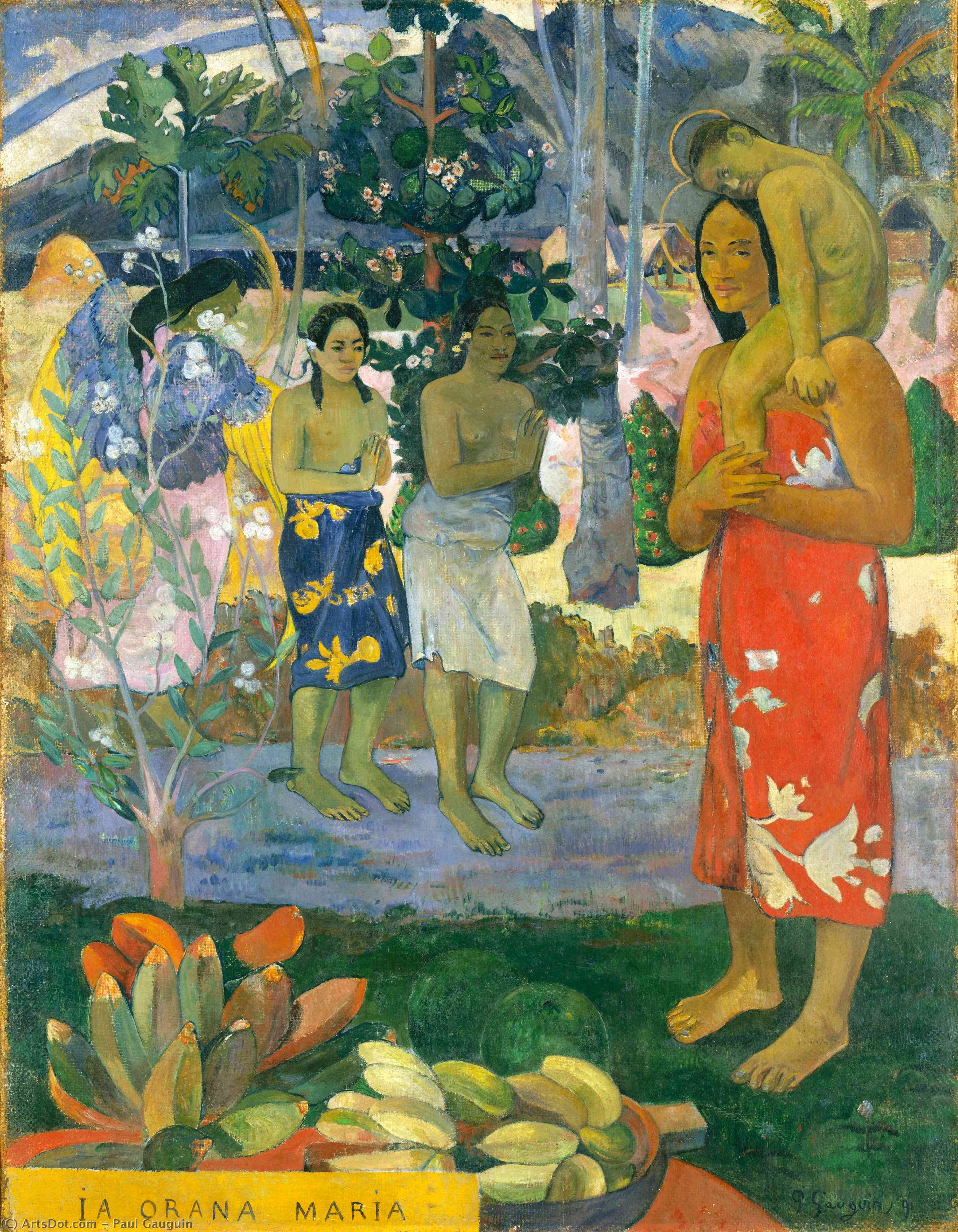
保罗·高更创作于1891年的杰作《Ia Orana Maria》(又名《圣母颂》),绝不仅仅是一幅画作;它是一首视觉诗篇,诞生于艺术家对真实生活的渴望以及他与波利尼西亚文化那场深刻的邂逅。这部作品凝聚了高更对欧洲艺术传统的激进背离,展现了他试图在西方传统束缚之外捕捉灵性之美的探索之旅。天堂之旅:背景与灵感
由于对巴黎社会的幻灭,高更前往塔希提寻求避难,他深信那里未经雕琢的美丽与充满活力的文化是通往更纯粹生活方式的关键。他并非仅仅在寻找异域风情的风景,而是追求一种能够从根本上重塑其艺术视野的沉浸式体验。《Ia Or 塔希提的幻梦:解读高更的《圣母颂》 保罗·高更创作于1891年的杰作《Ia Orana Maria》(又名《圣母颂》),绝不仅仅是一幅画作;它是一首视觉诗篇,诞生于艺术家对真实生活的渴望以及他与波利尼西亚文化那场深刻的邂逅。这部作品凝聚了高更对欧洲艺术传统的激进背离,展现了他试图在西方传统束缚之外捕捉灵性之美的探索之旅。天堂之旅:背景与灵感
由于对巴黎社会的幻灭,高更前往塔希提寻求避难,他深信那里未经雕琢的美丽与充满活力的文化是通往更纯粹生活方式的关键。他并非仅仅在寻找异域风情的风景,而是追求一种能够从根本上重塑其艺术视野的沉浸式体验。《Ia Orana Maria》正是这种沉浸后的直接产物——它是通过波利尼西亚视角重新构思的基督教图像学的融合。高更刻意选择在塔希提的背景下描绘宗教人物,以此挑战传统的表现形式,并探索信仰的普世性。世界的交融:构图与象征意义
画作呈现了一个迷人的场景:一群塔希提妇女正注视着圣母与圣婴耶稣显现的神迹,而这两位神圣人物本身也被描绘成了波利诞西亚人的形象。这种刻意的选择并非仅仅出于美学考虑,它暗示了不同信仰体系之间的和谐融合。画面的构图经过精心构建:一条深紫色的路径引导观众的视线进入郁郁葱葱的山峦景观,其间点缀着盛开的花树——它们是生命与丰饶的象征。前景中醒目展示的香蕉并非偶然出现,它们代表着富足与生计,将神圣的幻象与日常生活紧密相连。基督教意象与波利尼西亚符号的并置,邀请观众去沉思人类对于精神连接那份共同的渴望。大胆笔触与情感共鸣:艺术技法
高更标志性的后印象派风格在《Ia Orana Maria》中得到了强有力的体现。他摒弃了传统的透视法和自然主义的细节,转而采用扁平化的形式、大胆的色彩和极具表现力的笔触。布面油彩的使用赋予了画面丰富的纹理与鲜艳的色调,放大了绘画的情感冲击力。形状的刻意简化与非自然主义的色调并非缺陷,而是为了传达一种超脱尘世的疏离感与精神强度而进行的深思熟虑的选择。他的技法将情感置于精确的再现之上,营造出一种如梦似幻的宁静氛围。反响与传承:一部关键之作
《Ia Orana Maria》于1893年在巴黎首次展出,随即引发了广泛的讨论与争议。尽管一些评论家对其非传统的表现手法感到困惑,但也有人敏锐地察觉到了高更那具有开创性的远见。如今,这幅画作收藏于纽约大都会艺术博物馆的显赫馆藏中,其持久的艺术价值不言而喻。它始终是高更艺术生涯中的里程碑式作品,以其大胆的实验精神和对文化身份的探索,影响了后世一代又一代的艺术家。核心要点
- 文化的融合:这幅画作将基督教主题与波利尼西亚美学进行了完美的结合。
- 后印象派的创新:高更对色彩、形式和笔触的使用定义了他独特的艺术风格。
- 精神层面的探索:《Ia Orana Maria》深入探讨了信仰与信念这一普世主题。
- 持久的影响力:这部杰作持续激励着全球艺术家,并深深吸引着世界各地的观众。
相似艺术品




艺术家简介
Eugène Henri Paul Gauguin: A Revolutionary Post-Impressionist Painter
Paul Gauguin, a name synonymous with bold color and defiant individualism, stands as one of the most influential figures in the transition from Impressionism to modern art—a movement that irrevocably altered the course of artistic history. Born June 7, 1848, in Paris, France, his life unfolded far from the conventional paths expected of a young man of his time, marked by an upbringing steeped in intellectual curiosity and shaped by encounters with cultures radically different from those of Europe. His father, a journalist, instilled in him a passion for storytelling and observation—traits that would prove invaluable to Gauguin’s artistic endeavors—while his mother descended from Peruvian aristocracy, carrying within her lineage the spirit of exploration and questioning established norms. This heritage profoundly impacted Gauguin's worldview, fostering an unwavering belief in the importance of authenticity and fueling his lifelong quest to capture the essence of human experience through art.Early Years & Influences
Gauguin’s formative years were spent absorbing the intellectual currents of Parisian society—a city buzzing with artistic ferment—yet he harbored a deep yearning for something beyond the confines of academic convention. He received a formal education, mastering mathematics and drawing skills, but his true vocation lay in painting—a pursuit that demanded an uncompromising commitment to personal vision. The burgeoning Impressionist movement captivated him initially, drawn to Monet’s luminous landscapes and Renoir’s sensual depictions of Parisian life. Gauguin embraced the techniques of capturing fleeting moments of light and color, experimenting with brushstrokes and palettes that sought to convey emotion rather than mere visual representation. However, he soon recognized the limitations of Impressionism's preoccupation with optical perception—its insistence on faithfully reproducing what the eye sees—and felt compelled to forge his own path toward artistic expression. This dissatisfaction stemmed partly from a fascination with Japanese prints—Japonisme—which exerted a powerful influence on Gauguin’s aesthetic sensibilities. The flattened perspectives, bold outlines, and decorative patterns of Japanese woodblock prints captivated him, inspiring him to simplify forms and embrace stylistic choices that defied traditional Western conventions.From Finance to Artistic Passion
Despite pursuing a respectable career as a stockbroker—a profession deemed acceptable by the standards of his era—Gauguin’s artistic inclinations remained stubbornly persistent. He secretly nurtured his passion for painting during his leisure hours, honing his skills and developing his distinctive style in solitude. The financial crisis of 1882 served as a catalyst for this transformation, forcing him to abandon his lucrative profession and dedicate himself entirely to his artistic vocation. This wasn’t merely a change in occupation; it represented a fundamental recalibration of priorities—a conscious decision to prioritize creative fulfillment over material success. Gauguin sought guidance from Camille Pissarro, who encouraged his experimentation with color and technique and introduced him to the avant-garde circles of Paris—circles that embraced radical ideas about art and perception. Yet, Gauguin swiftly distanced himself from Impressionistic dogma, yearning for a more profound connection to nature and to the spiritual realm. He believed that true artistic expression required an immersion in experience—a willingness to abandon conventional notions of beauty and truth in favor of conveying emotion and intuition.Tahiti & The Symbolist Vision
The turning point in Gauguin’s artistic journey arrived with his decision to embark on a voyage to Tahiti in 1891—a move that would propel him into the forefront of the burgeoning Symbolist movement. Driven by an irresistible desire to escape the pressures of European society and to reconnect with primal instincts, he sought inspiration in Polynesian culture—believing it possessed a purity lost in Western civilization. Tahiti became his artistic sanctuary—a place where he could liberate himself from societal constraints and explore themes of spirituality, mythology, and human emotion through his unique lens. He meticulously documented the landscapes and rituals of Tahiti, employing bold colors and simplified forms to convey not just what he saw but what he *felt*. Influenced by medieval art—particularly Byzantine iconography—Gauguin adopted a stylistic approach characterized by flattened perspectives, stylized figures, and symbolic imagery—techniques that reflected his conviction that art should transcend mere representation and communicate deeper truths about the human condition. Iconic paintings like “Vahine no te miti” (Woman with Mango) and “The Vision After The Sermon” emerged from this period, solidifying Gauguin’s reputation as a visionary artist—a pioneer who dared to challenge conventions and forge his own path toward artistic expression.Legacy & Influence
Paul Gauguin died May 8, 1903, on Hiva Oa, a remote island in the Marquesas archipelago—leaving behind a legacy that continues to inspire artists and art lovers worldwide. His uncompromising commitment to personal vision—his rejection of academic dogma—and his embrace of Symbolist principles profoundly impacted subsequent generations of painters. Artists such as Pablo Picasso, Henri Matisse, and Edvard Munch acknowledged Gauguin’s influence on their own work, recognizing the transformative power of stylistic innovation and emotional intensity. Gauguin's bold use of color, simplified forms, and symbolic imagery remains a cornerstone of modern art—a testament to his enduring genius and his unwavering belief in the importance of artistic freedom. He stands as an unforgettable figure—a rebel who dared to defy expectations and forge his own path toward creative fulfillment—leaving behind a body of work that continues to captivate audiences and provoke contemplation centuries after its creation.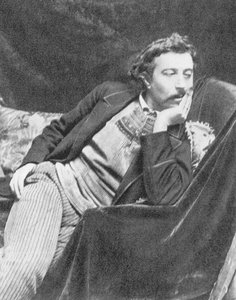
欧几何亨利·保罗·古尔涅
1848 - 1903 , 法国
艺术家简介
- Artistic Movement Or Style: 印象派、象征主義
- Artists Who Influenced This Artist: ['卡米爾·柯羅']
- Date Of Birth: 1848年6月7日
- Date Of Death: 1903年5月8日
- Full Name: Eugène Henri Paul Gauguin
- Nationality: 法國人
- Notable Artworks:
- 清輝
- 瓦希尼·諾·泰米
- Place Of Birth: 巴黎,法國
相关文章
光与影的彼岸:印象派与后印象派艺术收藏家的鉴赏之旅
深入探索印象派与后印象派艺术世界的瑰丽魅力。AllPaintingsStore为您提供专业的艺术收藏建议、定制油画服务,助您构建独一无二的臻品系列。了解大师作品背后的故事,提升您的艺术鉴赏力。
后印象主义十大名作:重塑艺术,点亮生活美学
探索后印象主义的十部杰作,从梵高的星空到高更的塔希提风情。了解艺术大师背后的故事与技法,感受色彩与光线的魅力。AllPaintingsStore.com为您提供博物馆品质的画作复制和精选家居装饰方案,点亮您的生活美学!

Echoes of 1886: Art, Culture & the Dawn of Modernity
Explore the vibrant art & culture of 1886 – a pivotal year bridging Impressionism to Post-Impressionism. Discover Van Gogh, Gauguin, Renoir & more with AllPaintingsStore's expert insights.
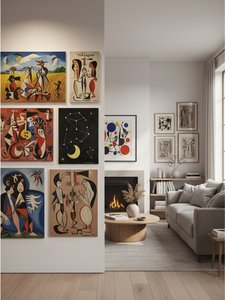
米罗大师25幅杰作:探索超现实主义的色彩与诗意 | AllPaintingsStore
探索米罗大师25幅经典画作,领略超现实主义的色彩与诗意。深入了解每件作品背后的故事、艺术技巧和文化意义。AllPaintingsStore.com提供高品质米罗油画复制品,为您的家居增添艺术灵感!立即在线探索完整系列。
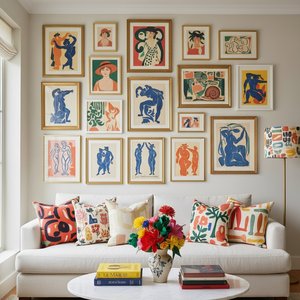
马蒂斯大师25幅杰作:色彩与光影的艺术传奇 | AllPaintingsStore
探索亨利·马蒂斯25幅杰作,感受野兽派色彩的魅力!从《舞蹈》到《红色和谐》,揭秘大师背后的故事与艺术灵感。AllPaintingsStore.com提供博物馆级高质量油画复制品,为您的家居增添奢华艺术气息。立即在线探索完整系列!