


 效果预览
效果预览
 购买手绘画作
 分享
分享 分享
分享
 详情
详情

 下载
下载
 相似作品
相似作品 X射线
X射线 幻灯片播放
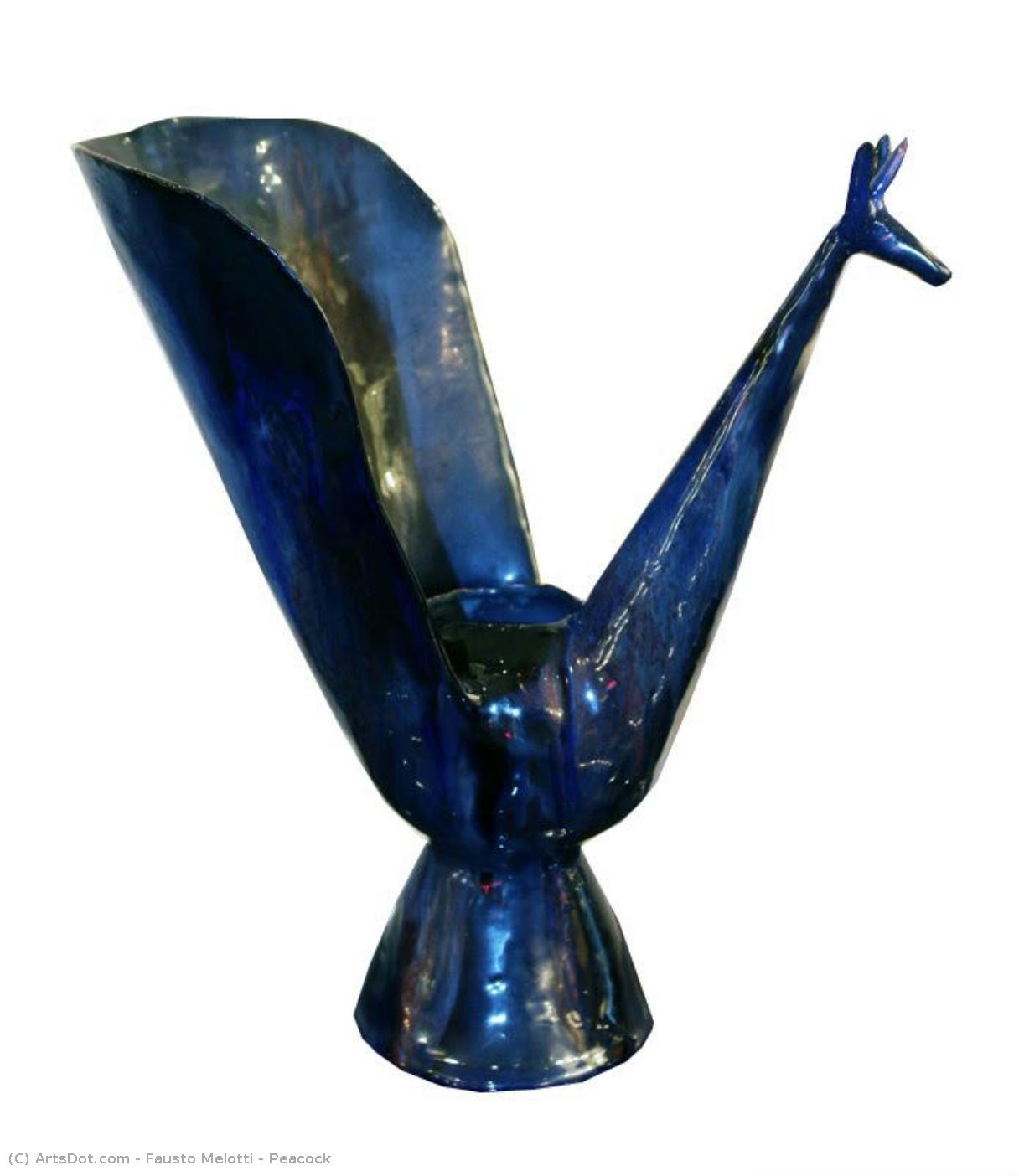
幻灯片播放Peacock


 展开详情
展开详情




































从与原作比例一致的预设尺寸中进行选择。

您可以输入自定义尺寸,以适配特定的画框或空间。如果您选择的尺寸与原图比例不符,我们将对作品进行裁剪,或通过镜像填充/纯色填充边缘的方式来扩展图像。在开始制作之前,我们会向您发送一份数字效果图供您确认。
请注意,屏幕上的预览并不能反映实际的裁剪或扩展效果。只有效果图才能准确展示最终的构图。
虽然我们提供定制尺寸,但为了保持原图比例,我们建议您从预设列表中选择尺寸。


 玻璃选项仅适用于110厘米以下的尺寸。

Peacock
艺术微喷/版画
复制品尺寸
-


最终总价
$ 64
藏品详情
相似艺术品


艺术家简介
Fausto Melotti: Bridging Futurism and Ceramic Innovation
Fausto Melotti (1901–1986) stands as a pivotal figure in Italian art history, embodying the dynamism of Futurism alongside a profound dedication to ceramic artistry. Born in Rovereto, nestled amongst the Dolomites, his formative years were steeped in artistic fervor thanks to his family’s involvement with the avant-garde movement—a connection that would profoundly shape his creative trajectory. His sister Renata Melotti married architect Gino Pollini, fostering an environment rich in intellectual discourse and artistic experimentation. The First World War forced a relocation to Florence, where he honed his skills at the Istituto Tecnico di Firenze and pursued higher education at Pisa University, delving into physics and mathematics alongside his burgeoning artistic ambitions. Moving to Milan in 1924, Melotti joined the influential Gruppo 7 architectural collective—Pollini, Luigi Figini, Giuseppe Terragni, Carlo Enrico Rava, Guido Frette, and Ubaldo Castagnoli—a partnership that cemented his position at the forefront of Italian design and artistic innovation. This collaboration exposed him to groundbreaking ideas about form and function, influencing his sculptural explorations for decades to come. He attended Accademia di Brera alongside sculptor Adolfo Wildt, absorbing invaluable lessons in classical technique and humanist expression. His friendship with Kazimir Malevich—particularly Kandinsky’s influence—became a cornerstone of his artistic vision, propelling him toward abstraction while retaining an inherent sensitivity to color and texture. Melotti's artistic journey began amidst the fervor of Futurism, where he collaborated closely with Carlo Belli and Fotrunato Depero at Casa d'Arte Futurista. This association fueled his experimentation with dynamic forms and disruptive visual language—a stylistic hallmark that would persist throughout his career. He embraced monumental commissions for the E 42 Exposition in Rome, crafting impressive sculptures that showcased both technical prowess and conceptual daring. Despite wartime devastation impacting his studio, Melotti persevered, returning to Milan and continuing to push artistic boundaries with ceramic works exploring geometric abstraction and textural interplay. His prolific output spanned decades, culminating in a monumental retrospective at Forte Belvedere in Florence in 1981—a testament to his enduring legacy as one of Italy’s most celebrated sculptors. Melotti's ceramics, characterized by their iridescent surfaces and meticulously crafted forms, transcended mere decorative embellishment; they became vehicles for conveying complex ideas about space, materiality, and visual perception. He achieved international acclaim, securing numerous awards recognizing his contribution to modern sculpture and cementing his place as a visionary artist who bridged the gap between revolutionary artistic movements and timeless aesthetic principles. Melotti’s work continues to inspire artists today, demonstrating the enduring power of experimentation and the transformative potential of embracing diverse influences—a legacy firmly rooted in both Futurism's bold ambition and ceramic art's subtle beauty.
fausto melotti
1901 - 1986
艺术家简介
- Artistic Movement Or Style: Futurist & Post-war Art
- Artists Or Movements Influenced By This Artist: ['Futurism']
- Artists Who Influenced This Artist: ['Kandinsky']
- Date Of Birth: 1901
- Date Of Death: 1986
- Full Name: Fausto Melotti
- Nationality: Italian
- Notable Artworks:
- Untitled (624)
- I Sette savi
- Place Of Birth: Rovereto, Italy
相关文章

Bronze Sculptures That Defined Art History | AllPaintingsStore
Journey through art history with our Top 10 bronze sculptures! Explore masterpieces by Rodin, Michelangelo & more. Discover stories behind iconic statues and find museum-quality reproductions for your home decor at AllPaintingsStore.com.

The Enduring Form: Exploring Themes & Techniques in Sculpture Across Historical Periods
Explore the rich history of sculpture from ancient masterpieces to contemporary innovations. Discover key techniques, influential artists & investment potential for discerning art collectors.

The Enduring Form: Sculpture Across History, Technique & Emotional Resonance
Explore the rich history of sculpture with AllPaintingsStore. Discover key techniques, influential artists & investment potential for discerning collectors. Expert insights into valuing and collecting timeless masterpieces.

Bronze Age to Modern Masters: 10 Sculptures That Redefined Art | AllPaintingsStore
Journey through art history with 10 legendary bronze sculptures – from Michelangelo's David to Rodin’s Thinker. Explore the stories, techniques & timeless beauty of these masterpieces. Find museum-quality reproductions & elevate your home decor on AllPaintingsStore.com.

抽象表现主义:十幅定义艺术史的杰作
探索抽象表现主义的十幅经典杰作!波洛克、罗斯科等大师作品,揭秘艺术史上的重要瞬间。AllPaintingsStore.com为您呈现高品质艺术品复制和精选家居装饰方案,感受现代艺术的力量与魅力。立即浏览全系列!



