

1913. Acrylic On Canvas.

§ 1目录数据


§ 2摘要
藏品详情
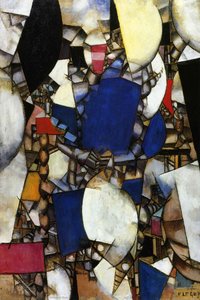
Geometric standards by Fernand Léger – A vibrant painting featuring bold geometric shapes and colors (reds, greens, yellows, blues, oranges) reflecting the dynamism of the machine age.
 展开全文
展开全文
§ 3赏析
Geometric Standards: A Vision of Industrial Harmony
Fernand Léger’s “Geometric Standards,” painted in 1913, stands as an arresting declaration of Cubist principles interwoven with the burgeoning fascination for machine aesthetics—a visual manifesto that foreshadowed the stylistic upheavals of the coming decades. Executed in bold reds and creams against a stark white ground plan, this monumental canvas transcends mere representation; it strives to capture not just what is seen but how it *feels*. Léger’s meticulous attention to detail reveals an obsessive exploration of form—circles dominate the composition, interspersed with squares and triangles that engage in a dynamic interplay of spatial relationships. These geometric shapes aren't simply decorative elements; they embody the very essence of industrial progress: repetition, precision, and unwavering structural integrity.The Influence of Cubism and Tubism
Léger’s artistic trajectory was profoundly shaped by Pablo Picasso and Georges Braque’s pioneering Cubist experiments. Rejecting traditional illusionistic perspective, Cubists fragmented objects into interlocking planes—a technique Léger adopted with fervor—creating a multifaceted visual experience that challenged viewers to reconsider their perception of reality. However, Léger pushed Cubism further, developing his own distinctive style known as Tubism (short for “tubisme”). Tubism prioritized tubular forms—representing pipes and machinery—as dominant motifs, emphasizing the underlying structure of objects while simultaneously conveying a sense of movement and dynamism. This stylistic innovation perfectly mirrored the anxieties and aspirations of the era, reflecting both the dehumanizing effects of industrialization and the optimistic belief in technological advancement.A Reflection of Parisian Life in 1913
“Geometric Standards” isn’t merely an abstract exercise; it's a carefully considered portrayal of Parisian life during the tumultuous years preceding World War I. Léger sought to depict not just the physical environment but also the psychological state of his contemporaries—a population grappling with rapid social change and confronted by the looming threat of conflict. The stark white ground plan symbolizes purity and clarity, contrasting sharply with the vibrant reds that represent passion and energy—elements crucial to capturing the spirit of the time. Léger’s masterful use of color contributes significantly to the artwork's emotional impact, drawing viewers into a contemplative engagement with its complex visual vocabulary.Symbolism Beyond Form: The Machine Age Aesthetic
Beyond its formal innovations, “Geometric Standards” carries symbolic weight—a deliberate invocation of the Machine Age aesthetic that permeated artistic discourse in Europe during this period. Léger’s obsession with tubular forms speaks to a broader cultural preoccupation with technology and industrial efficiency, reflecting anxieties about societal transformation alongside hopes for progress. The geometric shapes themselves represent stability and order amidst chaos—a visual assertion of faith in reason and scientific inquiry. By distilling the complexities of modern life into simplified geometric abstractions, Léger succeeded in communicating profound ideas about humanity’s relationship to its environment and its future trajectory.A Legacy of Bold Vision
Fernand Léger's “Geometric Standards” remains an enduring testament to his artistic genius—a cornerstone of Cubist innovation and a seminal work embodying the Machine Age aesthetic. Its bold colors, meticulous geometric construction, and evocative depiction of Parisian life continue to inspire artists and collectors alike. Today, reproductions of this masterpiece offer a captivating glimpse into Léger’s visionary worldview—a celebration of form and color that transcends time and resonates powerfully with audiences seeking inspiration from one of the most influential figures in modern art history.常见问题与解答
“Geometric standards”是如何体现 费尔南·莱热 的创作主题与艺术风格的?
"Geometric standards" 与 费尔南·莱热 的其他作品一样,都体现了 Cubism 风格以及其一贯的主题:cubist innovation, industrial vision, geometric abstraction, artistic experimentation, legacy style。
什么样的摆放方式最适合 费尔南·莱热 的《Geometric standards》 的画幅?
凭借其Landscape的形态,建议将《Geometric standards》复制品用于装饰Living Room。
哪里可以找到与 费尔南·莱热 的《Geometric standards》 风格相似的艺术品?
与“Geometric standards”相似的作品已列在艺术品的 相似作品 页面中。





 切换至版画销售渠道


 对于任何边长超过 105 厘米(约 41 英寸)的艺术品或复制品,画框将以拆解后的组件形式发货。此方法可确保安全送达并防止运输过程中的损坏。


