

Acrylic On Canvas.

§ 1目录数据


§ 2摘要
藏品详情
Fernand Léger’s Still Life4 presents a dynamic still life brimming with geometric forms and industrial motifs, characteristic of his Cubist style. This captivating artwork evokes a sense of modern tranquility, inviting you to explore this iconic piece and bring its unique charm into your space.
 展开全文
展开全文
艺术家简介
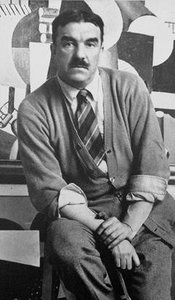
法国艺术家费尔南·莱热(1881-1955),现代主义先驱,以其独特的“筒状主义”和对机械美学的探索而闻名。他的作品融合了抽象与具象,预示着波普艺术的到来,并以大胆的色彩和简化形式描绘现代生活与工业景观。
§ 3赏析
A Symphony of Form and Industry: Exploring Fernand Léger’s Still Life4
Fernand Léger's Still Life4 offers a captivating glimpse into the artist’s revolutionary approach to depicting the modern world – a world increasingly defined by industry, mechanics, and the burgeoning influence of urban life. This meticulously rendered composition transcends the traditional still-life genre, becoming instead a powerful statement about the integration of these new forms into artistic expression. Léger, born Joseph Fernand Henri Léger in 1881 in Argentan, Normandy, was profoundly shaped by his rural upbringing, an experience that would later inform his unique vision when he moved to Paris around 1900. Unlike many artists of his time who sought refuge in pure abstraction, Léger embraced a deliberately structured abstraction, one that actively engaged with the dynamism and geometric precision of the machine age.
- Subject Matter: The painting presents a carefully arranged still life – a wooden table as its central anchor, supporting a vase brimming with verdant plants, an assortment of cups and bowls, and a thoughtfully placed book. These objects are not merely decorative; they are imbued with symbolic weight, representing the domestic sphere, intellectual pursuits, and the burgeoning influence of technology within the home.
- Style & Technique: Léger’s signature style is immediately recognizable in Still Life4. He employs a bold, geometric vocabulary, breaking down forms into their essential shapes – cylinders, spheres, and planes – echoing the construction of machinery. The application of paint is deliberately rough and textured, creating a palpable sense of physicality and emphasizing the materiality of the objects themselves. This technique, often described as “tubism,” reflects Léger’s fascination with the visual language of industrial design.
The Rise of Tubism: A Reaction to Impressionism
Léger's artistic journey was inextricably linked to the broader intellectual and cultural currents of his time. Emerging in the early 20th century, he was part of a movement that challenged the conventions of traditional art – particularly those of Impressionism. The influence of Cubism is evident, but Léger pushed beyond mere fragmentation, seeking to *construct* new forms based on observed reality, specifically the shapes found in machines and urban landscapes. This approach, known as Tubism (named after his studio, “Les Tubes”), aimed to capture not just the appearance of objects but their underlying structure and movement. The deliberate use of repetition and geometric patterns reflects Léger’s belief that these were the fundamental elements of modern life.
- Historical Context: Still Life4 was created during a period of immense social and technological change. The rapid industrialization of Europe, coupled with advancements in transportation and communication, profoundly altered people's lives and perceptions of the world. Léger’s art can be seen as a response to this transformation, attempting to articulate the experience of modernity through a distinctly visual language.
- Color Palette: The painting features a restrained yet impactful color palette dominated by earthy tones – browns, greens, and ochres – punctuated by brighter accents that draw attention to key elements within the composition. This deliberate use of color enhances the sense of depth and volume, further emphasizing the geometric forms.
Symbolism and Emotional Resonance
Beyond its formal qualities, Still Life4 possesses a subtle emotional resonance. The carefully arranged objects evoke a feeling of quiet contemplation – a space for rest and reflection amidst the relentless pace of modern life. The open book suggests intellectual curiosity and the pursuit of knowledge, while the plants introduce an element of natural beauty and tranquility. Léger’s deliberate use of texture and form creates a sense of tactile engagement, inviting the viewer to connect with the objects on a visceral level. This piece is not simply a representation of still life; it's a meditation on the relationship between humanity and technology, domesticity and industry.
A Timeless Masterpiece – Perfect for Your Space
AllPaintingsStore.com offers meticulously crafted hand-painted reproductions of Fernand Léger’s Still Life4, allowing you to bring this iconic artwork into your home or office. Each reproduction is created using the highest quality materials and techniques, ensuring exceptional detail and color accuracy. Whether you are an art collector, interior designer, or simply someone who appreciates beautiful art, a AllPaintingsStore.com reproduction of Still Life4 will be a stunning addition to any space.
常见问题与解答
在“Still Life4”中,哪种颜色最为醒目?
费尔南·莱热 的《Still Life4》 的主色调为 Gray (#88766f)。
费尔南·莱热 的《Still Life4》 适合悬挂在哪个房间?
费尔南·莱热 的《Still Life4》 推荐陈列于 Living Room。此建议是基于作品的主题、色彩与意境而定。
费尔南·莱热 的《Still Life4》 在艺术史上的地位如何?
费尔南·莱热 的《Still Life4》 在艺术史上的分类属于 Cubist Still Life 运动,创作于 Modern 时期。


 切换至版画销售渠道


 对于任何边长超过 105 厘米(约 41 英寸)的艺术品或复制品,画框将以拆解后的组件形式发货。此方法可确保安全送达并防止运输过程中的损坏。


