

1931. Ink On Paper.

§ 1目录数据


§ 2摘要
藏品详情
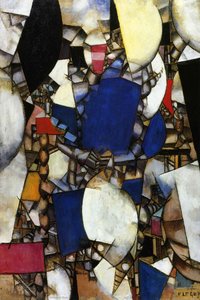
Explore Fernand Léger’s ‘Study Nuts,’ a striking monochrome cubist study of a walnut. Detailed hatching & cross-hatching create depth. A unique, vintage art piece – perfect for collectors!
 展开全文
展开全文
§ 3赏析
The Anatomy of Nature: A Botanical Revelation
In the quiet, focused realm of Fernand Léger’s 1931 masterpiece, Study Nuts, the boundaries between the organic world and scientific inquiry dissolve into a singular, breathtaking vision. At first glance, one might expect a traditional botanical illustration—a celebratory tribute to the bounty of nature. Instead, Léger presents us with a profound, cross-sectional exploration of a walnut half, stripped of its shell and laid bare before our eyes. The composition is intensely intimate, utilizing a tight crop that forces the viewer into an almost voyeuristic encounter with the nut's internal architecture. There is no surrounding landscape to provide context, only the labyrinthine network of fibers, cavities, and shadows that constitute the heart of the subject. This focused approach transforms a simple piece of fruit into a complex, topographical map of life itself.
The technique employed in this work is nothing short of a masterclass in monochrome precision. Eschewing the vibrant, primary colors often associated with his later "Tubism" style, Léger turns to the disciplined medium of black ink to achieve a sense of structural depth. Through an exquisite application of hatching and cross-hatching, he builds layers of darkness and light that simulate the rugged, intricate textures of the walnut's interior. Each stroke of the pen serves a dual purpose: to define the physical boundaries of the organic matter and to create a rhythmic, almost mechanical texture that vibrates with energy. The result is an image that feels both ancient, reminiscent of 18th-century anatomical sketches, and strikingly modern in its graphic intensity.
A Convergence of Biology and the Machine Age
To understand Study Nuts, one must look toward the historical pulse of the early 20th century. Created during a period of immense industrial transformation, Léger’s work reflects a fascination with the underlying geometry found within all things. While he is celebrated for capturing the metallic rhythm of factories and urban landscapes, this study reveals his ability to find that same structural logic within the natural world. There is a subtle, brilliant tension here between the biological subject and the mechanical execution; the way the fibers are rendered suggests the precision of an engineered component, bridging the gap between the pastoral roots of his youth in Normandy and the high-voltage hum of the modern era.
For the discerning collector or interior designer, this piece offers a unique emotional resonance. It does not demand attention through loud colors or dramatic narratives; rather, it commands respect through its quiet, intellectual rigor. The artwork possesses an understated elegance that makes it a versatile cornerstone for sophisticated spaces. Whether placed in a minimalist gallery setting or used to add a layer of textured depth to a contemporary study, Study Nuts provides a sense of groundedness and contemplative stillness. It is an ode to form and function, inviting the viewer to pause and appreciate the magnificent, hidden complexities that exist within even the most humble fragments of our world.
常见问题与解答
“Study nuts”背后的艺术家与艺术风格是哪些?
"Study nuts" 的背后是 费尔南·莱热 及其所属的 Cubism 流派。
费尔南·莱热 的《Study nuts》 描绘了什么内容?
费尔南·莱热 的《Study nuts》 描绘了:botanical study, walnut illustration, monochrome drawing, cubist composition, hatching technique, vintage art print, scientific study。
费尔南·莱热 的作品《Study nuts》知名度如何?
费尔南·莱热 的《Study nuts》 的知名度处于 Recognized 水平。这一分类反映了该作品被广泛认可的程度。





 切换至版画销售渠道


 对于任何边长超过 105 厘米(约 41 英寸)的艺术品或复制品,画框将以拆解后的组件形式发货。此方法可确保安全送达并防止运输过程中的损坏。


