

1921. Oil On Canvas.

§ 1Catalogue data


§ 2Abstract
藏品详情
Experience the vibrant energy of Fernand Leger's 1921 Cubist masterpiece The Breakfast, a dynamic display of Tubism and geometric forms that invites you to bring this iconic piece of modern art history into your collection.
 展开全文
展开全文
艺术家简介
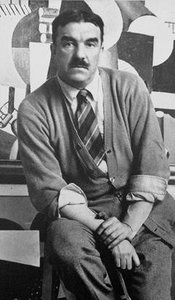
法国艺术家费尔南·莱热(1881-1955),现代主义先驱,以其独特的“筒状主义”和对机械美学的探索而闻名。他的作品融合了抽象与具象,预示着波普艺术的到来,并以大胆的色彩和简化形式描绘现代生活与工业景观。
§ 3Commentary
A Symphony of Geometry: Reimagining the Morning Ritual
In the vibrant landscape of early 20th-century modernism, few works capture the rhythmic pulse of a changing era as strikingly as Fernand Léger’s The Breakfast. Painted in 1921, this masterpiece serves as a window into a world where the domestic and the industrial began to merge into a singular, dynamic vision. The scene presents a group of three women gathered around a dining table, yet they are far from traditional figures in a quiet portrait. Instead, through Léger’s revolutionary lens, the act of sharing a morning meal is transformed into a complex dance of fragmented planes and interlocking shapes. There is an undeniable energy radiating from the canvas, as if the very air around the breakfast table is vibrating with the mechanical precision of the modern age.
The composition is a masterclass in what critics famously termed Tubism or Mechanical Cubism. Rather than relying on soft, organic curves, Léger utilizes cylindrical and tubular forms to construct his subjects and their surroundings. The table, the bowl, the cup, and even the figures themselves are distilled into essential geometric components—circles, rectangles, and spheres. This technique creates a fascinating tension; while the subject matter is intimately domestic, the execution feels architectural and structural. By breaking down the scene into overlapping planes and multiple viewpoints, Léger invites the viewer to move around the table mentally, experiencing the breakfast scene not as a static moment, but as a multifaceted, living construction.
Color, Light, and the Industrial Spirit
The emotional impact of The Breakfast is driven largely by its bold and unapologetic color palette. Léger eschews subtle gradations in favor of high-contrast primary colors—vivid reds, yellows, and blues—juxtaposed against stark blacks, whites, and industrial greys. This deliberate use of flat, saturated color reinforces the painting's sense of strength and clarity. There is no soft morning light filtering through a window here; instead, the lighting is diffused and even, stripping away traditional shadows to emphasize the weight and volume of the geometric forms. This lack of traditional depth forces the eye to engage with the surface of the painting, celebrating the texture of the paint and the sharp, defined lines that delineate each shape.
For the discerning collector or interior designer, this artwork offers more than mere decoration; it provides a profound sense of movement and modernity. The painting captures the spirit of an era defined by rapid technological advancement—the rise of the machine, the factory, and the urban sprawl. In The Breakfast, the domestic ritual is imbued with the same vigor found in a locomotive or a spinning gear. It is a piece that commands attention through its structural integrity and its ability to turn a simple morning gathering into an avant-garde celebration of form. To possess a reproduction of this work is to bring a fragment of the Cubist revolution into one's space, offering a timeless dialogue between the beauty of human connection and the structured elegance of the machine age.
常见问题与解答
"The Breakfast" 的艺术风格与其创作时代有何关联?
"The Breakfast" 属于 Cubism 流派,其创作者活跃于 现代主义 时期。
"The Breakfast" 的版画推荐用于何处?
"The Breakfast" 艺术版画的推荐用途为 Accent。
费尔南·莱热 的《The Breakfast》 的构图以什么颜色为主导?
White (#e9eae0) 是 费尔南·莱热 的《The Breakfast》 的主导色。


 切换至版画销售渠道


 对于任何边长超过 105 厘米(约 41 英寸)的艺术品或复制品,画框将以拆解后的组件形式发货。此方法可确保安全送达并防止运输过程中的损坏。


