

Oil On Canvas.

§ 1目录数据


§ 2摘要
藏品详情
Fernand Léger's 'The Green Tree,' painted in 1932, exemplifies Tubism—a revolutionary style characterized by simplified geometric forms and vibrant colors that capture the dynamism of the machine age. This iconic piece showcases Léger’s masterful blend of abstraction and observation.
 展开全文
展开全文
艺术家简介
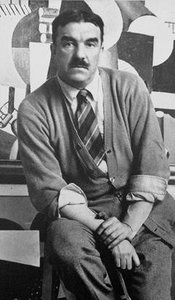
法国艺术家费尔南·莱热(1881-1955),现代主义先驱,以其独特的“筒状主义”和对机械美学的探索而闻名。他的作品融合了抽象与具象,预示着波普艺术的到来,并以大胆的色彩和简化形式描绘现代生活与工业景观。
§ 3赏析
A Symphony of Geometry: Rediscovering Fernand Léger’s The Green Tree
In the vibrant landscape of early twentieth-century modernism, few works capture the rhythmic pulse of life quite like Fernand Léger’s “The Green Tree.” Painted in 1932, this masterpiece serves as a profound testament to the artist's unique ability to bridge the gap between the organic world and the industrial age. At first glance, the viewer is greeted by a striking arrangement of verdant hues and bold, geometric shapes that seem to vibrate against the canvas. This is not merely a depiction of nature; it is an exploration of Tubism, a radical stylistic evolution where Léger utilized cylindrical forms and overlapping planes to suggest the constant motion and structural logic of a world in transition.
The composition is anchored by a central, luminous yellow circle that acts as a sun-like focal point, injecting a sense of warmth and vitality into the cool, rhythmic greens of the foliage. This brilliant orb disrupts the geometric grid, much like a spark of light within a factory, reminding us of Léster's fascination with the incandescent glow of modernity. Interspersed throughout the scene are subtle blue circles that dance across the periphery, creating a sense of depth and atmospheric tension. The way these primary colors interact—the deep greens, the piercing yellows, and the tranquil blues—creates a visual melody that is both intellectually stimulating and emotionally uplifting.
The Machine Age Meets the Natural World
To understand the soul of “The Green Tree,” one must look toward the historical context of the 1930s, an era defined by rapid industrialization and the rise of the machine aesthetic. Léger, who famously sought to “paint like a machine,” did not see technology as a cold or dehumanizing force, but rather as a source of new beauty and structural precision. In this work, he achieves a breathtaking synthesis: he applies the rigid, disciplined language of industrial design to the fluid, unpredictable forms of a tree. The leaves are transformed into rhythmic, overlapping discs, and the branches become structured elements of a larger, mechanical architecture.
This technique creates an extraordinary emotional impact, offering a sense of stability and order that is deeply comforting yet visually exhilarating. For the collector or interior designer, this painting offers a sophisticated balance; it possesses the bold, avant-garde edge required for contemporary statement pieces, while its organic subject matter ensures a harmonious integration into a variety of living spaces. It is a piece that invites contemplation, encouraging the viewer to find the hidden geometry in the natural world and the inherent beauty in the precision of modern life.
A Timeless Vision for Modern Interiors
Choosing a reproduction of “The Green Tree” is more than an aesthetic decision; it is an invitation to bring a piece of art history into the home. The painting’s ability to evoke both the pastoral tranquility of Léger's youth in Normandy and the high-energy dynamism of Parisian modernism makes it a versatile cornerstone for any curated collection. Whether placed in a minimalist gallery-style room or as a vibrant accent in a classic study, the artwork commands attention through its masterful use of color and form.
For those seeking to inspire guests or find personal solace, this work provides a window into a time when art was redefining reality itself. The interplay of light, the rhythmic repetition of shapes, and the profound sense of movement ensure that “The Green Tree” remains as relevant and captivating today as it was nearly a century ago. It stands as a permanent celebration of life's enduring energy, captured through the lens of a master who saw the heartbeat of the machine within the very leaves of the forest.
常见问题与解答
费尔南·莱热 的《The green tree》 使用了怎样的色调?
费尔南·莱热 的《The green tree》 的色调被描述为 Dark,这简练地概括了作品的色彩特征。
费尔南·莱热 是否还有其他别名或曾用名?
关于《The green tree》的创作者 费尔南·莱热,其记录在案的其他名称包括 费尔南·德·莱热, 若泽·费尔南·亨利·莱热 (全名)。
"The green tree" 融合了怎样的色调与情感?
费尔南·莱热 的《The green tree》 的 Dark 色调与其 Calm 的情感基调相得益彰。色彩是作品传达情感的表达方式之一。


 切换至版画销售渠道


 对于任何边长超过 105 厘米(约 41 英寸)的艺术品或复制品,画框将以拆解后的组件形式发货。此方法可确保安全送达并防止运输过程中的损坏。


