

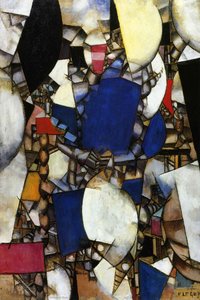
1930. Acrylic On Canvas.

§ 1目录数据


§ 2摘要
藏品详情
Admire Fernand Léger's 'The Red Statuette,' a vibrant Cubist masterpiece celebrating modern life and featuring a striking red background—a testament to Léger’s pioneering vision.
 展开全文
展开全文
艺术家简介
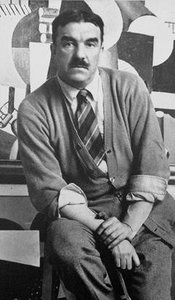
法国艺术家费尔南·莱热(1881-1955),现代主义先驱,以其独特的“筒状主义”和对机械美学的探索而闻名。他的作品融合了抽象与具象,预示着波普艺术的到来,并以大胆的色彩和简化形式描绘现代生活与工业景观。
§ 3赏析
A Bold Embrace of Modernity: Exploring Fernand Léger’s “The Statuette Red”
Fernand Léger’s “The Statuette Red,” painted in 1930, stands as a cornerstone of Cubism and Tubism—movements that fundamentally challenged the conventions of Western art at the time. More than just a depiction of form, it embodies Léger's unwavering conviction that art could – and should – reflect the dynamism and transformative power of industrial society.
- Subject Matter: The painting centers around a stylized female figure holding a baby, positioned against a striking crimson backdrop. This deliberate choice of color isn’t merely decorative; it symbolizes vitality, passion, and perhaps even a primal connection to the earth—a counterpoint to the mechanized world Léger sought to portray.
- Style & Technique: Léger's signature Tubism technique is evident throughout the canvas. Instead of attempting to represent objects realistically, he fragmented them into geometric planes and cylinders, simultaneously presenting multiple perspectives. This approach disrupts traditional notions of depth and illusion, prioritizing clarity and structural integrity.
- Historical Context: Created during the turbulent years following World War I, “The Statuette Red” reflects Léger’s profound engagement with the burgeoning industrial landscape of Europe. He witnessed firsthand the impact of technological advancements on human life and labor—themes that permeate his artistic vision.
- Symbolism & Emotion: The figure holding the baby represents fertility and nurturing – concepts antithetical to the perceived sterility of urban existence. Léger’s deliberate simplification of form aims to convey a sense of emotional resonance, bypassing intellectual contemplation in favor of direct sensory experience.
The Influence of Cubism: Breaking Down Representation
Léger's artistic trajectory was inextricably linked with the revolutionary ideas of Pablo Picasso and Georges Braque. Like his contemporaries, he rejected the pursuit of photographic realism, opting instead for a radically new visual language rooted in Cubist principles. This decision wasn’t driven by mere aesthetic preference; it stemmed from a conviction that art could communicate truths about the human condition beyond superficial appearances.
The fragmentation of form—a hallmark of Cubism—allowed Léger to explore multiple viewpoints simultaneously, capturing the essence of an object rather than its literal representation. This technique demanded meticulous attention to detail and precision, reflecting Léger’s fascination with engineering and industrial design.
A Celebration of Form and Color
"The Statuette Red" exemplifies Léger's masterful blending of geometric abstraction with expressive color palettes. The dominant crimson hue commands immediate attention, injecting energy and vibrancy into the composition. This bold chromatic choice underscores Léger’s belief that color could convey emotion and stimulate perception—a departure from Impressionist traditions.
Furthermore, Léger's use of cylindrical forms—characteristic of Tubism—creates a sense of stability and monumentality, contrasting with the perceived chaos of modern life. These forms are rendered with meticulous detail, emphasizing their materiality and reinforcing Léger’s commitment to capturing the physicality of the world around him.
Legacy & Inspiration
Fernand Léger's “The Statuette Red” continues to inspire artists and designers today. Its uncompromising embrace of abstraction—combined with its evocative color palette and masterful technique—serves as a testament to Léger’s enduring vision of art as a vehicle for exploring the complexities of the modern age. Reproductions of this iconic artwork offer a captivating glimpse into the artistic spirit of the 1930s, inviting viewers to contemplate the relationship between form, function, and emotion.
常见问题与解答
“The statuette Red”的创作者是谁?创作于哪一年?
费尔南·莱热 于 1930 年创作了《The statuette Red》。
费尔南·莱热 的《The statuette Red》 是人像、风景还是方形构图?
费尔南·莱热 的《The statuette Red》 采用 Portrait 格式。该格式描述了构图的比例。
哪里可以买到 费尔南·莱热 的《The statuette Red》 的版画?
您可以通过 采用棉质帆布或档案级画布纸制作的艺术版画 购买 “The statuette Red” 的版画。您可以前往其 艺术版画 页面,根据您的需求选择尺寸并下单。




 切换至版画销售渠道


 对于任何边长超过 105 厘米(约 41 英寸)的艺术品或复制品,画框将以拆解后的组件形式发货。此方法可确保安全送达并防止运输过程中的损坏。


