


 实景预览
实景预览
 切换至版画销售渠道
 分享
分享 分享
分享
 详情
详情 指南
指南

 下载作品
下载作品
 相似作品
相似作品 X射线
X射线 幻灯片播放
幻灯片播放 问答
问答 统计数据
统计数据untitled (6911)


 展开全文
展开全文
获取远超网页预览效果的印刷级文件。我们销售的每一张数字图像均源自库存数据库中的高分辨率母版——宽度通常在 5,000 至 15,000 像素之间——因此您可以放心地进行大幅打印、局部裁剪或还原细腻的细节。
每一件作品在离开我们的工作室前都经过了精心的处理。数字影像专家会对照原作核对色彩,并在必要时进行校正,随后利用专业修图工具提升清晰度与细节表现——且始终忠实于艺术家的笔触与风格。最终呈现的图像宛如原作本身,而非仅仅是一张加了滤镜的扫描件。
您可以在最终定稿前进行审核:我们的专家将在 72 小时内通过电子邮件向您发送图像以供审阅。如果不满意?您可以要求改进或修正;若质量未达预期,亦可申请退款。
这也是出版商、设计工作室、画廊及印刷厂所信赖的品质。
每份数字图像订单均包含的内容
专业级数字交付,品质保障
选择 AllPaintingsStore.com,您获得的不仅仅是一张图像——您收到的是经过专业级增强、精雕细琢的数字艺术作品,并享有满意保证。以下是您的订单中自动包含的所有内容:

邮件即时送达
您的高分辨率数字图像文件将在下单后 72 小时内通过电子邮件发送给您 —— 即可立即使用。

AI 增强型数字文件
您的艺术品经过专业优化,结合先进的 AI 技术与人工修饰,确保呈现极致的细节、清晰度与色彩准确度。

终身免费重发服务
不小心删除了文件或找不到了?没关系——我们将随时为您免费重发。

无需进口税费,始终如一
即刻拥有您的艺术作品,无需支付任何关税、税费或运费——数字下载始终免税。

色彩精准保障
我们通过专业工具与色彩管理技术,确保您的数字图像尽可能真实地还原原作色彩。

100天满意保证
如果您对所购数字图像不满意,我们将在100天内为您进行修改或提供100%的全额退款——无需任何理由。

100% 退款保证
不满意?在收到数字文件后的100天内,您可以申请全额退款——无需任何理由。

批量订购优惠
购买 3 张享 10% 折扣 - 购买 5 张享 15% 折扣 - 购买 10 张以上享 20% 折扣。非常适合创意项目、画廊及机构使用。
A Soulful Encounter with Nature: Franz Marc’s “Untitled (6911)”
Franz Marc's "Untitled (6911)," a captivating depiction of two deer immersed in a verdant landscape, transcends mere representation to become a profound meditation on the spirit of nature and the interconnectedness of life. Painted during a pivotal period in his career—a time when he was deeply engaged with the burgeoning Expressionist movement and the influential Blue Rider circle—this work embodies Marc’s signature style: a harmonious blend of observation and intuition, grounded in a fervent belief that art could serve as a conduit for spiritual experience. The painting isn't simply a record of deer; it’s an evocation of their essence, imbued with a quiet dignity and a palpable sense of being.
Marc’s technique is immediately striking. He employs a vibrant, almost Fauvist palette—bold swathes of cerulean blue, emerald green, ochre yellow, and russet red—that seem to pulse with an inner light. These colors aren't used descriptively; instead, they are deployed emotionally, conveying the feeling of the forest’s vitality and the deer’s inherent grace. The brushstrokes themselves are loose and expressive, contributing to a sense of movement and immediacy. Notice how he uses short, broken strokes to define the grasses, creating an illusion of texture and depth that draws the viewer into the scene. The deer's forms are simplified yet remarkably detailed, their musculature subtly rendered through careful observation and a willingness to abstract away extraneous detail.
The Language of Animals: Symbolism in Marc’s Vision
Franz Marc was particularly fascinated by animals, viewing them as embodiments of primal instincts and spiritual truths. In “Untitled (6911),” the deer aren't presented as wild creatures existing solely for survival; they are imbued with a quiet serenity and an almost otherworldly quality. The positioning of the two deer—one slightly to the left, the other on the right—suggests a gentle interaction, perhaps a moment of shared contemplation within the vastness of nature. The color blue, so dominant in the composition, held particular significance for Marc and his fellow Blue Rider artists. It represented not just the sky or water, but also the spiritual realm – a connection to something beyond the material world.
Furthermore, the deer themselves are often interpreted as symbols of innocence, vulnerability, and the fleeting beauty of existence. Their presence invites us to consider our own relationship with nature and the delicate balance of life. Marc’s choice to depict them in such a luminous setting elevates their status beyond mere fauna; they become emblems of a deeper, more profound truth.
A Reflection of an Era: Expressionism and Spiritual Seeking
"Untitled (6911)" is firmly rooted within the context of early 20th-century German Expressionism. This movement sought to express subjective emotions and inner experiences rather than simply depicting external reality. Marc, along with artists like Wassily Kandinsky and Emil Nolde, rejected academic conventions in favor of a more raw and emotionally charged approach to artmaking. His exploration of color and form was directly influenced by his studies of Vincent van Gogh, whose use of intense colors and expressive brushstrokes paved the way for a new kind of artistic language.
However, Marc’s work goes beyond mere stylistic imitation. He infused his paintings with a deeply personal spiritual quest—a desire to understand the essence of life through the lens of nature. This pursuit is evident in the painting's serene atmosphere and its evocative portrayal of the deer as symbols of something larger than themselves. The painting stands as a testament to Marc’s belief that art could be a vehicle for accessing a realm beyond the everyday, a space where beauty, spirituality, and truth converge.
Bringing “Untitled (6911)” into Your Space
A hand-painted reproduction of Franz Marc's "Untitled (6911)" offers a remarkable opportunity to bring this evocative artwork into your home or office. AllPaintingsStore’s meticulous reproductions capture the vibrancy of Marc’s palette and the expressive quality of his brushstrokes, allowing you to experience the painting’s emotional depth firsthand. Whether displayed in a sunlit room or a more intimate setting, this piece will undoubtedly serve as a focal point, inviting contemplation and sparking conversations about nature, spirituality, and the power of art.
常见问题与解答
马克·弗朗茨 的《untitled (6911)》 的色彩营造出怎样的情感?
在“untitled (6911)”中,Earthy 的色彩交织着Spiritual 的情感。
马克·弗朗茨 的《untitled (6911)》 的对比度表现如何?
"untitled (6911)" 的明暗对比度记录为 Bold。对比度描述了亮部与暗部之间的差异强度。
在购买之前,我可以在自己的墙上预览 马克·弗朗茨 的《untitled (6911)》 吗?
通过作品的 AR 效果预览 页面,您可以在兼容设备上使用增强现实技术,在自己的墙面上预览 马克·弗朗茨 的《untitled (6911)》。


艺术家简介
Franz Marc (1880-1916): Pioneer of German Expressionism and the Soulful Vision of Color
Franz Moritz Wilhelm Marc, born on February 8, 1880, in Munich, was a painter whose brief but intensely focused career irrevocably altered the course of German Expressionism. His story is one of profound spiritual seeking translated into a vibrant visual language—a quest to understand the essence of life through the purity he found in the natural world, particularly within the animal kingdom. Initially influenced by his father, Wilhelm Marc, a landscape painter who instilled in him a love for observation and detail, young Franz’s artistic path wasn't immediately certain. He briefly contemplated theology, grappling with questions of faith and existence before ultimately dedicating himself to art at the Academy of Fine Arts in Munich—a decision driven by an innate desire to express inner truths through visual form.Early Influences and Artistic Training
Marc’s formative years were marked by a fascination with Romantic literature and philosophy, mirroring the sensibilities of his time. He studied drawing first with Gabriel Hackl and then painting with Wilhelm von Diez at Munich University—receiving instruction from masters who championed naturalism and studio production. However, it was a transformative encounter with Vincent van Gogh’s paintings during visits to Paris that truly ignited his artistic vision. Van Gogh's expressive use of color and raw emotion resonated deeply with Marc—liberating him from conventional techniques and setting him on a path toward a more subjective and emotionally charged style. This influence is palpable in Marc’s early works, characterized by muted palettes and meticulous attention to detail—reflecting the prevailing artistic trends of his era. He sought to capture not merely what he saw but also *how* he felt—a deeply personal response to the world around him.The Birth of Der Blaue Reiter and Artistic Collaboration
Marc’s artistic development wasn't solitary; it flourished within the dynamic context of Munich’s burgeoning bohemian scene. He experimented with various artist groups, including the Neue Künstlervereinigung München, before co-founding *Der Blaue Reiter* (The Blue Rider) in 1911 alongside Wassily Kandinsky—a pivotal moment that would define his artistic trajectory and solidify his place as a leader of German Expressionism. This wasn’t merely a group or an exhibition series; it was a philosophical and artistic revolution—a concerted effort to move beyond representational art and express inner spiritual truths through abstraction and symbolic color. The journal *Der Blaue Reiter* became a platform for disseminating these ideas, showcasing not only their own work but also that of fellow artists who shared his vision—artists like August Macke and Franz Kupffer—and exploring diverse cultural influences from folk art to primitive sculpture. Marc’s contribution during this period was instrumental in establishing the core tenets of Expressionism: prioritizing emotion over rational observation and utilizing simplified forms and bold colors to convey profound spiritual concepts.Exploring Animal Symbolism and Color Theory
Marc's artistic style is immediately recognizable for its distinctive use of color—a conscious departure from naturalistic conventions that reflected his belief in art’s capacity to transcend the material realm. He eschewed descriptive color palettes, instead employing hues imbued with symbolic meaning—primarily blue (representing spirituality), yellow (signifying joy and femininity), and red (embodied violence and materiality). This systematic approach to color—informed by Kandinsky's theories of color psychology—was a hallmark of his oeuvre and underscored his conviction that art could communicate ideas beyond the literal level. His fascination with animals stemmed from their perceived purity and connection to nature—a perspective rooted in Romantic ideals and mirroring the broader cultural preoccupation with the sublime during his time. Marc’s paintings of horses, deer, foxes, and other creatures are not merely depictions of animals; they are symbolic representations of fundamental human values—innocence, harmony, courage, and vulnerability—expressed through simplified forms and vibrant colors.Legacy and Enduring Influence
Marc's untimely death on March 4, 1916, during the Battle of Verdun—a tragic consequence of his involvement in World War I—marked a devastating loss for the art world but cemented his legacy as one of the most influential figures in modern art history. His work continues to inspire awe and contemplation today—demonstrating the enduring power of art to provoke emotion and engage intellect. Marc’s paintings are exhibited in prominent museums worldwide, including the Lenbachhaus in Munich—where a comprehensive collection showcases the breadth and depth of his artistic vision. He is remembered not only as a pioneer of German Expressionism but also as a visionary artist who dared to explore the profound connection between art, spirituality, and the natural world—a legacy that transcends time and continues to resonate with audiences across generations. His exploration of color symbolism and abstraction remains a cornerstone of artistic thought—a testament to his unwavering belief in art’s ability to illuminate the human condition and inspire transformative insight.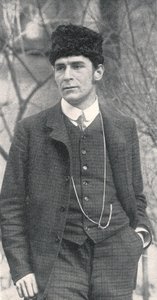
马克·弗朗茨
1880 - 1916 , 德国
基本信息
- Artistic Movement Or Style: 德國表現主義
- Artists Or Movements Influenced By This Artist: ['抽象藝術']
- Artists Who Influenced This Artist:
- 梵高
- 德拉奧內
- Date Of Birth: 二月八日, eighteen eighty 年
- Date Of Death: 三月四日, nineteen sixteen 年
- Full Name: Franz Moritz Wilhelm Marc
- Nationality: 德國人
- Notable Artworks:
- 紅鹿
- 藍馬塔
- Place Of Birth: 慕尼黑,德國