

- 首页

- 数字图像作品
- frederic george stephens
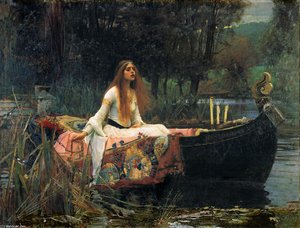
- Morte d'Arthur

 Preview
 购买版画
购买版画 分享
分享 分享
分享
 详情
详情

 下载
下载
 相似作品
相似作品 X射线
X射线 幻灯片播放
幻灯片播放Morte d'Arthur


 展开详情
展开详情
购买高分辨率增强版数字图像,其品质远超在线预览。
每一份文件都由我们的内部专家使用先进工具与专业的后期润色技术精心打造。我们确保每一张图像都具备卓越的清晰度、精准的色彩还原度以及细腻的细节表现。
最终文件将在 72 小时内通过电子邮件交付,并针对专业、编辑及印刷用途进行了优化。其品质与顶级设计工作室、出版社和画廊所信赖的标准完全一致。
每份数字图像订单均包含
专业数字图像交付,品质保障
选择 AllPaintingsStore.com,您获得的不仅仅是一张图像——您收到的是经过专业级增强、精雕细琢的数字艺术作品,并享有满意保证。以下是您的订单中自动包含的所有内容:

邮件快速送达
您的高分辨率数字图像文件将在下单后 72 小时内通过电子邮件发送给您 —— 即可立即使用。

AI 增强型数字文件
您的艺术品经过专业优化,结合先进的 AI 技术与人工修饰,确保呈现极致的细节、清晰度与色彩准确度。

终身免费重发服务
不小心删除了文件或找不到了?没关系——我们将随时为您免费重发。

无需进口费用,始终如一
即刻拥有您的艺术作品,无需支付任何关税、税费或运费——数字下载始终免税。

色彩精准保证
我们通过专业工具与色彩管理技术,确保您的数字图像尽可能真实地还原原作色彩。

60天满意保证
如果您对所购买的数字图像不满意,我们将在60天内为您进行修改或退还100%的款项——无需任何解释。

100% 退款保证
如果不满意?在收到数字文件后的60天内,我们为您提供全额退款——无需任何理由。

批量订单优惠
购买 3 张图片可享 10% 折扣 - 购买 5 张可享 15% 折扣 - 购买 10+ 张可享 20% 折扣。非常适合创意项目、画廊和机构使用。
相似艺术品


艺术家简介
A Life Dedicated to the Pre-Raphaelites: Frederic George Stephens
Frederic George Stephens, born in Walworth, London, in 1827, occupies a unique and often overlooked position within the history of British art. While not celebrated as a prolific painter himself, his significance lies in his unwavering dedication to the ideals of the Pre-Raphaelite Brotherhood – a movement he helped found and tirelessly championed throughout his life. Stephens’s story is one of intellectual passion overcoming physical limitation; an accident in 1837 left him disabled, leading to a private education that fostered a deep love for literature and art history, but curtailed any ambitions for a traditionally rigorous artistic training.
His path converged with those of John Everett Millais and William Holman Hunt at the Royal Academy Schools in 1844. It was here, amidst the academic constraints of the time, that the seeds of rebellion were sown. Stephens’s keen intellect and articulate nature proved invaluable as the trio began to formulate their rejection of conventional artistic practices, seeking instead inspiration from the art predating Raphael – a period they believed embodied greater sincerity and naturalism. In 1848, he formally joined the Brotherhood, becoming one of its seven founding members. He wasn’t merely a participant; Stephens was often the intellectual engine, articulating their shared vision in writings that would later shape public understanding of their aims.
From Painter to Prophet: The Evolution of an Art Critic
Stephens actively contributed paintings to the early Pre-Raphaelite output. Works like *Morte d’Arthur* (1849), *The Proposal (The Marquis and Griselda)* (1850–51) and *Mother and Child* (circa 1854–6) reveal a striving for detail and narrative clarity characteristic of the Brotherhood. However, acutely aware of his own limitations as a painter – he famously destroyed many of his works in later life – Stephens made a pivotal decision to dedicate himself to art criticism. This wasn’t an abandonment of artistic principles, but rather a shift in medium; he would become the voice of Pre-Raphaelitism, defending its aesthetic and philosophical underpinnings.
His disappointment with his own talent was profound, yet it fueled a remarkable career as a writer. He became art critic for *The Athenaeum* in 1860, a position he held for over four decades until 1901. Through meticulously researched articles and insightful commentary, Stephens introduced the public to the Brotherhood’s work, contextualizing their paintings within broader artistic traditions – particularly Flemish art history – and challenging prevailing academic tastes. He didn't simply praise; he engaged in a nuanced dialogue with contemporary critics, defending the Pre-Raphaelites against accusations of ugliness or lack of originality.
The Communicator of Ideals: Stephens’s Writings and Influence
Stephens’s influence extended beyond *The Athenaeum*. He contributed to numerous other periodicals, including *The Germ* – the short-lived but influential Pre-Raphaelite journal – and publications in both England and America. His writings were characterized by a deep understanding of art history, a commitment to intellectual rigor, and an unwavering belief in the power of truthfulness in art. He wasn’t merely describing paintings; he was articulating a worldview, advocating for a return to naturalism, sincerity, and moral purpose.
He also served as a vital link between the Pre-Raphaelites and their patrons, fostering relationships with collectors who supported their work. His book *William Holman Hunt and His Work* (1860), written to accompany an exhibition of Hunt’s *The Finding of the Saviour in the Temple*, was instrumental in establishing Hunt's reputation. Stephens also undertook extensive cataloging projects, including a four-volume catalogue of prints and drawings in the British Museum (1870–83). These endeavors demonstrate his commitment to making art accessible and understandable to a wider audience.
A Lasting Legacy: Reassessing Stephens’s Historical Significance
While often overshadowed by the more celebrated painters of the Brotherhood, Frederic George Stephens played an indispensable role in its success. He was the intellectual architect, the tireless advocate, and the eloquent defender of Pre-Raphaelite ideals. His writings not only shaped public perception of the movement but also provided a crucial historical context for understanding its artistic innovations.
In recent years, there has been a growing recognition of Stephens’s importance as an art historian and critic. Scholars are reassessing his paintings, recognizing their sincerity and narrative power, and acknowledging his vital contribution to Victorian art discourse. He stands as a testament to the power of intellectual passion, demonstrating that one does not need to be a master painter to profoundly impact the course of art history. His legacy lies not in the works he created, but in the ideals he championed and the words he used to illuminate them.

frederic george stephens
1827 - 1907
基本信息
- Artistic Movement Or Style: Pre-Raphaelite Brotherhood
- Date Of Birth: 1827
- Date Of Death: 1907
- Full Name: Frederic George Stephens
- Nationality: British
- Notable Artworks:
- Morte d'Arthur
- Mother and Child
- The Proposal
- Place Of Birth: Walworth, London



