


 效果预览
效果预览
 分享
分享 分享
分享
 详情
详情 指南
指南

 下载
下载
 相似作品
相似作品 X射线
X射线 幻灯片播放
幻灯片播放 统计数据
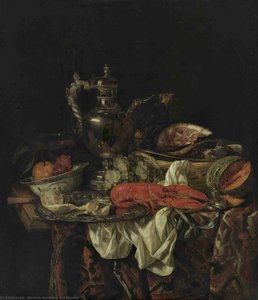
统计数据Still Life, Georg Hainz, 1666 - 1700
 1700
1700 113.0 x 95.0 cm
 展开详情
展开详情
手工油画复制品
由我们的艺术家按需定制,为您提供您所选尺寸及画框的布面手工油画。 ( 切换至版画销售渠道 切换至数字图像销售渠道)




































从与原作比例一致的预设尺寸中进行选择。

您可以输入自定义尺寸,以适配特定的画框或空间。如果所选尺寸与原图比例不符,我们将通过裁剪作品或添加手绘元素来扩展画面。数字样稿将在制作开始前发送给您确认。
请注意,屏幕预览无法准确反映实际的裁剪或扩展效果,只有样稿才能真实呈现最终的构图。
虽然我们提供定制尺寸服务,但为了保留原作比例,建议您从预设列表中选择尺寸。
下单后,AllPaintingsStore.com 团队将通过电子邮件联系客户获取具体要求,并提供效果预览图。


 玻璃选项仅适用于110厘米以下的尺寸。

Still Life, Georg Hainz, 1666 - 1700
复制材质
复制品尺寸
-


最终总价
$ 258
相似艺术品




艺术家简介
The Master of Material Splendor: The Life and Legacy of Georg Hainz
In the heart of the seventeenth century, as the mercantile pulse of Northern Germany began to beat with newfound prosperity, a singular talent emerged to capture the fleeting beauty of the material world. Georg Johann Hainz, born around 1630 in the vibrant artistic enclave of Altona, stands as a pivotal figure in the North German Baroque. His life and work serve as a window into an era defined by both immense wealth and a profound, melancholic awareness of mortality. Moving through the cultural corridors of Hamburg, Hainz established himself not merely as a painter, but as a visual poet capable of transforming inanimate objects into a complex narrative of human existence.
Hainz’s artistic journey was deeply rooted in the stylistic currents flowing from the Dutch Golden Age. His early training under Johannes Herman Dessler provided him with a rigorous foundation, exposing him to the meticulous traditions of masters like Willem Kalf and Cornelis Gijsbrecht van Bronkhorst. From these influences, Hainz inherited an unwavering commitment to realism and a fascination with the interplay of light and shadow. This education allowed him to master the pronkstilleven—the lavish still life—a genre that demanded an extraordinary ability to render diverse textures, from the cold sheen of silver to the delicate, translucent skin of a ripening peach.
A Symphony of Light and Texture
To encounter a work by Hainz is to be invited into a sensory experience. His compositions are often characterized by a breathtaking density, where objects are arranged with both calculated precision and an organic sense of abundance. In his celebrated Cabinets of Curiosities, the viewer is confronted with a treasure trove of global wonders: gleaming jewelry, exotic porcelain, and intricate nautilus cups. He possessed a rare technical brilliance, utilizing oil glazes to sculpt surfaces with light. One can almost feel the rough patina of aged metal or the cool, smooth curve of an imported dish as his brushwork captures every specular highlight and deep, velvety shadow.
Beyond the mere display of wealth, Hainz’s work is imbued with a profound symbolic depth. He was a master of the Vanitas tradition, weaving subtle reminders of the ephemeral nature of life into his displays of opulence. Within a single frame, a luxurious Persian rug might lie beneath a peeled lemon—its bright acidity contrasting with the inevitable decay it represents—or an aged skull might rest near a shimmering gold-plated dish. This duality creates a tension that is central to his art: the celebration of earthly achievement and the somber memento mori that reminds us all of the passage of time.
Historical Significance and Artistic Lineage
The impact of Georg Hainz extended far beyond his own canvases. As a prominent figure in Hamburg’s flourishing artistic scene, he became a cornerstone of the local Baroque movement. His versatility allowed him to navigate various commissions, ranging from intimate portraits to grand decorative murals, demonstrating an adaptability that secured his patronage among the era's influential noble families and merchant elites. Furthermore, his role as a mentor helped shape the next generation of North German painters; historical records suggest he may have taught artists such as Christian Berentz and potentially Franz Werner von Tamm.
Though his name is sometimes found in historical texts as Heintz or Hinz, his legacy remains unmistakable. He bridged the gap between the Dutch aesthetic and a distinct North German sensibility, creating a body of work that remains as captivating today as it was in the seventeenth century. Through his meticulous attention to detail and his ability to find the spiritual within the material, Georg Hainz ensured that the fleeting splendors of his age would be preserved in eternal, luminous oil.

georg hainz
1630 - 1700 , Germany
艺术家简介
- Artistic Movement Or Style: Dutch Still Life Tradition
- Artists Or Movements Influenced By This Artist: ['Floris Jansz. van Sauvegarde']
- Artists Who Influenced This Artist: ['Willem Kalf']
- Date Of Birth: ca. 1630
- Date Of Death: 1688
- Full Name: Georg Johann Hainz
- Nationality: German
- Notable Artworks: ['Still Life with carved Ivory Ewer']
- Place Of Birth: Altona, Germany

