

1949. Oil On Canvas, 144.0 x 174.0 cm.

§ 1目录数据

- 144.0 x 174.0 cm


 了解更多
了解更多§ 2摘要
藏品详情
Georges Braque’s "The Studio (III)" presents a fragmented Cubist vision of an artist's workspace, showcasing geometric planes and muted tones from 1949. Explore this iconic artwork by the influential modern master and bring its innovative spirit into your collection.
艺术家简介
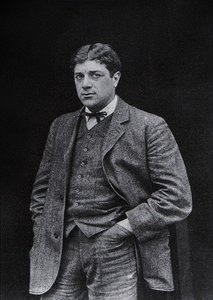
乔治·布拉克(1882-1963):立体主义先驱, fauvism大师。探索他的创新艺术作品,从《埃斯塔克小屋》到令人惊叹的拼贴画。他是与毕加索合作开创立体主义运动的关键人物,对现代艺术产生了深远影响。
§ 3赏析
A Fragmented Workspace
The painting The Studio (III), executed by Georges Braque in 1949, presents a room viewed through a fractured lens. The composition is built from geometric planes, primarily rectangular and angular shapes that overlap to reconstruct the interior of an artist's workspace. Within this space, several objects are discernible: a chair, a table, a window, knives, and a clock. These elements do not appear as unified, continuous forms but are instead dissected into intersecting fragments. The palette is restrained, consisting largely of browns, ochres, and creams. This choice of color emphasizes the materiality of the scene. A person is positioned within the room, appearing to observe or interact with the surrounding objects.
The technique utilizes the principles of Cubism to reject traditional illusionistic perspective. Instead of a single, static viewpoint, the artist employs multiple perspectives simultaneously. The window and the furniture are broken into shapes that create spatial ambiguity. This method focuses on the underlying structure of the subject matter rather than its surface appearance. The light in the studio is subdued, contributing to a sense of quietude within the composition.
Symbolism and Historical Context
The objects placed throughout the studio carry specific weight within the 1949 composition. The scattered knives represent the tools used in the process of creation and destruction. A clock hangs near the center of the painting, marking the passage of time and the persistence of the creative process. These items are integrated into the geometric structure to define the atmosphere of focused observation. The stillness of the still life setting allows for a contemplation of the act of making art.
This work emerged from a period of significant artistic development in Paris. Braque's approach in this mature period reflects his earlier involvement with Fauvism and his subsequent development of both Analytical and Synthetic Cubism alongside Pablo Picasso. While his earlier collaborations focused on flattening planes and monochromatic tones, this 1949 work demonstrates a refined use of form. The painting captures the tension between the physical reality of the studio tools and the intellectual experimentation of the artist's vision.
常见问题与解答
乔治·布拉克 的《The Studio (III)》 的亮度如何?
乔治·布拉克 的《The Studio (III)》 的记录亮度为 Soft Shadow。
"The Studio (III)" 是何时以及使用什么材料创作的?
"The Studio (III)"创作于1949年,采用Oil On Canvas技法。
关于“The Studio (III)”的建议打印规格——尺寸与方向为何?
对于“The Studio (III)”,建议的打印设置尺寸为 Large,方向为 Landscape。


 切换至版画销售渠道


 对于任何边长超过 105 厘米(约 41 英寸)的艺术品或复制品,画框将以拆解后的组件形式发货。此方法可确保安全送达并防止运输过程中的损坏。


