


 效果预览
效果预览
 分享
分享 分享
分享
 详情
详情 指南
指南

 下载
下载
 相似作品
相似作品 X射线
X射线 幻灯片播放
幻灯片播放 统计数据
统计数据Portrait of an Unknown Man in Black, with a Hat and Watch on a Table


 展开详情
展开详情
手工油画复制品
由我们的艺术家按需定制,为您提供您所选尺寸及画框的布面手工油画。 ( 切换至版画销售渠道 切换至数字图像销售渠道)




































从与原作比例一致的预设尺寸中进行选择。

您可以输入自定义尺寸,以适配特定的画框或空间。如果所选尺寸与原图比例不符,我们将通过裁剪作品或添加手绘元素来扩展画面。数字样稿将在制作开始前发送给您确认。
请注意,屏幕预览无法准确反映实际的裁剪或扩展效果,只有样稿才能真实呈现最终的构图。
虽然我们提供定制尺寸服务,但为了保留原作比例,建议您从预设列表中选择尺寸。
下单后,AllPaintingsStore.com 团队将通过电子邮件联系客户获取具体要求,并提供效果预览图。


 玻璃选项仅适用于110厘米以下的尺寸。

Portrait of an Unknown Man in Black, with a Hat and Watch on a Table
复制材质
复制品尺寸
-


最终总价
$ 258
相似艺术品


艺术家简介
Gerard Terborch: The Intimate Master of Dutch Interiors
Gerard Terborch (1617-1681) stands as a singular figure in the pantheon of Dutch Golden Age painters, renowned not for grand historical scenes or heroic portraits, but for his exquisitely observed and profoundly intimate depictions of domestic life. Born in Zwolle, he inherited an artistic lineage that propelled him toward a career marked by both technical mastery and a unique sensibility—a quiet elegance that continues to captivate viewers centuries later. His work offers a rare glimpse into the lives of the prosperous middle class, revealing their subtle gestures, unspoken emotions, and the carefully constructed atmosphere of their homes.
Terborch’s early artistic education was shaped by his father, Gerard Terborch the Elder, a skilled artist who had spent formative years in Rome. This exposure to Italian Renaissance principles instilled in young Gerard a deep appreciation for detail, light, and shadow—qualities he would later translate into his own distinctive style. He began his training in Amsterdam under Willem Cornelisz Duyster and Pieter de Molijn, absorbing the techniques of these influential masters while simultaneously forging his own path. A brief sojourn in London during 1635 exposed him to a different artistic environment, likely influencing his later depictions of aristocratic subjects.
His travels extended beyond Europe, including stays in Spain and Germany, where he encountered the influence of Diego Velázquez, whose masterful use of light and color profoundly impacted Terborch’s approach. The Spanish court's patronage further refined his skills, contributing to a subtle refinement in his palette and composition. Returning to Holland in 1650, he settled in Deventer, where he established a studio and continued to produce works that would cement his reputation as one of the most discerning observers of domestic life.
The Language of Domesticity
Terborch’s genius lay not in dramatic narratives but in capturing the quiet moments of everyday existence. He eschewed grand gestures and theatrical poses, instead focusing on the subtle interactions between individuals within a carefully rendered interior setting. His paintings are populated by figures engaged in seemingly mundane activities—reading letters, playing musical instruments, conversing quietly—yet these scenes resonate with an underlying sense of emotion and psychological depth.
A key element of Terborch’s technique was his meticulous attention to detail. He rendered fabrics with astonishing realism, capturing the textures of satin, velvet, and lace with a precision that bordered on obsessive. Light plays a crucial role in his compositions, subtly illuminating faces and objects while creating an atmosphere of intimacy and warmth. His use of muted colors—primarily browns, grays, and ochres—contributes to the overall sense of quietness and restraint.
His most celebrated works, such as *The Letter* (c. 1660-65) and *The Concert* (c. 1657), exemplify his mastery of this technique. In *The Letter*, a young woman receives a missive from her husband, her expression conveying a mixture of anticipation and melancholy. In *The Concert*, a family gathers for an evening musicale, their faces illuminated by candlelight, creating a scene of serene domesticity. These paintings are not merely representations of scenes; they are windows into the hearts and minds of the people depicted.
Influences and Artistic Development
Terborch’s artistic development can be traced through several distinct phases. Initially influenced by the Haarlem school, characterized by its emphasis on realism and meticulous detail, he gradually moved toward a more refined and introspective style. His early works often featured scenes of soldiers and guardsmen, reflecting the influence of Pieter Codde and Willem Duyster. However, as he matured, he developed his own unique approach to interior genre painting, prioritizing psychological depth and atmospheric effects over literal representation.
The impact of Diego Velázquez is evident in Terborch’s later works, particularly in his masterful use of light and shadow. Velázquez's ability to capture the nuances of human expression—the subtle flicker of an eye, the fleeting emotion on a face—served as a model for Terborch, who sought to convey similar levels of psychological insight in his own paintings.
Legacy and Historical Significance
Despite producing a relatively small number of works, Gerard Terborch’s influence on Dutch painting is undeniable. He established a new framework for subject matter, taking viewers into the sanctum of the home and revealing the complexities of domestic life. His paintings are not merely decorative; they offer valuable insights into the social customs, values, and emotional lives of 17th-century Hollanders.
Terborch’s work has been admired by art historians for its technical brilliance, psychological depth, and understated elegance. He is considered one of the masters of Dutch interior genre painting, alongside artists such as Gerrit Dou and Johannes Vermeer. His legacy continues to inspire contemporary artists who seek to capture the beauty and complexity of everyday life.

gerard terborch ii
1617 - 1681
艺术家简介
- Artistic Movement Or Style: Baroque
- Artists Or Movements Influenced By This Artist:
- Gabriel Metsu
- Gerrit Dou
- Johannes Vermeer
- Artists Who Influenced This Artist:
- Pieter de Molijn
- Pieter Codde
- Willem Duyster
- Date Of Birth: December 1617
- Date Of Death: December 8, 1681
- Full Name: Gerard ter Borch
- Nationality: Dutch
- Notable Artworks:
- The Swearing of the Oath
- The Letter
- The Concert
- Paternal Advice
- Place Of Birth: Zwolle, Netherlands
相关文章

光影交织的时代:荷兰黄金时代绘画艺术的兴盛与创新
深入探索荷兰黄金时代的绘画艺术:伦勃朗、维米尔等大师的技法与创新,了解巴洛克风格的独特演绎。AllPaintingsStore提供手绘油画复制、艺术咨询及收藏建议,助您领略经典艺术之美。
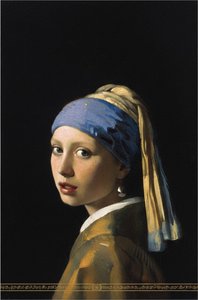
荷兰黄金时代:十幅定义艺术史的巨作 | AllPaintingsStore
探索荷兰黄金时代的艺术巅峰! 伦勃朗、维米尔等大师名作,带您领略巴洛克艺术的辉煌。高清画作、博物馆级品质,点亮您的家居空间。AllPaintingsStore.com 提供精选艺术复制品和定制装饰方案。立即在线探索全系列!

Mastering Light & Shadow: A Journey Through the Dutch Golden Age's Luminous Legacy
Embark on a cultural journey through the Dutch Golden Age. Explore the masterful interplay of light and shadow in 17th-century masterpieces, from Rembrandt to Vermeer, and discover how this era of profound realism continues to inspire fine art collectors today.
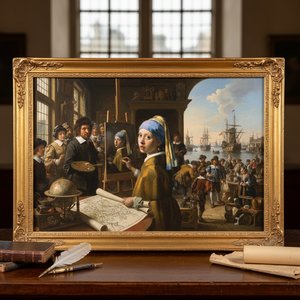
荷兰黄金时代绘画:文化创新中的现实主义反思
深入探索荷兰黄金时代绘画的文化创新与现实主义反思。本文解读伦勃朗、维米尔等大师的作品,并结合玛莉特·韦斯特曼的图像学研究,揭示艺术史背后的社会语境与现代性意识觉醒。

Golden Light & Dutch Skies: The Timeless Magic of Dutch Golden Age Landscapes
Discover the breathtaking beauty of Dutch Golden Age landscapes. Explore the mastery of light, chiaroscuro, and 17th-century realism through an expert art history lens, celebrating the enduring legacy of the Dutch Masters for discerning collectors and art lovers.

