


 效果预览
效果预览
 购买手绘画作
 分享
分享 分享
分享
 详情
详情

 下载
下载
 相似作品
相似作品 X射线
X射线 幻灯片播放
幻灯片播放Expressionistische Landschaft
 展开详情
展开详情




































从与原作比例一致的预设尺寸中进行选择。

您可以输入自定义尺寸,以适配特定的画框或空间。如果您选择的尺寸与原图比例不符,我们将对作品进行裁剪,或通过镜像填充/纯色填充边缘的方式来扩展图像。在开始制作之前,我们会向您发送一份数字效果图供您确认。
请注意,屏幕上的预览并不能反映实际的裁剪或扩展效果。只有效果图才能准确展示最终的构图。
虽然我们提供定制尺寸,但为了保持原图比例,我们建议您从预设列表中选择尺寸。


 玻璃选项仅适用于110厘米以下的尺寸。

Expressionistische Landschaft
艺术微喷/版画
复制品尺寸
-


最终总价
$ 64
相似艺术品
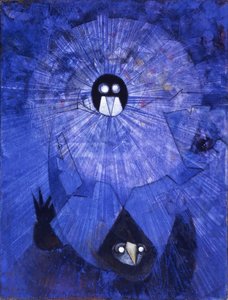


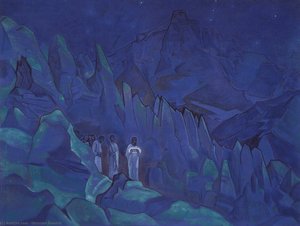


艺术家简介
Hermann Scherer: Life and Legacy
Early Life and Training
Hermann Scherer was born in Rümpingen, Baden-Württemberg, Germany, in 1893. He began his artistic journey not with a brush, but with stone. After leaving school in 1907, he undertook an apprenticeship as a stonemason at the Schwab workshop in Lörrach. This foundational training would profoundly influence his later sculptural work and understanding of form.
Sculptural Beginnings & Artistic Development
From 1910 to 1919, Scherer honed his skills working with a series of Basel sculptors – Carl Gutknecht, Otto Roos, and Carl Burckhardt. Working as a laborer and later an assistant for Roos allowed him to establish a small workshop of his own. This period was crucial in developing his technical abilities and artistic vision. In 1919, Scherer underwent a significant shift, rejecting much of his earlier work and embracing a more contemporary approach to art.
Influences & Expressionist Exploration
The early 1920s marked a period of intense artistic exploration for Scherer. He was deeply influenced by the German painters Erich Heckel, Ernst Ludwig Kirchner, and Karl Schmidt-Rottluff. A visit to an exhibition of Edvard Munch’s work in Zurich further ignited his passion for Expressionism. He forged a close relationship with Kirchner, traveling to Davos for extended painting trips from 1922 to 1924.
The Rot-Blau Group & Public Reaction
In late 1924, Scherer co-founded the artist group Rot-Blau (Red-Blue) with Albert Müller and Paul Camenisch, later joined by Werner Neuhaus. Their debut exhibition at the Basler Kunstverein in 1925 provoked a strong public reaction; some works were deemed offensive in both Basel and Zurich. Despite this controversy, Rot-Blau became an important force in Swiss Expressionism.
Later Years & Legacy
Although his friendship with Kirchner cooled in 1925, their shared commitment to Expressionism remained. Kirchner continued to support the Rot-Blau group, showcasing their work at an international art exhibition in Dresden in 1926. Sadly, Scherer’s career was cut short by illness. He became seriously ill in autumn 1926 and died in Basel on May 13, 1927.
Major Achievements & Historical Significance
- A posthumous exhibition at the Kunsthalle Basel in 1927 showcased over 200 of his works.
- The Dreiländermuseum in Lörrach holds a significant collection of Scherer’s art, including woodcuts and the “Portrait of Otto Staiger.”
- Streets and bridges in Rümpingen are named in his honor.
- His sculpture "Das kleine Mädchen" ("The Little Girl") was acquired by the Pfalzgalerie Kaiserslautern for over 140,000 euros in 2004.
Hermann Scherer’s work represents a vital contribution to Swiss Expressionism. His bold use of color, emotive subject matter, and innovative approach to both painting and sculpture continue to resonate with audiences today. He remains a notable figure in the history of 20th-century art.

Hermann Scherer
1893 - 1927 , Germany
艺术家简介
- Birth Date: 1893
- Birth Place: Rümpingen, Germany
- Death Date: 1927-05-13
- Influenced:
- Albert Müller
- Paul Camenisch
- Werner Neuhaus
- Influenced By:
- Erich Heckel
- Ernst Ludwig Kirchner
- Karl Schmidt-Rottluff
- Edvard Munch
- Movement: Expressionism
- Name: Hermann Scherer
- Nationality: Swiss
- Notable Works:
- Expressionistische Landschaft
- Tessiner Landschaft
- Das kleine Mädchen


