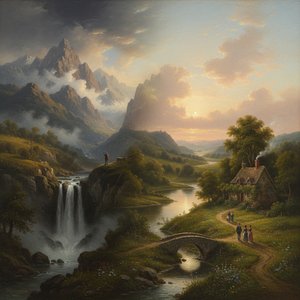
1798. Oil On Canvas. 卡尔斯鲁厄州立美术馆.

§ 1Catalogue data


§ 2Abstract
藏品详情
Explore 'Project for The Disposition of the ''Grande Galerie''' by Hubert Robert, a captivating capriccio showcasing Roman ruins & French landscapes. A masterpiece of 18th-century art.
 展开全文
展开全文
艺术家简介
法国画家于贝尔·罗伯特(1733-1808)以其充满诗意的废墟景观和“ capriccio”绘画而闻名。他的作品融合了历史、想象力和对光影的敏锐捕捉,是洛可可与新古典主义过渡时期的重要代表人物,预示着浪漫主义的到来。
§ 3Commentary
A Symphony of Decay and Grandeur
In the twilight of the eighteenth century, as the echoes of the French Revolution began to settle into the broader European consciousness, Hubert Robert captured a vision of Rome that transcends mere architectural documentation. His 1798 masterpiece, Roman Capriccio, is not simply a landscape; it is an evocative journey into the heart of memory and the sublime. Through his masterful use of the capriccio technique—a style defined by architectural fantasy rather than topographical accuracy—Robert invites the viewer to wander through a dreamscape where the boundaries between reality and imagination dissolve. The canvas presents a breathtaking panorama of crumbling columns, weathered arches, and majestic statues, all bathed in a hazy, golden light that suggests the warmth of a setting sun over an empire long passed.
The composition is a delicate dance of light and shadow, where Robert employs layered planes of color to create an illusionistic depth that draws the eye deep into the Roman ruins. This atmospheric approach allows the monumental structures to appear both physically imposing and ethereally transient. Amidst the skeletal remains of classical greatness, small figures—the staffage—are scattered throughout the scene. These individuals, engaged in quiet contemplation or casual interaction around the ancient sculptures, provide a vital sense of scale and human connection. Their presence transforms the ruins from cold, dead stone into a living stage, where the grandeur of the past meets the fleeting pulse of the present.
The Poetics of Time and Transformation
Beyond its visual splendor, Roman Capriccio serves as a profound meditation on the relentless march of time. To look upon these decaying structures is to witness the inevitable triumph of nature over human ambition. Robert utilizes the crumbling masonry as a powerful symbol of the ephemeral nature of power and the futility of even the most monumental architectural achievements. Yet, there is no sense of pure tragedy in this decay; instead, the artist weaves in elements of regeneration. The subtle emergence of vibrant blossoms amidst the rubble acts as a poignant counterpoint to the stone, suggesting that from the wreckage of old worlds, new beauty and hope can inevitably bloom.
For the discerning collector or interior designer, this painting offers more than just aesthetic appeal; it provides an emotional anchor for a space. The work possesses a unique ability to evoke nostalgia and a sense of wonder, making it an ideal centerpiece for rooms designed for reflection and intellectual engagement. Whether placed in a grand library or a contemporary living space, the Roman Capriccio brings with it a storied atmosphere of classical elegance and Romantic mystery. It is a piece that does not merely decorate a wall but tells a story of endurance, transformation, and the eternal beauty found within the ruins of history.
常见问题与解答
于贝尔·罗伯特 的《Roman Capriccio》 的色彩构图是如何构建的?
在“Roman Capriccio”中,Gentle的对比与Unified Palette的和谐交相辉映。
是否有面向学生的 于贝尔·罗伯特 的《Roman Capriccio》 详情页?
针对 于贝尔·罗伯特 的《Roman Capriccio》,我们提供了一个 指南 页面:这是一份可打印的艺术品资料页,专为学生及课堂教学使用而设计。
“Roman Capriccio”的创作者是谁,属于什么风格?
"Roman Capriccio" 由 于贝尔·罗伯特 以 Romantic Landscape 流派风格创作而成。艺术家与艺术流派共同定义了作品的传承。


 切换至版画销售渠道


 对于任何边长超过 105 厘米(约 41 英寸)的艺术品或复制品,画框将以拆解后的组件形式发货。此方法可确保安全送达并防止运输过程中的损坏。