


 效果预览
效果预览
 购买手绘画作
 分享
分享 分享
分享
 详情
详情

 下载
下载
 相似作品
相似作品 X射线
X射线 幻灯片播放
幻灯片播放Light Bay Mare
 Romanticism
 1812
1812 70.0 x 90.0 cm
 Brodsworth Hall
 展开详情
展开详情




P118B $10

P118H $10

P118W $10

P438Z $10

P508JH $12

P508YH $12

P805H $10

P805Z $10

P919BZ $10

P919G $10

P919XJ $10

P959ZH $10

P968JZ $12

W106C $8

W218G $10

W218JH $8

W218Y $10

W307PJ $10

W316G $10

W316PJ $8

W316Y $10

W398PJ $8

W4111J $10

W500HY $15

W500JH $15

W692G $12

W849H $8

W940BG $15

W953PJ $8




从与原作比例一致的预设尺寸中进行选择。

您可以输入自定义尺寸,以适配特定的画框或空间。如果您选择的尺寸与原图比例不符,我们将对作品进行裁剪,或通过镜像填充/纯色填充边缘的方式来扩展图像。在开始制作之前,我们会向您发送一份数字效果图供您确认。
请注意,屏幕上的预览并不能反映实际的裁剪或扩展效果。只有效果图才能准确展示最终的构图。
虽然我们提供定制尺寸,但为了保持原图比例,我们建议您从预设列表中选择尺寸。


 玻璃选项仅适用于110厘米以下的尺寸。

Light Bay Mare
艺术微喷/版画
复制品尺寸
-


最终总价
$ 64
相似艺术品


艺术家简介
The Master of the English Hunt: The Life and Legacy of James Barenger
In the dappled sunlight of the early nineteenth-century English countryside, few artists captured the pulse of the hunt and the quiet majesty of the animal kingdom as vividly as James Barenger. Born on Christmas Day in 1780 within the industrious enclave of Kentish Town, London, Barenger was destined for a life steeped in artistic precision. He was the son of James Barenger Snr., a celebrated metal chaser whose meticulous skill in portraying insects for the Royal Academy provided a foundational blueprint for his son’s later mastery of anatomical realism. This familial lineage of craftsmanship meant that from his earliest years, Barenger viewed the natural world not merely as scenery, and certainly not as mere decoration, but as a subject requiring scientific accuracy and profound emotional resonance.
Barenger’s artistic evolution was a journey from the delicate landscapes of his youth to the robust, muscular energy of equestrian portraiture. While he initially found footing as a landscape artist, his true calling emerged through his fascination with the movement and spirit of horses and hounds. By the time he made his formal debut at the Royal Academy in 1807, he had begun to cultivate a style that would define him: a seamless blend of naturalism and narrative tension. His work did not simply sit static upon the canvas; it breathed with the rhythmic panting of hounds and the nervous twitch of a horse's ear, capturing those fleeting, breathless moments of the chase that defined the sporting culture of his era.
Technique, Texture, and the Sporting Tradition
What truly distinguishes Barenger’s oeuvre is his unparalleled ability to render texture and light with an almost tactile quality. Whether he was depicting the coarse, wiry fur of a hunting dog or the sleek, shimmering coat of a bay mare, his brushwork conveyed a deep understanding of organic matter. In masterpieces such as Pheasant Shooting, one can sense the tension of the hunt through his strategic use of composition. He utilized the lush, textured underbrush to guide the viewer’s eye, creating a sense of depth that mirrors the very search conducted by the hunter. This mastery of light and shadow—the interplay of sunbeams piercing through thick woodland canopy—allowed him to elevate sporting scenes from mere documentation to high art.
His influence extended far beyond the walls of private galleries, reaching the wider public through the burgeoning medium of print. Barenger’s paintings were frequently reproduced in prestigious sporting publications of the day, including:
- W. H. Scott’s British Field Sports
- The Sporting Repository
- The Annals of Sporting
- The Sporting Magazine
These engravings, often executed by skilled hands like those of his brother Samuel or W. H. Scott himself, ensured that Barenger’s depictions of legendary animals, such as the famed Blucher, became iconic images within British sporting history. His work served as a visual record of an aristocratic way of life, immortalizing the breeds and the traditions of the English landed gentry.
A Lasting Impression on the English School
Though his life was tragically short, ending in 1831, James Barenger left behind a legacy that solidified his position within the prestigious English School of painting. He moved through the artistic circles of London with distinction, securing commissions from influential families like the Tattersall family, whose patronage allowed him to pursue his passion for animal breeding and fine art simultaneously. His life was a testament to the synergy between observation and execution; he lived much of his life as an avid breeder, a pursuit that undoubtedly informed the anatomical perfection found in his canvases.
Today, Barenger is remembered not merely as an illustrator of hunts, but as a pioneer who brought a new level of dignity and scientific rigor to animal painting. His ability to imbue his subjects with individual character—transforming a mere horse into a portrait of strength and grace—ensures that his work remains a vital chapter in the history of British realism. Through his eyes, we continue to witness the timeless, evocative beauty of the natural world and the enduring spirit of the English sporting tradition.

james barenger
1780 - 1831
艺术家简介
- Artistic Movement Or Style: Early American Art
- Artists Or Movements Influenced By This Artist: ['British School']
- Artists Who Influenced This Artist: ['Dutch Masters']
- Date Of Birth: 1780
- Date Of Death: 1831
- Full Name: James Barenger
- Nationality: English
- Notable Artworks: ['Blucher']
- Place Of Birth: Kentish Town, London
相关文章
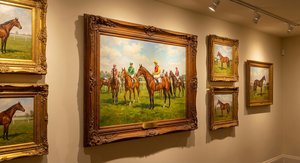
Sir Alfred Munnings' Masterpieces: 25 Paintings That Define Equine Art | AllPaintingsStore
Explore 25 iconic Sir Alfred Munnings paintings! Discover the beauty of British Impressionism, equine art & rural England. Find museum-quality reproductions and elevate your home decor with AllPaintingsStore. Explore the full collection online.

康斯塔布尔大师之作:25幅传世风景画赏析 | AllPaintingsStore
探索康斯塔布尔的25幅传世杰作!沉浸于英国田园风光,感受浪漫主义绘画大师的光影与色彩。高清油画复制、艺术品购买尽在AllPaintingsStore.com,为您的家居增添经典之美。立即在线探索完整系列!
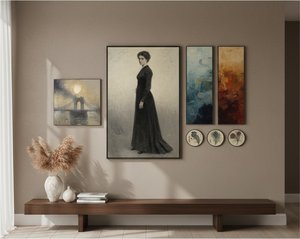
惠斯勒大师25幅杰作:艺术、家居与永恒之美 | AllPaintingsStore
探索詹姆斯·惠斯勒25幅杰作!深入了解夜曲、静谧和谐等经典油画背后的故事与艺术魅力。AllPaintingsStore.com提供博物馆级复制品,为您的家居带来永恒之美。立即在线探索完整系列!

Cultivating Visions: A Historical Journey Through Rural Landscapes in Art
Explore the rich history of rural landscape painting with AllPaintingsStore. Discover Impressionist masterpieces, key artists & movements. Find your perfect serene artwork and bring nature's beauty home.
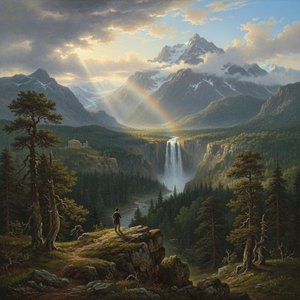
Evoking Nature's Sublime: A Comprehensive Exploration of 19th-Century Landscape Painting
Explore the captivating world of 19th-century landscape painting! Discover renowned artists like Friedrich & Monet, key movements, and find the perfect artwork to bring nature's serenity into your home. Expert insights at AllPaintingsStore.


