

Acrylic.

§ 1Catalogue data

§ 2Abstract
藏品详情
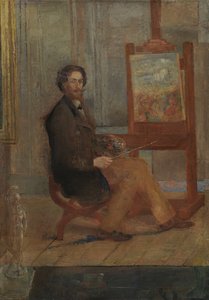
James Ensor’s haunting self-portrait captures the unsettling mood of Symbolism through meticulous detail—a brooding gaze and formal attire reflecting a man wrestling with inner anxieties. Explore this iconic Belgian masterpiece and bring its evocative artistry into your home.
 展开全文
展开全文
艺术家简介
比利时画家詹姆斯·恩索 (1860-1949),表现主义与超现实主义先驱,以其令人不安的场景、面具、狂欢节和骷髅而闻名。《基督进入布鲁塞尔》等作品深刻批判社会与宗教,风格大胆前卫,影响深远。
§ 3Commentary
James Ensor’s Self-Portrait: A Study in Psychological Intensity
- Subject Matter James Ensor's "Self-portrait," completed around 1888, depicts a solitary figure—the artist himself—seated at a desk. The pose is deliberately understated, conveying a sense of introspection and quiet contemplation rather than grand theatricality. This deliberate simplicity serves to heighten the psychological impact of the image.
- Style Ensor’s style aligns firmly with Symbolism, though it anticipates Expressionism's bolder explorations of emotion. He eschews naturalistic representation in favor of stylized forms and flattened perspectives—techniques characteristic of the movement’s rejection of Impressionist optical realism. The painting avoids idealized beauty, opting instead for a portrayal that captures the artist’s inner turmoil.
- Technique Ensor employed oil paint on canvas using a meticulous layering process. He meticulously blended colors to create subtle gradations and textures, emphasizing the materiality of the surface itself. This technique contributes to the painting's unsettling atmosphere—the muted palette and careful brushwork reinforce the sense of confinement and psychological unease.
- Historical Context Created during a period of significant artistic experimentation in Europe, “Self-portrait” reflects the broader Symbolist preoccupation with exploring inner states of mind and confronting anxieties about mortality. Ensor’s work responded to the intellectual currents of his time—particularly Nietzsche's philosophy of eternal recurrence—which questioned traditional notions of morality and purpose.
- Symbolism The desk itself is laden with symbolic significance, representing intellectuality and perhaps also isolation. The man’s gaze directs outwards but seems unfocused, hinting at a preoccupation with thoughts beyond immediate perception. Furthermore, the muted color scheme—primarily browns and greys—underscores the painting's melancholic mood and speaks to Ensor’s exploration of themes like decay and disillusionment.
Exploring Psychological Depth Through Flattened Perspective
Ensor deliberately rejects traditional perspective, flattening the pictorial space to create a claustrophobic effect. This technique isn't merely stylistic; it serves as a powerful tool for conveying psychological tension. By minimizing depth, Ensor forces the viewer’s eye inward, mirroring the artist’s own preoccupation with internal reflection and confronting uncomfortable truths. The absence of atmospheric haze—a hallmark of Impressionism—further enhances this sense of confinement.A Palette of Quiet Disquiet
The subdued color palette—dominated by earthy browns and muted greys—is crucial to the painting’s emotional resonance. Ensor eschews vibrant hues, opting for tones that evoke feelings of melancholy and introspection. This deliberate restraint contributes to the unsettling atmosphere, mirroring the artist's own anxieties about existence and confronting existential questions.Influence Beyond Symbolism
Despite its affiliation with Symbolism, “Self-portrait” anticipates the expressive tendencies of Expressionism. Ensor’s meticulous brushwork—characterized by visible strokes that convey texture and emotion—prefigures the bolder stylistic choices championed by artists like Edvard Munch and Ernst Ludwig Kirchner. This influence extends beyond technique; Ensor's unflinching gaze at the viewer embodies a spirit of psychological honesty that would become central to Expressionist art.常见问题与解答
"Self-portrait" 是否属于公有领域作品?
詹姆斯·恩索尔 的《Self-portrait》 属于 属于公有领域 —— 其版权已过期。此版权状态决定了该作品图像的复制方式。
"Self-portrait" 是如何平衡明暗对比的?
詹姆斯·恩索尔 的《Self-portrait》 的亮度记录为 shadow,亮度值为 Soft Shadow。
《Self-portrait》属于 詹姆斯·恩索尔 艺术生涯中的哪个时期?
“Self-portrait”创作于詹姆斯·恩索尔艺术生涯的Mature Period时期。这一时期标志着该作品与艺术家艺术风格演进的紧密关联。


 切换至版画销售渠道


 对于任何边长超过 105 厘米(约 41 英寸)的艺术品或复制品,画框将以拆解后的组件形式发货。此方法可确保安全送达并防止运输过程中的损坏。


