

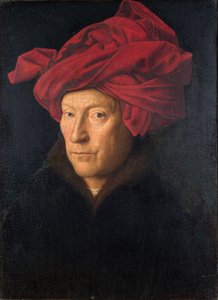
1437. 油性, 27.0 x 21.0 cm. Gemäldegalerie Alte Meister.

§ 1目录数据

- 27.0 x 21.0 cm


§ 2摘要
藏品详情
Witness Jan van Eyck's mastery with 'Small Triptych (central panel)' – a stunning oil painting reproduction capturing intimacy & realism, showcasing his revolutionary techniques and artistic influence.
 展开全文
展开全文
艺术家简介
早期尼德兰绘画的先驱扬·凡·艾克 (约1390-1441),以精湛的油画技法和开创性的现实主义而闻名。探索《根特祭坛画》和《阿尔诺夫二夫妇画像》等杰作,感受北方文艺复兴艺术的魅力!
§ 3赏析
The Intimate World of Jan van Eyck's Central Panel
Within the confines of the ‘Small Triptych,’ a masterpiece by Jan van Eyck completed around 1437, resides a scene of profound serenity and quiet contemplation. This central panel, measuring just 27 x 21 centimeters, isn’t merely a depiction of a mother and child; it's an exquisitely rendered meditation on domesticity, faith, and the enduring bond between generations. Van Eyck, a pivotal figure in the Early Netherlandish movement, masterfully employs his revolutionary oil painting technique to capture not just the outward appearance but also the very essence of this intimate moment. The woman, seated comfortably within a simple chair, exudes an aura of gentle authority and profound love as she cradles her infant – a visual embodiment of nurturing and protection. The subtle modeling of her garments, achieved through layers of meticulously applied paint, creates a remarkable sense of tactile realism, inviting the viewer to almost feel the softness of the fabric against their fingertips.
Notice the deliberate placement of the figures within the space. They are not isolated but subtly integrated into a carefully constructed architectural setting. Three arches frame the scene, hinting at a sacred or domestic space—perhaps a chapel or a private chamber—and adding depth to the composition. Above the mother and child, a clock serves as a poignant reminder of time’s passage, anchoring the scene in both earthly reality and spiritual contemplation. The inclusion of this seemingly mundane object elevates it to a symbol of mortality and the preciousness of fleeting moments.
Light and Shadow: Van Eyck's Revolutionary Technique
What truly distinguishes Van Eyck’s work is his unparalleled mastery of light. He doesn’t simply paint light; he *creates* it, manipulating its effects to sculpt form and imbue the scene with a luminous quality. Unlike earlier painters who relied on tempera, which produced flat, lifeless surfaces, Van Eyck's use of oil paints allowed him to build up layers of color gradually, creating subtle gradations of tone and texture. This technique enabled him to achieve an astonishing level of realism – the way light catches on the woman’s hair, the delicate folds in her dress, and the soft glow around the infant are all testament to his skill.
The interplay of light and shadow is particularly evident in the modeling of the figures. Van Eyck uses highlights to accentuate their forms, creating a sense of three-dimensionality that was revolutionary for its time. The shadows, conversely, recede into the background, drawing the viewer’s eye towards the central figures and enhancing the overall sense of intimacy. This masterful control of light is not merely aesthetic; it serves to convey a profound emotional resonance, suggesting both serenity and a quiet reverence.
A Window into the Renaissance: Symbolism and Context
The ‘Small Triptych’ resides within the Gemäldegalerie Alte Meister in Dresden, Germany—a treasure trove of Early Netherlandish art. Van Eyck's work is deeply rooted in the International Gothic style, yet he pushed beyond its decorative flourishes to embrace a more naturalistic and realistic approach. His innovations in oil painting – particularly his ability to create luminous colors and incredibly detailed textures – profoundly influenced subsequent generations of artists. The triptych itself represents a shift towards private devotional art, moving away from the grand altarpieces commissioned by churches and towards smaller, more intimate works intended for domestic use.
The inclusion of elements like the clock and the arches suggests a connection to both earthly and spiritual realms. The mother-child relationship is central to Christian iconography, representing the Virgin Mary and Christ—a potent symbol of divine grace and salvation. The overall composition evokes a sense of timelessness, inviting viewers to contemplate the enduring power of family, faith, and the beauty of the everyday.
Bringing Jan van Eyck Home: A Hand-Painted Reproduction
AllPaintingsStore offers exquisite, hand-painted reproductions of Jan van Eyck’s ‘Small Triptych (central panel)’, capturing the artist's revolutionary techniques and profound emotional depth. Each reproduction is meticulously crafted by our skilled artisans, using traditional oil painting methods to faithfully recreate Van Eyck’s luminous colors, intricate details, and masterful modeling. Owning a AllPaintingsStore reproduction allows you to bring this iconic masterpiece into your home or office, celebrating the enduring legacy of one of art history's greatest masters. Explore our collection today and experience the magic of Van Eyck’s vision firsthand.
常见问题与解答
扬·凡·艾克 的《Small Triptych (central panel)》 的创作年代与艺术风格是什么?
"Small Triptych (central panel)"创作于1437年,属于Early Netherlandish Painting运动时期的作品。其创作年代与艺术流派确立了该作品在艺术史上的地位。
扬·凡·艾克 创作《Small Triptych (central panel)》时是多少岁?
当"Small Triptych (central panel)"于1437创作时,出生于1390的扬·凡·艾克正值47岁。
对于 扬·凡·艾克 的《Small Triptych (central panel)》,有哪些推荐的用途和陈列空间?
扬·凡·艾克 的《Small Triptych (central panel)》 推荐用于 反光性,理想的摆放空间为 客厅空间。结合使用场景与空间布局,可以更好地确定复制品的陈列位置。


 切换至版画销售渠道


 对于任何边长超过 105 厘米(约 41 英寸)的艺术品或复制品,画框将以拆解后的组件形式发货。此方法可确保安全送达并防止运输过程中的损坏。


