

1816. 布面油画.

§ 1目录数据


§ 2摘要
藏品详情
Explore John Constable’s poignant portrait of Maria Bicknell, capturing Romantic devotion with soft light and meticulous detail—a masterpiece reflecting love amidst societal constraints.
 展开全文
展开全文
§ 3赏析
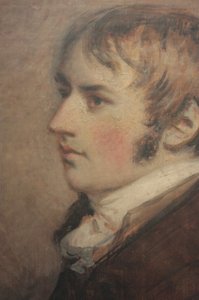
Maria Bicknell (Mrs. John Constable) – A Portrait of Romantic Devotion
John Constable’s Maria Bicknell (Mrs. John Constable) stands as a poignant emblem of the Romantic era’s preoccupation with emotion and personal experience—a stark contrast to the grand narratives favored by earlier artistic movements.
Painted in 1816 during a period marked by societal disapproval surrounding Constable’s relationship with Maria Bicknell, this portrait transcends mere likeness; it embodies the profound affection that bound him to his beloved. Their union defied convention, fueled by an unwavering commitment despite familial objections and social pressures—a narrative woven into the very fabric of the artwork.
Artistic Elements: Soft Light and Delicate Detail
Constable’s masterful technique employs oil paint on canvas, prioritizing subtle tonal gradations to evoke a sense of serenity. The muted palette—dominated by earthy browns and creams—creates an atmosphere of intimacy and introspection. Maria Bicknell is depicted in repose, her gaze directed slightly to the left, conveying thoughtfulness and vulnerability. Her long brown hair cascades gracefully around her shoulders, framing her face with elegance, while her white dress subtly ornamented with a delicate necklace underscores her refinement.
Constable’s meticulous attention to detail captures the nuances of human expression—the subtle curve of her lips, the gentle tilt of her head. These elements contribute to the painting's emotional resonance, inviting viewers to contemplate the complexities of love and devotion amidst societal constraints.
Historical Context: Romantic Sentimentality
The portrait emerged during a time when Romanticism championed subjective experience and idealized beauty—a reaction against Enlightenment rationalism’s emphasis on reason. Constable’s depiction aligns perfectly with this aesthetic sensibility, prioritizing emotional truth over formal conventions. The inclusion of supporting figures—presumably Maria Bicknell's family—adds layers to the narrative, hinting at the societal disapproval faced by the couple.
Furthermore, the clock in the background serves as a visual reminder of time’s passage and the inevitability of change—a motif prevalent throughout Romantic art. It underscores the fragility of human relationships and the bittersweet beauty of fleeting moments.
Legacy: Beyond Portraiture – A Window into Constable's Soul
While Maria Bicknell (Mrs. John Constable) is undeniably a portrait in the traditional sense—a celebration of beauty and grace—it represents something far deeper: Constable’s unwavering devotion to Maria Bicknell and his profound connection with nature.
Like Constable's celebrated landscapes, such as The Hay Wain, this painting speaks to universal themes of love, longing, and the human condition—solidifying Constable’s place as one of the foremost artists of his era.
For those seeking inspiration or contemplating acquiring a stunning reproduction, John Constable: Portrait of Maria Bicknell offers an unparalleled glimpse into the artist’s artistic vision and emotional depth.
常见问题与解答
康斯塔勃尔 的《maria bicknell (mrs. john constable) -》 的色彩浓郁度如何?
康斯塔勃尔 的《maria bicknell (mrs. john constable) -》 呈现出和谐均衡的色彩强度。
康斯塔勃尔 的《maria bicknell (mrs. john constable) -》 是一件广为人知的艺术品吗?
康斯塔勃尔 的《maria bicknell (mrs. john constable) -》 的记录热度为 标志性。
康斯塔勃尔 的《maria bicknell (mrs. john constable) -》 的创作年代与艺术风格是什么?
康斯塔勃尔 的《maria bicknell (mrs. john constable) -》创作于1816年,属于Romanticism流派。


 切换至版画销售渠道


 对于任何边长超过 105 厘米(约 41 英寸)的艺术品或复制品,画框将以拆解后的组件形式发货。此方法可确保安全送达并防止运输过程中的损坏。


