


 效果预览
效果预览
 分享
分享 分享
分享
 详情
详情 指南
指南

 下载
下载
 相似作品
相似作品 X射线
X射线 幻灯片播放
幻灯片播放 统计数据
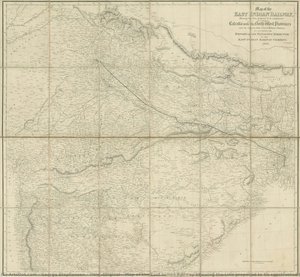
统计数据Atlas of Elementary Geography


 展开详情
展开详情
手工油画复制品
由我们的艺术家按需定制,为您提供您所选尺寸及画框的布面手工油画。 ( 切换至版画销售渠道 切换至数字图像销售渠道)




































从与原作比例一致的预设尺寸中进行选择。

您可以输入自定义尺寸,以适配特定的画框或空间。如果所选尺寸与原图比例不符,我们将通过裁剪作品或添加手绘元素来扩展画面。数字样稿将在制作开始前发送给您确认。
请注意,屏幕预览无法准确反映实际的裁剪或扩展效果,只有样稿才能真实呈现最终的构图。
虽然我们提供定制尺寸服务,但为了保留原作比例,建议您从预设列表中选择尺寸。
下单后,AllPaintingsStore.com 团队将通过电子邮件联系客户获取具体要求,并提供效果预览图。


 玻璃选项仅适用于110厘米以下的尺寸。

Atlas of Elementary Geography
复制材质
复制品尺寸
-


最终总价
$ 258
相似艺术品




艺术家简介
The Cartographer of Knowledge: The Legacy of Juan de la Gloria Artero González
In the golden age of Spanish academic expansion, few figures bridged the gap between scientific precision and educational accessibility as elegantly as Juan de la Gloria Artero González. Born in the sun-drenched town of Bullas, Spain, in 1834, Artero’s journey was one defined by a profound devotion to the clarity of the world. His early years, spent studying in Bull and Mula, laid a foundation of discipline that would later manifest in his meticulous approach to geography. A pivotal moment in his intellectual formation occurred at the seminary of San Fulgencio in Murcia, where his studies in theology provided him with a unique perspective on the structure of existence—a lens through which he would eventually view the physical contours of our planet.
Artero was not merely a chronicler of lands; he was a pioneer of educational cartography. At a time when geographical knowledge could be dense and inaccessible to the common student, he envisioned a way to translate complex topographical data into visual narratives that could spark curiosity in any classroom. His ambition was rooted in the belief that an accurate map is more than a navigational tool; it is a fundamental instrument of informed citizenship. By bringing the intricacies of the natural world into the hands of learners, he sought to foster a generation capable of understanding their place within the vast tapestry of human civilization.
Mastery of Line and Detail
The artistry of Artero González lies in his remarkable command over the traditional engraving techniques of the late 19th century. His work demanded an almost monastic level of patience, as he painstakingly transferred geological surveys onto parchment with surgical precision. Each map produced under his direction was a triumph of technical skill, characterized by fine, intricate linework that captured the subtle nuances of the earth's surface. To gaze upon his work is to witness the delicate interplay of light and shadow rendered through density of line, where mountain ranges emerge from valleys and coastal boundaries are defined with unwavering fidelity.
This commitment to realism was far more than a stylistic preference; it was the heartbeat of his pedagogical mission. Artero believed that for a map to teach, it must be truthful. His Atlas of Elementary Geography stands as a testament to this philosophy, showcasing:
- The meticulous delineation of topographical elevations and geological contours.
- A seamless integration of scientific accuracy with aesthetic clarity.
- The use of traditional engraving to create lasting, high-fidelity visual records.
A Lasting Historical Impression
The historical significance of Juan de la Gloria Artero González extends far beyond the borders of his native Spain. As a professor and university chair at the University of Granada, he influenced the academic landscape of his era, leaving behind works that became staples of Spanish education for decades. His Atlas histórico-geográfico de España, published in 1879, achieved legendary status, reaching numerous editions as it became the definitive guide for students navigating the complexities of their nation's history and geography.
Though he passed away in 1903, his influence remains etched into the very way we perceive the relationship between art and science. He proved that the map-maker is, in many ways, an artist of truth, using the medium of print to illuminate the unknown. Today, his legacy lives on through the collectors and historians who find beauty in his precise lines and profound meaning in his dedication to spreading knowledge. Artero González remains a luminous figure in the history of cartography, reminding us that to map the world is to truly begin to understand it.

juan de la gloria artero gonzález
1834 - 1903 , Spain
艺术家简介
- Date Of Birth: September 30, 1834
- Date Of Death: June 19, 1903
- Full Name: Juan de la Gloria Artero González
- Nationality: Spanish
- Notable Artworks: ['Atlas of Elementary Geography']
- Place Of Birth: Bullas, Spain
相关文章

Mapping Beauty: Transform Your Space with Stunning Topographical Artworks
Elevate your interiors with breathtaking topographical art. From vintage cartography to textured 3D reliefs, discover how hand-painted maps and historical landscapes can transform any room into a sophisticated sanctuary of discovery and timeless beauty.

Echoes of Time: Exploring the Enduring Appeal & Historical Context of Vintage Art Prints
Explore the captivating world of vintage art prints! Discover their history, collecting tips & enduring appeal. Expert insights on chromolithography and building a legacy collection with AllPaintingsStore.

19th Century Masterpieces: 10 Paintings That Defined an Era | AllPaintingsStore
Journey through 19th century art with AllPaintingsStore! Explore 10 iconic paintings – from Monet & Renoir to Courbet – and discover the stories behind Romanticism, Realism & Impressionism. Find museum-quality reproductions for your home decor. Explore the full collection online!

Echoes of Time: Nostalgia, Technique & Cultural Significance in Vintage Paintings
Explore the captivating world of vintage paintings! Discover key styles, cultural significance & collecting tips from art experts at AllPaintingsStore. Find authentic reproductions and elevate your home décor.

Echoes of Time: Exploring the Enduring Appeal of Vintage Artwork
Explore the captivating world of vintage art! Discover its history, enduring appeal, & how to build your own collection. Expert advice, custom reproductions & museum-quality prints at AllPaintingsStore.

