


 效果预览
效果预览
 分享
分享 分享
分享
 详情
详情 指南
指南

 下载
下载
 相似作品
相似作品 X射线
X射线 幻灯片播放
幻灯片播放 统计数据
统计数据Travel Diary of Juliusz Słowacki


 展开详情
展开详情
艺术微喷/版画
博物馆级艺术微喷或帆布版画,制作高效,并提供多种饰面选择。 ( 购买手绘画作 切换至数字图像销售渠道)




P118B $10

P118H $10

P118W $10

P438Z $10

P508JH $12

P508YH $12

P805H $10

P805Z $10

P919BZ $10

P919G $10

P919XJ $10

P959ZH $10

P968JZ $12

W106C $8

W218G $10

W218JH $8

W218Y $10

W307PJ $10

W316G $10

W316PJ $8

W316Y $10

W398PJ $8

W4111J $10

W500HY $15

W500JH $15

W692G $12

W849H $8

W940BG $15

W953PJ $8




从与原作比例一致的预设尺寸中进行选择。

您可以输入自定义尺寸,以适配特定的画框或空间。如果您选择的尺寸与原图比例不符,我们将对作品进行裁剪,或通过镜像填充/纯色填充边缘的方式来扩展图像。在开始制作之前,我们会向您发送一份数字效果图供您确认。
请注意,屏幕上的预览并不能反映实际的裁剪或扩展效果。只有效果图才能准确展示最终的构图。
虽然我们提供定制尺寸,但为了保持原图比例,我们建议您从预设列表中选择尺寸。


 玻璃选项仅适用于110厘米以下的尺寸。

Travel Diary of Juliusz Słowacki
艺术微喷/版画
复制品尺寸
-


最终总价
$ 64
A Window into Romantic Wanderlust
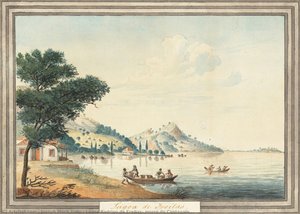
In the delicate strokes of this watercolor from 1848, we find ourselves transported to a moment of profound tranquility, captured by the hand of one of Poland's most luminous literary figures, Juliusz Słowacki. This piece, part of his evocative travel diary, transcends mere documentation; it is a poetic meditation on movement and stillness. The scene depicts a solitary figure navigating a boat across a serene expanse of water, framed by the majestic, soft silhouettes of distant mountains. As the oarsman pulls against the gentle current, the composition invites the viewer to share in the rhythmic peace of a summer day. The presence of figures along the shore and the subtle detail of an umbrella to the left suggest a shared human experience with nature—a quiet afternoon where the boundaries between the traveler and the landscape begin to dissolve.
The technique employed here is quintessential of the Romantic era’s fascination with the ephemeral. Using the fluid, translucent medium of watercolor, SłowAcki captures the play of light upon the water's surface and the hazy atmosphere of a warm afternoon. There is a masterful use of soft edges and bleeding pigments that mimics the way memory itself functions—vivid in certain details, yet dreamlike and blurred at the periphery. The artist’s ability to balance the structural weight of the mountains with the lightness of the water creates a visual harmony that is both grounding and ethereal. For the collector, this work offers more than just aesthetic beauty; it provides a tactile connection to the spontaneous, sketching style that characterized Słowacki's journeys through the Middle East and Europe.
Historical Resonance and Emotional Depth
To understand this artwork is to understand the soul of Polish Romanticism. Juliusz Słowacki, often revered as one of Poland's "three bards," lived a life defined by exile, patriotism, and an unquenchable thirst for the exotic. This watercolor was born from a period of profound personal and political transition. Having fled his homeland following the November Uprising, Słowacki’s travels through Greece, Egypt, and the Holy Land were not merely sightseeing expeditions but spiritual quests. The painting serves as a visual companion to his literary output, embodying the Romantic ideal of the "wanderer"—a figure seeking truth and beauty in the far reaches of the world. The peacefulness of the scene belies the turbulent history of its creator, offering a sanctuary of calm amidst a life of upheaval.
For interior designers and connoisseurs of fine art, this reproduction offers a sophisticated focal point that breathes life into any space. Its palette of soft blues, earthy tones, and luminous highlights makes it an ideal addition to a curated gallery wall or as a standalone statement piece in a study or library. The emotional impact of the work lies in its ability to evoke nostalgia and a sense of longing—a "sehnsucht" that resonates deeply with anyone who has ever been moved by the call of the horizon. Owning a reproduction of this piece is an invitation to bring the spirit of discovery and the timeless elegance of 19th-century Romanticism into the modern home, creating an atmosphere of contemplative grace.
相似艺术品




艺术家简介
Juliusz Słowacki: Life and Legacy
Early Life and Education
- Born: September 4, 1809, in Kremencze (Kremenets), Poland (now Ukraine).
- Słowacki’s early life was shaped by the political turmoil of partitioned Poland. He grew up in what were known as the “stolen lands,” fostering a strong sense of national identity.
- He received his education in Kremencze and Vilnius (Wilno), Lithuania, where he developed an interest in literature and history.
- His father, Jan Słowacki, was a teacher and writer who influenced Juliusz’s intellectual development.
Early Career and Political Involvement
- Słowacki briefly worked for the government of the Kingdom of Poland but soon became involved in patriotic activities.
- November Uprising (1830): He served as a courier for the Polish revolutionary government during the uprising against Russian rule.
- Following the defeat of the uprising, Słowacki went into exile, like many other Polish patriots. This period profoundly impacted his writing and worldview.
Life in Exile and Artistic Development
- Słowacki spent much of his life abroad, residing in Paris, Geneva, Italy, Greece, and the Middle East.
- His travels exposed him to diverse cultures and philosophical ideas, which enriched his literary work.
- He developed a unique poetic style characterized by neologisms (newly coined words), irony, and a blend of Romanticism with Slavic folklore and mysticism.
- Key Influences: Polish history, Slavic mythology, Romantic poets like Byron and Goethe, and Eastern philosophies.
Major Works and Themes
- Dramas: Kordian (a pivotal work exploring Polish identity and political disillusionment), Balladyna (a dark tale of ambition and betrayal inspired by Slavic folklore).
- Poems: Beniowski (an epic poem about a Hungarian nobleman who fought for Poland), Testament mój (“My Testament,” a philosophical and autobiographical work), Anhelli (a mystical drama).
- Recurring Themes: National identity, freedom, the struggle against oppression, Slavic mythology, mysticism, the conflict between good and evil, and the search for meaning in life.
Artistic Style and Innovations
- Słowacki’s style is marked by its lyrical intensity, dramatic flair, and philosophical depth.
- He was a master of poetic language, employing vivid imagery, symbolism, and innovative rhetorical devices.
- His use of neologisms expanded the Polish vocabulary and contributed to the development of modern Polish literature.
- Słowacki is considered the father of modern Polish drama, paving the way for future generations of playwrights.
Historical Significance and Legacy
- One of the “Three Bards”: Along with Adam Mickiewicz and Zygmunt Krasiński, Słowacki is regarded as one of Poland’s greatest Romantic poets.
- His works played a crucial role in preserving Polish national identity during a period of foreign occupation.
- Słowacki's dramas continue to be performed and studied today, inspiring artists and scholars alike.
- He returned briefly to Poland during the Spring of Nations uprising in 1848 but soon resumed his exile. He died in Paris on April 3, 1849.

juliusz słowacki
1809 - 1849 , Poland
艺术家简介
- Birth Date: 1809-09-04
- Birth Place: Kremencze, Poland
- Death Date: 1849-04-03
- Movement: Romanticism
- Name: Juliusz Słowacki
- Nationality: Polish
- Notable Works:
- Kordian
- Balladyna
- Beniowski
- Testament mój
- Anhelli
相关文章

Ephemeral Visions: Exploring the Artistic Legacy & Contemporary Practice of Watercolor Painting
Explore the captivating world of watercolor painting! Discover its rich history, essential techniques, influential artists & collecting tips. A comprehensive guide for art enthusiasts from AllPaintingsStore.

葛饰北斋:25幅传世名作,浮世绘大师的艺术传奇 (Katsushika Hokusai: 25 Masterpieces, The Art Legacy of the Ukiyo-e Master)
探索葛饰北斋的25幅传世名作!深入了解浮世绘大师的艺术传奇,感受《神奈川冲浪波》等经典作品背后的故事与魅力。AllPaintingsStore.com提供博物馆级高质量复制品,为您的家居带来日本风情和艺术灵感。立即探索完整系列!

水彩艺术的流光溢彩:历史渊源、情感共鸣与现代实践
探索水彩艺术的流光溢彩!深入了解其历史渊源、大师技法与现代实践。提供专业的艺术咨询、定制油画服务,助您收藏和鉴赏优秀作品。AllPaintingsStore.com – 您的艺术之选。

Watercolor Wonders: 10 Masterpieces That Redefined Art History | AllPaintingsStore
Journey through 10 legendary watercolor masterpieces by Sargent, Turner & Homer! Explore iconic landscapes, portraits & floral art that redefined history. Find museum-quality reproductions and curated decor ideas at AllPaintingsStore.com.

Ephemeral Visions: Exploring the Artistic Legacy & Nuances of Watercolor Painting
Explore the captivating world of watercolor painting! Discover its rich history, essential techniques, influential artists & collecting tips from art experts. A comprehensive guide for enthusiasts.

