


 效果预览
效果预览
 购买手绘画作
 分享
分享 分享
分享
 详情
详情

 下载
下载
 相似作品
相似作品 X射线
X射线 幻灯片播放
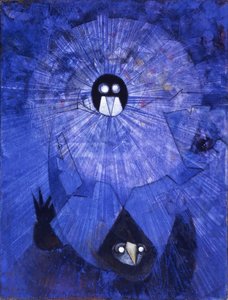
幻灯片播放Abstract Composition


 展开详情
展开详情




































从与原作比例一致的预设尺寸中进行选择。

您可以输入自定义尺寸,以适配特定的画框或空间。如果您选择的尺寸与原图比例不符,我们将对作品进行裁剪,或通过镜像填充/纯色填充边缘的方式来扩展图像。在开始制作之前,我们会向您发送一份数字效果图供您确认。
请注意,屏幕上的预览并不能反映实际的裁剪或扩展效果。只有效果图才能准确展示最终的构图。
虽然我们提供定制尺寸,但为了保持原图比例,我们建议您从预设列表中选择尺寸。


 玻璃选项仅适用于110厘米以下的尺寸。

Abstract Composition
艺术微喷/版画
复制品尺寸
-


最终总价
$ 64
相似艺术品








艺术家简介
Konrad Ernst Otto Zuse: Pioneer of Computing
Early Life and Education
- Konrad Ernst Otto Zuse was born on June 22, 1910, in Berlin, Germany.
- He studied mechanical engineering at the Technical University of Braunschweig, graduating in 1933.
- Even during his studies, Zuse demonstrated a keen interest in automation and calculation, laying the groundwork for his future innovations.
The Genesis of Computing: Early Machines
- Driven by frustration with repetitive calculations during his engineering work, Zuse began designing calculating machines in the 1930s.
- His first creation was the Z1 (1936-1938), a mechanical binary computer using floating-point numbers and limited programmability. Though mechanically unreliable, it demonstrated key concepts.
- The Z2 (1939) improved upon the Z1 with electromechanical relays, offering greater reliability but was destroyed during World War II.
The Z3: The First Functional Programmable Computer
- In May 1941, Zuse completed the Z3, widely considered the world’s first functional program-controlled Turing-complete computer.
- It was electromechanical, using relays, and operated with binary floating-point arithmetic.
- The Z3 was destroyed during a bombing raid in 1943, but its design principles were revolutionary.
Further Developments: The Z4 and Beyond
- Zuse continued his work, developing the Z4 (completed in 1945), which became the world’s first commercial computer. It was sold to the Aerodynamische Versuchsanstalt (AVA) for aerodynamic calculations.
- He founded one of the earliest computer businesses, Zuse KG, to produce and sell computers.
Plankalkül: A Visionary Programming Language
- Between 1943 and 1945, amidst wartime conditions, Zuse designed Plankalkül, the first high-level programming language.
- It was remarkably advanced for its time, featuring concepts like data structures and conditional statements. However, it remained largely unimplemented during his lifetime due to lack of resources and computing power.
Later Life and Theoretical Work
- In 1969, Zuse published Rechnender Raum (Calculating Space), proposing the concept of a computation-based universe – a precursor to digital physics.
- He received belated recognition for his pioneering work in the latter part of his life, including the Turing Award in 1968.
- Konrad Zuse died in Hünfeld, Germany, on December 18, 1995.
Historical Significance and Legacy
- Zuse’s work was largely overlooked during World War II due to the conflict and limited communication with Allied researchers.
- His contributions were crucial in laying the foundations for modern computing, influencing subsequent generations of computer scientists and engineers.
- He is rightfully regarded as a founding father of computer science, whose vision extended beyond mere calculation to encompass the very nature of reality itself.

konrad ernst otto zuse
1910 - 1995 , Germany
艺术家简介
- Birth Date: 1910
- Birth Place: Berlin, Germany
- Death Date: 1995
- Movement: Early Computing / Pioneer of Computer Science
- Name: Konrad Ernst Otto Zuse
- Nationality: German
- Notable Works:
- Z3
- Plankalkül
- Z4



