

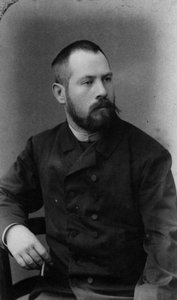
1923. Drawing, 47.0 x 53.0 cm. 不来梅艺术馆.

§ 1目录数据

- 47.0 x 53.0 cm


§ 2摘要
藏品详情
Experience Lovis Corinth's expressive 1923 Self-Portrait, a striking blend of Impressionism and Expressionism; discover this masterpiece today.
 展开全文
展开全文
艺术家简介
德国画家洛维斯·柯林特 (1858-1925),横跨印象派与表现主义,以肖像、风景画和对生活的真实描绘著称,《屠宰场》是其早期代表作。探索他在柏林分离派中的领导地位以及他对德国艺术的持久影响。
§ 3赏析
A Glimpse into the Artist's Soul: Lovis Corinth's Self-Portrait
To stand before a self-portrait by an artist of Lovis Corinth’s caliber is not merely to observe a likeness; it is to encounter a direct, unfiltered conversation with the creative spirit itself. This 1923 depiction captures the master at a moment of profound introspection. The subject gazes out from the canvas, framed by the subtle weight of his glasses and the defining sweep of his mustache—details that anchor the viewer in a specific, tangible reality. Corinth, forever navigating the rich currents between Impressionism's luminous observation and Expressionism's raw emotional outcry, offers us here a portrait steeped in both technical mastery and personal vulnerability.
The Synthesis of Style: Bridging Eras on Canvas
Corinth’s artistic journey was one of magnificent evolution. Having absorbed the naturalistic light studies of Impressionism during his formative years in Paris and Munich, he later found himself drawn into the more visceral, emotionally charged landscape of Expressionism. This Self-Portrait serves as a beautiful testament to that synthesis. While the rendering retains a certain observational clarity—a nod to the masters who preceded him—the underlying energy pulses with an expressive intensity. The technique, described as a drawing, suggests immediacy; it feels less like a carefully constructed facade and more like a thought captured before it could dissipate into memory.
Historical Echoes and Emotional Resonance
Created in 1923, this work emerges from a period of immense cultural upheaval. Corinth himself navigated the profound personal shifts that marked his life, including the devastating stroke he suffered. This context imbues the portrait with an added layer of poignant depth. The self-examination visible here transcends mere vanity; it speaks to resilience, to the enduring human need to document one's own existence against the backdrop of a changing world. For the collector or designer, this piece offers more than decoration; it provides a focal point for contemplation—a quiet monument to artistic endurance.
Bringing Corinth Home: Owning a Piece of History
Acquiring a reproduction of this Self-Portrait allows you to integrate a significant piece of art historical dialogue into your own space. The subtle nuances in the line work, the thoughtful gaze, and the palpable sense of history contained within the original make it an unparalleled statement piece. Whether placed in a study where deep thought is encouraged or a gallery wall meant to evoke intellectual depth, this artwork invites viewers to pause, look closer, and engage with the complex interplay between the artist's vision and his own enduring self.
常见问题与解答
"Self-Portrait"创作于何时,属于哪种艺术流派?
"Self-Portrait"创作于1923年,属于Expressionism运动时期的作品。其创作年代与艺术流派确立了该作品在艺术史上的地位。
罗维斯·科林斯 的《Self-Portrait》 采用了什么技法?
罗维斯·科林斯 的《Self-Portrait》 的媒介为 Drawing。复制品旨在呈现该技法的视觉效果。
《Self-Portrait》的创作者 罗维斯·科林斯 是否还有其他艺名?
关于《Self-Portrait》的创作者 罗维斯·科林斯,其记录在案的其他名称包括 弗朗茨·海因利希·路易斯·科林斯。


 切换至版画销售渠道


 对于任何边长超过 105 厘米(约 41 英寸)的艺术品或复制品,画框将以拆解后的组件形式发货。此方法可确保安全送达并防止运输过程中的损坏。


