


 效果预览
效果预览
 分享
分享 分享
分享
 详情
详情 指南
指南

 下载
下载
 相似作品
相似作品 X射线
X射线 幻灯片播放
幻灯片播放 统计数据
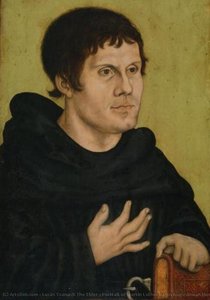
统计数据Martin Luther as Junker Jörg


 展开详情
展开详情
手工油画复制品
由我们的艺术家按需定制,为您提供您所选尺寸及画框的布面手工油画。 ( 切换至版画销售渠道 切换至数字图像销售渠道)




P118B $10

P118H $10

P118W $10

P438Z $10

P508JH $12

P508YH $12

P805H $10

P805Z $10

P919BZ $10

P919G $10

P919XJ $10

P959ZH $10

P968JZ $12

W106C $8

W218G $10

W218JH $8

W218Y $10

W307PJ $10

W316G $10

W316PJ $8

W316Y $10

W398PJ $8

W4111J $10

W500HY $15

W500JH $15

W692G $12

W849H $8

W940BG $15

W953PJ $8




从与原作比例一致的预设尺寸中进行选择。

您可以输入自定义尺寸,以适配特定的画框或空间。如果所选尺寸与原图比例不符,我们将通过裁剪作品或添加手绘元素来扩展画面。数字样稿将在制作开始前发送给您确认。
请注意,屏幕预览无法准确反映实际的裁剪或扩展效果,只有样稿才能真实呈现最终的构图。
虽然我们提供定制尺寸服务,但为了保留原作比例,建议您从预设列表中选择尺寸。
下单后,AllPaintingsStore.com 团队将通过电子邮件联系客户获取具体要求,并提供效果预览图。


 玻璃选项仅适用于110厘米以下的尺寸。

Martin Luther as Junker Jörg
复制材质
复制品尺寸
-


最终总价
$ 258
The Weight of Faith: Lucas Cranach’s Dramatic Depiction
Lucas Cranach the Elder's “Martin Luther as Junker Jörg,” painted in 1522, isn’t merely a portrait; it’s a carefully constructed tableau vivant—a visual embodiment of a pivotal moment in European history. This woodcut, executed with remarkable detail and imbued with potent symbolism, captures Martin Luther not as the fiery reformer we often envision, but as a man caught in the precarious balance between faith and worldly threat. The image immediately commands attention: Luther, clad in the garb of a wealthy nobleman – the “Junker” – stands with a stoic gaze directed just beyond the frame, suggesting both vulnerability and resolute determination. His beard and mustache, rendered with meticulous realism, convey an air of authority tempered by a hint of weariness, reflecting the immense pressures he faced during his initial defiance of papal authority.
- The Context: Painted in the tumultuous years following Luther’s 1521 return to Wittenberg after his exile, this work speaks directly to the climate of religious upheaval. Luther's challenge to the Catholic Church had placed him under imperial ban and threatened his life; the “Junker Jörg” disguise was a calculated maneuver designed to protect him while he continued to disseminate his ideas.
- The Disguise: The choice of attire is crucial. The nobleman’s clothing represents a temporary shedding of Luther's clerical identity, a deliberate act of concealment intended to shield him from persecution. It highlights the precariousness of his position and underscores the lengths he was willing to go to for his beliefs.
- The Composition: Cranach masterfully employs perspective—a subtle recession into the background—to draw the viewer’s eye towards Luther, anchoring him within the scene. The muted palette – dominated by browns, greys, and blacks – reinforces the somber mood and emphasizes the gravity of the situation.
Craftsmanship & Technique: A Masterful Woodcut
Cranach’s skill as a woodcutter is immediately apparent in the intricate detail of this image. The lines are crisp, precise, and remarkably expressive, conveying texture and form with astonishing subtlety. This was not simply a print; it was a carefully considered artistic statement. Cranach utilized a technique known as “bitter burn,” where he would carve away areas of the wood block to create lighter tones, allowing for a greater range of shading and detail than traditional relief printing. The result is a remarkably nuanced image—a testament to his technical mastery.
Key Techniques:- Bitterschnitt (Bitter Cut): Cranach’s signature technique, enabling detailed shading and tonal variation within the woodcut.
- Cross-Hatching: Used extensively to create texture and depth in the clothing and Luther's face.
- Linear Perspective: Employed subtly to establish a sense of space and draw the viewer’s eye towards the central figure.
Symbolism & Thematic Resonance
Beyond its immediate depiction, “Martin Luther as Junker Jörg” is rich in symbolic meaning. The sword, partially visible at Luther's side, represents both his authority and the threat he faced – a constant reminder of the potential consequences of his defiance. The setting itself—a vaguely defined landscape—suggests a world outside the confines of Wittenberg, emphasizing Luther’s exile and the broader implications of his challenge to established power structures. The very act of portraying Luther in this disguise speaks volumes about the courage required to stand against the Church and the lengths he was willing to go to protect his convictions.
The image serves as a potent reminder of the personal sacrifices made by those who dared to question religious authority, solidifying Luther’s place as a key figure in the dawn of the Reformation.A Timeless Portrait: Reproduction & Artistic Legacy
Reproductions of “Martin Luther as Junker Jörg” offer a remarkable opportunity to engage with this iconic image and appreciate Cranach's artistic genius. The detail and emotional depth captured in the original woodcut are faithfully reproduced, making it an ideal addition to any collection or interior space. Consider framing the reproduction within a period-appropriate wooden frame to further enhance its historical impact. This artwork is not just a depiction of a man; it’s a window into a transformative era—a testament to faith, courage, and the enduring power of art to capture the complexities of human experience.
相似艺术品




艺术家简介
卢卡斯·克拉纳赫老:萨克森文艺复兴的巨匠
卢卡斯·克拉纳赫老,生于1472年的德国克罗纳赫,是德国文艺复兴时期一位举足轻重的艺术家。他的生命轨迹与宗教和政治动荡交织,艺术作品也深深地烙印着新教改革的浪潮以及他所服务的富丽堂皇的宫廷。最初在父亲汉斯·马勒的指导下接受训练,克拉纳赫早期的艺术发展至今仍有些神秘色彩,但来自南德地区的艺术影响在他不断演进的风格中显而易见。他很快便以其卓越的技艺和捕捉人物内心深度的能力脱颖而出——这些品质迅速吸引了权势人物的目光。1504年,他进入萨克森选帝侯弗雷德里克三世的服务,这段关系定义了他职业生涯的大部分时光,并为他提供了稳定性和接触重要圈子的机会。在维滕贝格担任宫廷画家不仅仅是创作装饰性作品,更将克拉纳赫置于欧洲历史上最具变革性的运动的核心。赞助、改革与艺术创新
克拉纳赫在萨克森宫廷中的地位不仅为他的生计提供了保障,也促进了他的艺术发展。他并非仅仅记录事件,而是积极塑造变革时代的视觉叙事。他最持久的遗产可能是他与新教改革运动的核心人物马丁·路德之间的密切联系。克拉纳赫创作了多达十一幅路德肖像画,每一幅都为我们提供了对这位宗教改革者个性及其不断演变的角色独特的见解。这些并非简单的画像,而是精心设计的图像,旨在展现权威、虔诚和智慧——对于挑战既定宗教秩序的领袖来说,这些都是必不可少的品质。除了肖像画之外,克拉纳赫还将新教神学转化为视觉形式,创作了木刻版画和绘画作品,广泛传播了新教思想。他对圣经场景的描绘摆脱了传统的天主教图像符号,强调直接参与《圣经》阅读,并促进了观众与信仰之间更个人化的关系。《给约阿希姆报喜》这幅作品散发着一种欢乐的精神,反映了改革后的教会对个人虔诚的新重视。这种创新的方法不仅限于宗教主题;克拉纳赫的神话画作,如对维纳斯和其他古典人物的描绘,常常带有与当代政治和社会问题相关的象征意义。家族工作室:风格与技巧
卢卡斯·克拉纳赫老并非孤军奋战的艺术家,他经营了一个生产力惊人的工作室,雇佣了众多助手和学徒,他们为他的作品贡献了大量力量。这种合作方式意味着许多归功于克拉纳赫的作品实际上是在他的指导下或由他的圈子成员完成——包括他的儿子卢卡斯·克拉纳赫年轻。克拉纳赫工作室以其独特的风格而闻名:比例修长的优雅人物、鲜艳的色彩和一丝不苟的细节处理。他的技术结合了油画、木刻和版刻,使他能够通过原创艺术品和价格实惠的印刷品来接触到广泛的受众。《弗雷德里克三世选帝侯的鹿狩》完美地展现了他对北方文艺复兴风格的大师级运用,既有细致的现实主义,又有高贵的象征意义。构图充满活力,捕捉了狩猎的能量,同时也传达了选帝侯的力量和地位。克拉纳赫对光与影的使用创造了一种深度和氛围感,将观众带入场景之中。他的肖像画同样引人注目,以其心理洞察力和精致的执行力为特征。遗产与持久影响
卢卡斯·克拉纳赫老于1553年去世,留下了非凡的艺术遗产,至今仍在回响。他是一位肖像大师、一位熟练的宗教主题诠释者,也是一位精明的商人,他了解视觉沟通的力量。他的作品不仅反映了他所处时代的文化和智力潮流,而且帮助塑造了这些潮流。克拉纳赫的工作室在他去世后继续蓬勃发展,确保了他的风格和技巧代代相传。 他的影响可以体现在众多后续艺术家的作品中,而他的画作仍然受到收藏家和博物馆的广泛追捧。从标志性的马丁·路德肖像到迷人的神话场景,克拉纳赫的艺术为我们提供了一个了解德国文艺复兴世界的迷人窗口——一个既充满深刻的精神质疑又充满艺术创新的世界。他将宗教狂热、政治敏锐和艺术天赋相结合的能力巩固了他作为该时代最重要的艺术家之一的地位,几个世纪后的今天,他的贡献仍然激励并吸引着观众。
卢卡斯·克兰纳赫画师
1472 - 1553 , 德國
艺术家简介
- Artistic Movement Or Style: 北歐藝術風格
- Artists Or Movements Influenced By This Artist: ['德國文藝復興']
- Artists Who Influenced This Artist: ['漢斯·馬爾']
- Date Of Birth: 約1472年出生於克拉納赫市
- Date Of Death: 1553年去世於魏瑪市
- Full Name: 盧卡斯·克蘭納赫畫家
- Nationality: 德國人
- Notable Artworks:
- 聖母顯靈畫
- 亞當與夏娃
- 聖書故事
- Place Of Birth: 德國 克拉納赫市
相关文章

German Expressionism's 10 Defining Masterpieces | Art for Your Home
Explore 10 defining German Expressionism masterpieces – from Munch's 'The Scream' to Kandinsky’s abstracts. Discover the artists, stories & bold colors behind this powerful art movement. Find museum-quality reproductions at AllPaintingsStore.com.

The Soul of the Grain: Discovering the Timeless Beauty and Artistic Legacy of Woodcut Art
Explore the profound beauty of woodcut art. From ancient traditions to modern mastery, discover the tactile soul of relief printing and its enduring legacy in fine art collections.

Mastering the Woodcut: A Definitive Guide to the Art of Relief Printing and its Historical Legacy
Explore the profound history and technical mastery of woodcut relief printing. From ancient origins to German Expressionism, discover how artists use the subtractive process to create iconic works. A definitive guide for art students, collectors, and historians.

日耳曼文艺复兴:人文主义的觉醒与艺术革新 - 重塑欧洲文明的辉煌篇章
探索日耳曼文艺复兴的人文主义与艺术革新!AllPaintingsStore 提供高品质手绘油画复制品、定制服务及专业艺术咨询,重现大师经典,点亮您的空间。值得信赖的艺术品收藏专家。

Charles Martin Hardie: A Pioneer of Colour Woodcut & British Printmaking Revival
Discover Charles Martin Hardie (1858-1916), a pivotal Scottish artist renowned for his evocative portraits and pioneering colour woodcut technique. Explore his life, work, and lasting influence on British printmaking.


