

1982. Lithograph, 66.0 x 50.0 cm.

§ 1目录数据

- 66.0 x 50.0 cm


 了解更多
了解更多§ 2摘要
藏品详情
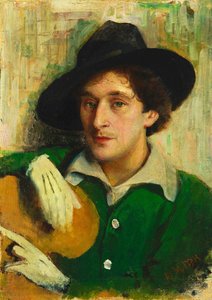
Experience the dreamlike world of Marc Chagall's 'Fiddler with Rust.' This lithograph captures his signature style—folkloric figures, vibrant colors, and symbolic depth. A masterpiece from 1982.
§ 3赏析
A Dreamscape in Rust and Gold: Unveiling Marc Chagall’s “Fiddler with Rust”
Marc Chagall's "Fiddler with Rust," painted in 1982, isn’t merely a depiction of a musician; it’s an immersion into a world brimming with memory, folklore, and the deeply personal vision that defined the artist’s extraordinary career. This lithograph, rendered in muted yet vibrant tones, captures a fleeting moment from Chagall's childhood in Vitebsk, a town forever etched within his artistic consciousness – a place of layered cultures, Orthodox churches juxtaposed against bustling Jewish marketplaces, and a profound sense of nostalgia. The painting immediately draws the eye to the central figure, a man lost in the act of playing his violin, his face simplified yet radiating an undeniable warmth. He’s not simply performing; he's embodying a connection to tradition, to community, and perhaps even to something beyond the tangible world.
The technique employed is quintessential Chagall – a masterful blend of naive art principles with a sophisticated understanding of color and composition. Lithography lends itself beautifully to his style, creating a textured surface that seems to ripple with movement. The lines are fluid and expressive, guiding the viewer’s eye through the densely populated scene. Notice how he utilizes overlapping figures, not for strict perspective but to create a sense of layered narrative, as if multiple stories are unfolding simultaneously within this single frame. The flattened space, characteristic of his work, further enhances the dreamlike quality, inviting us to step into a world where logic takes a backseat to emotion and imagination.
Symbolism Woven into the Fabric of Memory
Beyond its immediate visual appeal, “Fiddler with Rust” is rich in symbolic resonance. The violin itself is a potent emblem – representing joy, cultural heritage, and the enduring power of music. The two birds perched near the fiddler’s head are often interpreted as symbols of freedom and spirituality, perhaps alluding to Chagall's own yearning for escape from oppressive circumstances. The floating figures surrounding the central figure suggest a state of suspended animation, a dreamlike realm where memories and emotions coalesce. Even the “rust” in the title – a subtle but significant detail – hints at the passage of time, the fading of recollections, and the bittersweet nature of nostalgia.
The inclusion of two hens is particularly noteworthy. In Chagall’s Vitebsk, chickens were a common sight, representing fertility, abundance, and family life. Their presence reinforces the painting's connection to the artist’s roots and his deeply ingrained sense of belonging. The color palette—a restrained blend of earthy tones punctuated by flashes of yellow and red—contributes to the overall mood, evoking both warmth and melancholy.
A Window into Chagall’s Soul
Created in 1982, during a period when Chagall was nearing the end of his remarkable life, “Fiddler with Rust” offers a poignant glimpse into the artist's enduring spirit. It’s a testament to his ability to transform personal memories and cultural influences into universal symbols of hope, longing, and the human condition. The painting isn’t simply a portrait; it’s an invitation to contemplate the complexities of identity, the power of art, and the timeless beauty of a world seen through the eyes of a visionary artist.
Considered within the context of Chagall's broader oeuvre, “Fiddler with Rust” stands as a particularly intimate work—a deeply personal meditation on his childhood in Vitebsk. It’s a reminder that even amidst the chaos and upheaval of the 20th century, art can provide solace, connection, and a profound sense of continuity.
Technical Details & Reproduction Considerations
The artwork itself is a lithograph measuring 66 x 50 cm, executed on paper. The lithographic process lends a unique textural quality to the image, with subtle variations in tone and line that add depth and richness. Reproductions, particularly those utilizing high-quality archival inks and printing techniques, can faithfully capture this tactile dimension. When selecting a reproduction, pay close attention to the substrate – canvas or paper – as it will significantly impact the final aesthetic effect. The original’s soft lighting and diffused atmosphere are best replicated with materials that offer a similar level of subtlety and nuance.
For collectors seeking an authentic representation of Chagall's masterpiece, consider commissioning a hand-painted reproduction from AllPaintingsStore.com or other reputable art reproduction specialists. These artisans meticulously recreate the artist’s style and techniques, ensuring that the final product is both visually stunning and historically accurate.
常见问题与解答
马克·夏加尔 的《Fiddler with ruster》 的色彩浓郁度如何?
“Fiddler with ruster”的色彩强度为Monochromatic。强度描述了色彩呈现的浓郁程度。
马克·夏加尔 的《Fiddler with ruster》 建议用于何种场景?
马克·夏加尔 的《Fiddler with ruster》 的复制品非常适合用于 Statement。这一建议源于作品的主题、意境与色彩。
在家的哪个空间摆放 "Fiddler with ruster" 的复制品最为合适?
马克·夏加尔 的《Fiddler with ruster》 的推荐陈列空间为 Living Room。当然,该建议也可根据您的室内装饰进行灵活调整。


 切换至版画销售渠道


 对于任何边长超过 105 厘米(约 41 英寸)的艺术品或复制品,画框将以拆解后的组件形式发货。此方法可确保安全送达并防止运输过程中的损坏。


