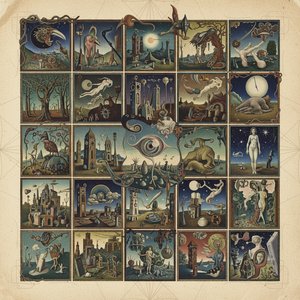
1919. Oil On Canvas, 54.0 x 43.0 cm.

§ 1目录数据

- 54.0 x 43.0 cm


 了解更多
了解更多§ 2摘要
藏品详情
Explore Max Ernst’s surreal masterpiece ‘Aquis submersus,’ capturing a dreamlike pool scene with enigmatic figures and symbolic sports balls—a captivating glimpse into the artist's philosophical exploration of the subconscious during the Surrealist era. Discover this stunning reproduction.
§ 3赏析
A Dreamscape Suspended in Time
To gaze upon Max Ernst’s 1919 masterpiece, Aquis submersus, is to step through a portal into the unsettlingly beautiful logic of the subconscious. The title itself, Latin for "Drowned in the Waters," serves as a haunting prelude to a visual journey that transcends the boundaries of the rational world. At first glance, the painting presents a scene of deceptive tranquility: a swimming pool nestled among architectural forms, where figures linger in a state of suspended animation. Yet, beneath this serene surface lies the restless energy of the early 20th century, a period defined by profound societal upheaval and the intellectual ferment following the Great War. Ernst does not merely depict a scene; he engineers a psychological labyrinth, inviting the viewer to navigate a landscape where the lines between reality and dream begin to dissolve.
The composition is an arresting study in juxtaposition. A man stands at the edge of the pool, his gaze fixed intently upon a woman reclining within the azure depths. This intimate, almost voyeuristic encounter is punctuated by the presence of two sports balls, strategically positioned to disrupt the water's surface. These elements of incongruity introduce an unsettling humor and a sense of chance that are hallmarks of the Dadaist and Surrealist spirit. As one explores the periphery of the pool, other figures appear scattered throughout the tableau—some sitting, some lying down—creating a sense of a shared, yet deeply isolated, dreamscape. The architecture itself feels strangely weightless, with buildings that cast shadows against the sky like solid walls, and a clock hanging in the heavens, its reflection on the water masquerading as a pale moon.
Technique and the Language of Surrealism
Ernst’s approach to Aquis subsubmersus is deeply rooted in his desire to liberate art from the constraints of logic. While this early work shows the profound influence of Italian Metaphysical art, it also hints at the experimental techniques that would later define his career. The painting employs bold colors and simplified forms, prioritizing emotional resonance over photographic realism. There is a tactile quality to the work, a precursor to his famous use of frottage, where textures are transferred to create organic, unpredictable patterns. This method mirrors the Surrealist obsession with accessing the hidden layers of the mind, using texture and shape to evoke the raw, unrefined imagery of dreams.
For the discerning collector or interior designer, this piece offers a profound emotional impact that shifts depending on the light and the viewer's perspective. It is a work of deep symbolism: the submerged woman may represent femininity, vulnerability, or even repressed desire, while the disruptive placement of the sports balls symbolizes the destabilization of the established order. Bringing a high-quality reproduction of this masterpiece into a space provides more than just decoration; it introduces a conversation piece that challenges the intellect and stirs the imagination. It is an ideal selection for those seeking to infuse their environment with mystery, depth, and the timeless allure of the human unconscious.
常见问题与解答
"Aquis submersus" 的创作年份 1919 对应于 马克斯·恩斯特 艺术生涯中的哪个阶段?
鉴于其创作于1919年,作品《Aquis submersus》属于马克斯·恩斯特的Mature Surreal时期。
马克斯·恩斯特 的《Aquis submersus》 的画面方向是怎样的?
马克斯·恩斯特 的《Aquis submersus》 采用 Portrait 格式。该格式描述了构图的比例。
马克斯·恩斯特 的《Aquis submersus》 的创作媒介和创作日期是什么?
马克斯·恩斯特 的《Aquis submersus》 的创作媒介为 Oil On Canvas,创作于 1919 年。



 切换至版画销售渠道


 对于任何边长超过 105 厘米(约 41 英寸)的艺术品或复制品,画框将以拆解后的组件形式发货。此方法可确保安全送达并防止运输过程中的损坏。