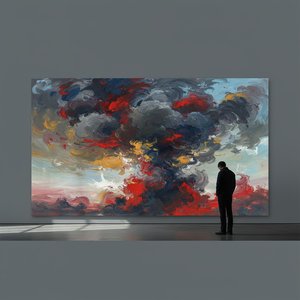
1948. Oil On Canvas, 244.0 x 122.0 cm.

§ 1目录数据

- 244.0 x 122.0 cm


§ 2摘要
藏品详情
 展开全文
展开全文
§ 3赏析
No. 5, 1948 – A Symphony of Chaos and Control
Jackson Pollock’s *No. 5*, created in 1948, stands as an emblem of Abstract Expressionism—a movement that irrevocably altered the landscape of modern art. More than just a painting; it's a visceral embodiment of emotion, intellect, and revolutionary technique, captivating viewers with its mesmerizing complexity and enduring legacy. This monumental canvas, measuring eight by four feet on fiberboard, transcends mere visual representation, inviting contemplation about the very nature of artistic expression itself.
Technique: The Birth of Action Painting
Pollock’s groundbreaking approach to painting—drip painting—was unlike anything seen before. Rejecting traditional brushstrokes and easel-bound compositions, he embraced a method that involved pouring and manipulating liquid paints onto a horizontal surface. This seemingly effortless process concealed an astonishing level of control and precision. Using synthetic resin paints mixed with linseed oil, Pollock meticulously layered colors onto the fiberboard, creating intricate webs of pigment that resembled turbulent skies or blossoming floral arrangements. The resulting texture—a dense tapestry of interwoven lines and drips—became synonymous with “action painting,” a term coined by Harold Rosenberg to describe this transformative style.
Emotional Resonance: Capturing the Subconscious
At its core, *No. 5* is an intensely personal statement reflecting Pollock’s inner turmoil and fascination with the subconscious mind. Influenced by Surrealism and Native American art—particularly Navajo weaving patterns—Pollock sought to bypass rational thought and tap into primal impulses. The dominant hues of yellow and brown convey a sense of warmth, yet simultaneously hint at underlying anxieties and instability. Critics noted that “You spent money on ‘that’?” reflecting the initial reaction of Ted Dragon, Ossorio's partner. This painting isn’t merely decorative; it’s an invitation to delve into the depths of human emotion—a courageous exploration of vulnerability and resilience.
Historical Significance: Pivotal Moment in Modern Art
*No. 5*, alongside other works from Pollock’s drip period, propelled Abstract Expressionism to international prominence. It challenged conventional artistic norms and solidified Pollock's position as a pioneer of American art history. The deliberate absence of a title—a decision championed by Pollock himself—served to refocus attention on the painting’s inherent qualities, encouraging viewers to engage with it without preconceived notions. Its sale for $140 million in 2006 cemented its place among the most valuable artworks globally, symbolizing not only artistic achievement but also the transformative power of innovation and daring experimentation.
Legacy: An Enduring Influence
Today, *No. 5* continues to inspire artists and collectors alike. Its influence can be seen in countless subsequent works exploring similar themes of spontaneity and abstraction. Furthermore, reproductions of this masterpiece offer a remarkable opportunity to experience Pollock’s vision firsthand—bringing the dynamism and emotional depth of Abstract Expressionism into homes and galleries worldwide. For those seeking inspiration or delving deeper into art history, examining *No. 5* provides invaluable insight into the genesis of modern artistic thought.
常见问题与解答
哪里可以找到与 杰克逊·波洛克 (Jié K逊·Bōluòkè) 的《Number 5》 风格相似的艺术品?
与 杰克逊·波洛克 (Jié K逊·Bōluòkè) 的《Number 5》 相似的作品已汇集在作品的 相似作品 页面中。
是否有面向学生的 杰克逊·波洛克 (Jié K逊·Bōluòkè) 的《Number 5》 详情页?
杰克逊·波洛克 (Jié K逊·Bōluòkè) 的《Number 5》 的 指南 页面提供了一份可打印的两页式学生资料单:包含作品及其基本信息表、将其置于艺术家生平中的年代轴、艺术家的其他作品、经测量的色板,以及四种格式的即用型引用文献。
杰克逊·波洛克 (Jié K逊·Bōluòkè) 是否还有其他别名或曾用名?
杰克逊·波洛克 (Jié K逊·Bōluòkè) 也被称为 保罗·杰克逊·波洛克 (Bǎo Luó·Jié K逊·Bōluòkè), 波洛克 (Bōluòkè)。


 切换至版画销售渠道


 对于任何边长超过 105 厘米(约 41 英寸)的艺术品或复制品,画框将以拆解后的组件形式发货。此方法可确保安全送达并防止运输过程中的损坏。