

1930. Oil On Canvas, 68.0 x 50.0 cm.

§ 1目录数据

- 68.0 x 50.0 cm


§ 2摘要
藏品详情
Paul Klee’s ‘Rhythmic’ (1930): A dynamic abstract painting of geometric blocks in grey & red. Explore its layered texture, Constructivist influence & unique visual complexity.
 展开全文
展开全文
艺术家简介
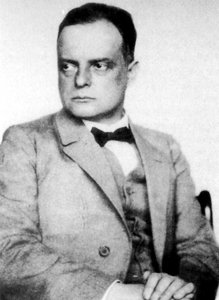
瑞士裔德国艺术家保罗·克利(1879-1940),以其色彩丰富、充满童趣的抽象画作闻名。他的作品融合了表现主义、立体主义与超现实主义的影响,探索了色彩理论和形式设计,对现代艺术产生了深远影响。代表作包括《哈马默特》、《兄弟》等,是20世纪最具创新性的艺术家之一。
§ 3赏析
Rhythmic Abstraction: A Window into Klee’s Early Modernism
Paul Klee's *Rhythmic* (1930) is a captivating example of his exploration into abstract form and color, created during a pivotal period in the artist’s career. Measuring 68 x 50 cm, this work exemplifies Klee’s unique visual language – one that bridges Expressionism, Cubism, and burgeoning Surrealist tendencies.Deconstructing Form & Color
The composition is dominated by a grid-like arrangement of irregularly shaped blocks rendered in a restrained palette of black, white, and varying shades of grey against a warm reddish-brown background. There’s no attempt at representational imagery; instead, Klee focuses entirely on the interplay between geometric shapes – primarily rectangles and squares, though softened by some irregular forms – and their textural relationships. The surface is notably rough and layered, suggesting multiple applications of paint and a deliberate building up of visual complexity. This technique creates a tactile quality that invites close inspection.Technique & Materials
Klee likely employed oil paints on canvas or board to achieve the rich texture evident in *Rhythmic*. The layering of paint isn’t merely about color application; it's integral to the artwork’s structure, defining edges and creating subtle variations within each block. This meticulous approach reflects Klee’s deep understanding of color theory, a subject he explored extensively in his influential writings – *The Paul Klee Notebooks* – which are considered foundational texts for modern art.Historical Context & Artistic Influences
Created in 1930, *Rhythmic* places itself within the broader context of early abstract painting. While influenced by Constructivism’s emphasis on geometric abstraction, it diverges from strict adherence to its principles. The work also echoes elements of Abstract Expressionism, though predating its full emergence. Klee's time teaching at the Bauhaus school of art, design and architecture undoubtedly informed his approach to form and composition. He wasn’t solely concerned with aesthetic innovation; he was actively engaged in exploring fundamental principles of visual organization.Emotional Resonance & Interpretation
Despite its abstract nature, *Rhythmic* evokes a compelling emotional response. The controlled complexity suggests order, while the variation in block sizes and textures introduces an element of contained chaos. The reddish-brown background provides warmth and contrast, grounding the cooler tones of the blocks and preventing the composition from feeling sterile. It’s a work that invites contemplation – a visual meditation on balance, tension, and the inherent beauty of abstract form.Collecting & Interior Design
*Rhythmic* would be a striking addition to any collection focused on early modern art or the works of Paul Klee. Its limited color palette makes it surprisingly versatile for interior design.- It complements minimalist spaces, adding visual interest without overwhelming.
- Its geometric structure resonates with contemporary architectural styles.
- The warm background tones harmonize well with neutral palettes and natural materials.
常见问题与解答
克莱 的《Rhythmic (Rythmical)》 属于哪种艺术流派?
克莱 的《Rhythmic (Rythmical)》 所属的艺术流派为 Constructivism。这一分类将该作品置于相关艺术家及艺术作品的语境之中。
克莱 的《Rhythmic (Rythmical)》 的整体基调是什么?
克莱 的《Rhythmic (Rythmical)》 的整体基调为 Calm,这种基调传达了作品的整体氛围。
"Rhythmic (Rythmical)" 是如何平衡明暗对比的?
“Rhythmic (Rythmical)”的整体亮度为bright,其亮度值为Gentle Luminance。


 切换至版画销售渠道


 对于任何边长超过 105 厘米(约 41 英寸)的艺术品或复制品,画框将以拆解后的组件形式发货。此方法可确保安全送达并防止运输过程中的损坏。


