

Acrylic On Canvas.

§ 1目录数据

§ 2摘要
藏品详情
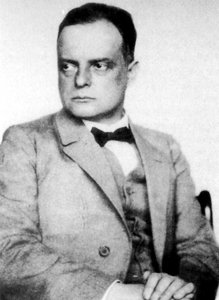
Employing a grayscale palette—ranging from whites to blacks—highlights form and texture over color variation.
 展开全文
展开全文
艺术家简介
瑞士裔德国艺术家保罗·克利(1879-1940),以其色彩丰富、充满童趣的抽象画作闻名。他的作品融合了表现主义、立体主义与超现实主义的影响,探索了色彩理论和形式设计,对现代艺术产生了深远影响。代表作包括《哈马默特》、《兄弟》等,是20世纪最具创新性的艺术家之一。
§ 3赏析
A Quiet Reflection: Analyzing Paul Klee’s Self-Portrait
Paul Klee's "Self-portrait," executed in 1937, stands as a deceptively simple yet profoundly resonant testament to the artist’s enduring fascination with form and gesture. More than just a depiction of his likeness, it embodies Klee’s core artistic philosophy – an unwavering commitment to capturing essence rather than striving for photographic accuracy. The sketch, rendered in muted grayscale tones—primarily whites and blacks punctuated by subtle shading—immediately establishes a contemplative mood, inviting viewers into the artist's inner world.- Composition & Perspective: Klee employs a flattened perspective, characteristic of his early style, prioritizing visual harmony over illusionistic depth. The head and shoulders dominate the canvas, positioned centrally to draw the eye directly to the subject’s gaze – an unwavering stare that conveys both introspection and quiet confidence. Minimal background detail reinforces this focus, emphasizing the portrait's contemplative nature.
- Technique & Material: Crafted with graphite pencils on paper, “Self-Portrait” showcases Klee’s masterful use of hatching and crosshatching techniques. These meticulous lines build up tonal values with remarkable precision, creating a textured surface that mimics the physicality of pencil strokes. The artist eschews bold colors, opting instead for grayscale to heighten the expressive power of line and shape.
- Stylistic Influences & Expression: Klee’s approach aligns closely with his broader stylistic explorations—drawing inspiration from Cubism's fragmented perspectives and Surrealism’s dreamlike imagery. However, unlike many artists of his time who sought to convey emotion overtly, Klee prioritizes visual abstraction, suggesting feelings through carefully considered compositional choices and expressive lines.
- Symbolic Resonance: The artist’s attire—a cap and collared shirt with a tie—offers subtle symbolic cues. These elements speak to Klee's engagement with tradition while simultaneously reflecting his desire for artistic innovation. The simplicity of the sketch itself symbolizes an exploration of fundamental visual principles, mirroring Klee’s belief that art should transcend mere representation.
- Historical Context: Created during a period marked by political upheaval and uncertainty—specifically amidst Nazi persecution—the portrait reflects Klee's anxieties about his personal safety and artistic freedom. Yet, despite these concerns, the artwork retains an aura of serenity, suggesting resilience and unwavering dedication to creative pursuits.
常见问题与解答
克莱 的《Self-portrait》 融合了怎样的主题与氛围?
"Self-portrait" 描绘了 portrait sketch, monochromatic drawing, geometric forms, early style, minimal composition, line texture, psychological depth,并传达出 Calm 的意境。
《Self-portrait》属于 克莱 艺术生涯中的哪个时期?
“Self-portrait”创作于克莱艺术生涯的Early Style时期。这一时期标志着该作品与艺术家艺术风格演进的紧密关联。
"Self-portrait" 是否属于公有领域作品?
关于版权,"Self-portrait" 属于 属于公有领域 —— 其版权已过期。


 切换至版画销售渠道


 对于任何边长超过 105 厘米(约 41 英寸)的艺术品或复制品,画框将以拆解后的组件形式发货。此方法可确保安全送达并防止运输过程中的损坏。


