

Acrylic On Canvas.

§ 1目录数据

§ 2摘要
藏品详情
Explore Piet Mondrian's iconic Apple Tree, Pointillist Version – a masterpiece of geometric abstraction inspired by theosophy and reflecting his pursuit of universal beauty. Discover its details at Artvee.
 展开全文
展开全文
艺术家简介
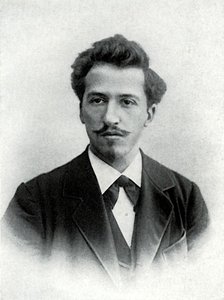
荷兰抽象派大师蒙德里安(1872-1944),以其新塑像主义风格闻名,运用纯粹的几何形状、基本色彩和直线创造出极简而富有表现力的作品。他的代表作如《红蓝黄构图》等,深刻影响了现代艺术与设计。
§ 3赏析
Apple Tree, Pointillist Version – A Symphony of Geometric Harmony
Piet Mondrian’s *Apple Tree*, painted in 1908-1909 during his formative years exploring the nascent principles of Pointillism and Fauvism, represents more than just a depiction of nature; it embodies Mondrian's burgeoning philosophical quest for universal beauty and spiritual unity. Initially influenced by Dutch Impressionism – evidenced in his early landscapes like *The Red Mill* – Mondrian swiftly moved beyond mere visual representation, recognizing its limitations in conveying the essence of existence.
- Style: Pointillist – Mondrian’s approach distinguishes itself from traditional painting through a technique rooted in optical blending. Instead of applying pigment directly onto canvas, he meticulously dots tiny fragments of color—primarily shades of blue and green—creating an illusion of depth and vibrancy without resorting to shading or blending.
- Technique: The artist employed oil paint on composition board, utilizing a precise method that demanded painstaking attention to detail. Each dot is carefully positioned to maximize its impact on the overall color palette and textural surface.
- Historical Context: Created during Mondrian’s exploration of Symbolism and Théosophy—a spiritual movement emphasizing humanity's evolution toward cosmic unity—the painting reflects a desire to transcend earthly concerns and capture transcendent ideals. This fascination with esoteric thought profoundly shaped his artistic vision.
Symbolic Resonance – Blue, Geometry, and the Pursuit of Spirit
The dominant hue of *Apple Tree* is undeniably blue, chosen not arbitrarily but deliberately as a symbol representing spiritual harmony and transcendence. Mondrian’s belief in theosophy instilled within him a conviction that art should aspire to communicate universal values—a concept central to his Neoplasticist philosophy. The tree itself—rendered in simplified geometric forms—further underscores this principle.
- Geometric Forms: Mondrian's reduction of natural elements into fundamental geometric shapes – rectangles and squares – reflects a rejection of organic complexity in favor of rational order. These forms symbolize stability, balance, and the underlying structure of reality.
- Color Palette: The restrained color palette—primarily blue, green, and brown—contributes to the painting’s contemplative mood and reinforces its symbolic significance. Mondrian believed that colors possessed inherent spiritual qualities, aligning with his philosophical convictions.
A Reflection of Artistic Evolution – From Landscape to Abstraction
Before embracing Pointillism and Neoplasticism, Mondrian honed his skills in landscape painting, diligently studying nature’s subtleties. However, he quickly recognized that capturing the fleeting beauty of the natural world was insufficient for expressing the profound truths he sought. This early experimentation served as a crucial stepping stone toward his groundbreaking artistic breakthrough—a decisive shift away from representational art towards pure abstraction.
“Art is higher than reality and has no direct relation to reality,” Mondrian famously declared, encapsulating his conviction that true artistic expression resided beyond the confines of observable phenomena. *Apple Tree*, therefore, stands as a testament to this transformative journey—a poignant reminder of Mondrian’s unwavering dedication to pursuing beauty and spiritual unity through uncompromising geometric abstraction.This artwork embodies Mondrian's enduring legacy as one of the pioneers of modern art, inspiring generations of artists and designers alike. Its meticulous technique and symbolic depth continue to captivate viewers today, offering a glimpse into the artist’s profound philosophical convictions and his unwavering belief in the transformative power of visual art.
常见问题与解答
在购买之前,我可以在自己的墙上预览 蒙德里安 的《Apple Tree, Pointillist Version》 吗?
“Apple Tree, Pointillist Version” 支持增强现实(AR)预览:通过作品的 AR 效果预览 页面,您可以在兼容设备上查看该作品呈现在您专属空间的效果。
蒙德里安 的《Apple Tree, Pointillist Version》 的亮度是多少?
蒙德里安 的《Apple Tree, Pointillist Version》 的记录亮度为 Dark。
是否有关于 蒙德里安 的《Apple Tree, Pointillist Version》 的导览页?
"Apple Tree, Pointillist Version" 的指南请参阅作品的 指南 页面 —— 这是一份可打印的信息单,包含了该作品的说明、署名以及详细信息表(艺术家、日期、媒介、原尺寸、馆藏)。


 切换至版画销售渠道


 对于任何边长超过 105 厘米(约 41 英寸)的艺术品或复制品,画框将以拆解后的组件形式发货。此方法可确保安全送达并防止运输过程中的损坏。


